


A prescription did not guarantee a PrEP shot for patients at one St. Louis clinic. Researchers who reviewed the clinic’s records found that roughly 4 in 10 people prescribed the long-acting HIV prevention medication never started it. Problems with insurance accounted for most of the recorded barriers.
Dr. Aditi Ramakrishnan and her Washington University colleagues presented the findings as a poster at IDWeek 2026, held Oct. 21–24 in Washington, D.C. They studied records from a large clinic funded by the federal Ryan White HIV/AIDS Program, so the results describe that clinic’s experience rather than access nationwide.
“I think this really illustrates that the demand is there for LAI PrEP, but very much the real-world implementation of LAI PrEP is not set up to meet that demand at this time,” Ramakrishnan told The American Journal of Managed Care.
Missing Pharmacy Benefits and Prior Authorization Denials Blocked PrEP Shots
The poster reported 268 patients prescribed injectable PrEP from February 2022 through July 7, 2026. Of those, 163 received an injection and 105 did not. A smaller analysis through March included 170 patients: 100 who started injections and 70 who did not.
Among the 70, 54.3% had no pharmacy benefit and 41.4% were denied prior authorization, AJMC reported in a separate summary of the poster. Some had more than one barrier. A few people had to show that oral PrEP had failed before their insurer would pay.
Medicaid covered 24.3% of the patients who did not start injections, compared with 7% of those who did. Ramakrishnan told AJMC that Missouri Medicaid coverage was an obstacle in the clinic’s experience.
Plan type mattered a lot. Ninety-four percent of people who got the shot had coverage through a pharmacy benefit only. “We found that medical benefits rarely led to a successful injection in this clinic environment, and that even then, depending on the type of insurance, one needed prior authorization,” Ramakrishnan said.
Seven patients switched clinics just to get the shot covered under their medical benefit.
Injectable PrEP Patients Stayed in HIV Prevention Care
The researchers also checked whether patients still had an active PrEP prescription after 12 months, or at their most recent review if less time had passed. That was true for 96% of the group that started injections and 72.9% of the group that did not. Because this was a review of records rather than a randomized trial, the difference cannot show that the injections themselves kept people in care.
One person in the study got HIV. That person took oral PrEP on and off and had been denied coverage for the injection in the previous year.
“Interest in LAI PrEP exceeds real-world access,” the authors wrote. “Policymakers must address this gap to achieve effective LAI PrEP implementation to end the epidemic.”
Ramakrishnan pointed to coverage. “We want to end the epidemic, and so if those barriers can be decreased, if we can increase insurance coverage and flexible models to support LAI PrEP, that can really improve access to care and actually end the epidemic in our population,” she said.
Apretude and Yeztugo: The PrEP Injections Used in the Study
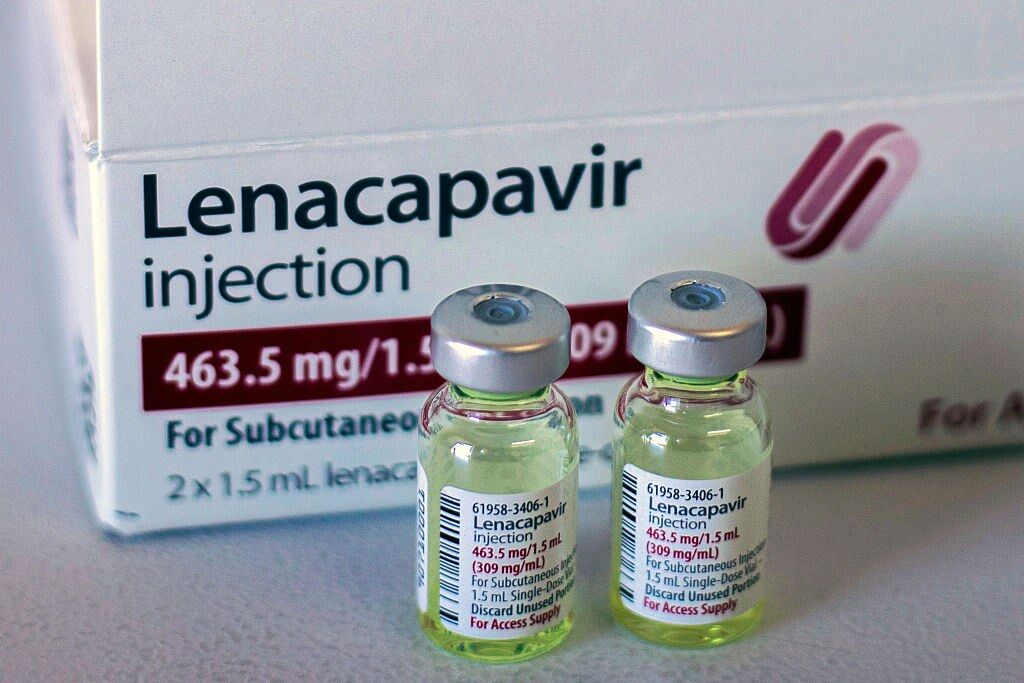
Most people in the study who got a shot, 83%, received cabotegravir, sold by ViiV Healthcare as Apretude. The rest got Gilead’s lenacapavir, sold as Yeztugo.
PrEP is medication taken to prevent HIV. The FDA approved Apretude in December 2021 as the first injectable option. After two initial injections one month apart, it is given every two months.
Yeztugo, approved in June 2025, offers an injection every six months. The clinic findings highlight problems getting prescribed medication covered. They do not compare the two drugs’ effectiveness.


