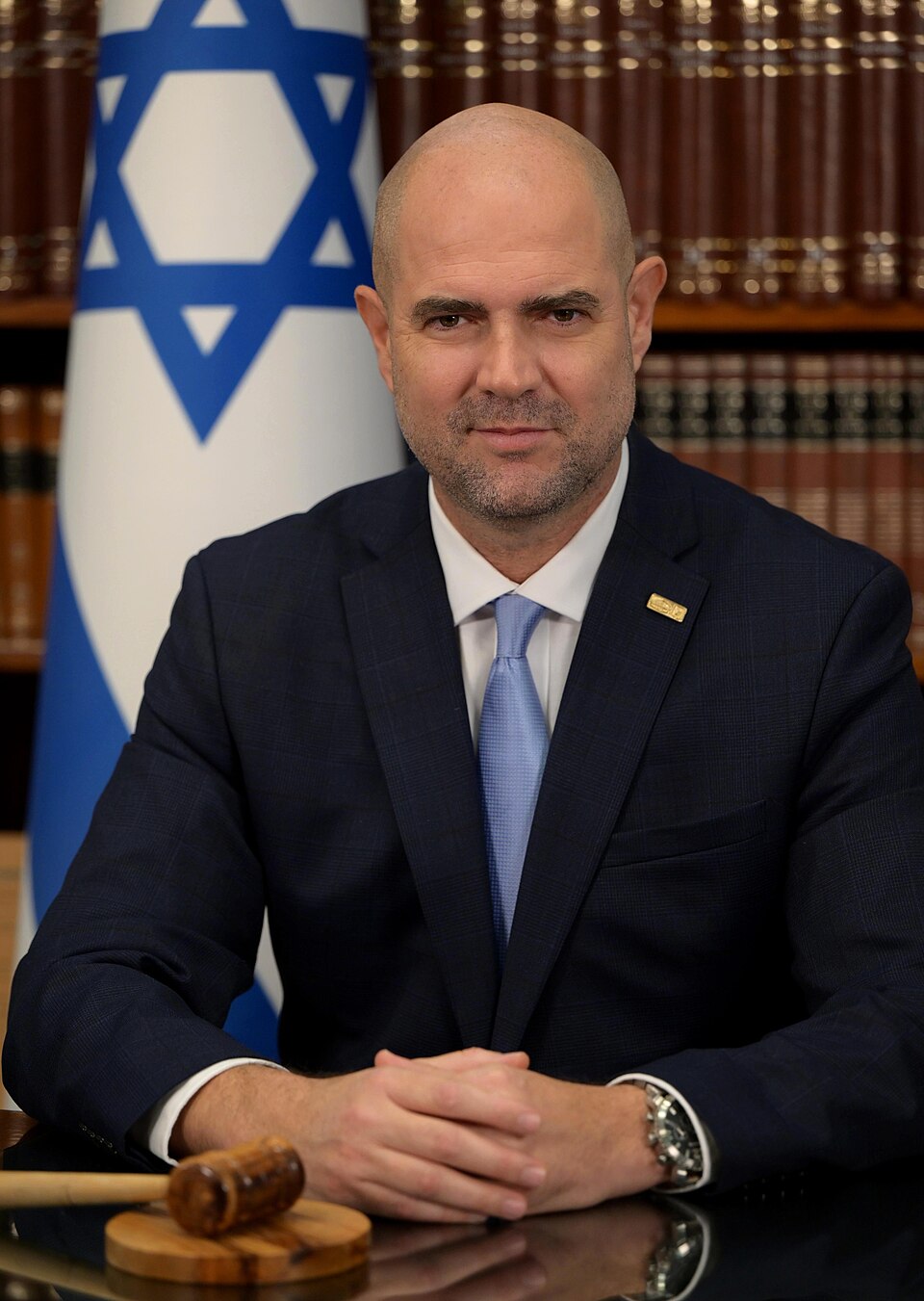

Israel has a new Knesset speaker. Matan Kahana replaced Amir Ohana, the first openly gay person to hold the post, on Nov. 17.
Kahana, a member of Gadi Eisenkot’s Yashar party, received 66 votes. Likud’s Ofir Katz received 52 in a separate vote, The Jerusalem Post reported. The decision followed a six-hour filibuster by Benjamin Netanyahu’s bloc.
“The Knesset of Israel is the home of all citizens of the State of Israel, and I intend to be the speaker for everyone,” Kahana said in his first speech from the chair, according to Reuters copy published by ABC News.
A Request From 67 Lawmakers
The request to replace Ohana came from 67 lawmakers, more than half the Knesset. On Nov. 10, he agreed to hold the vote a week later, Ynet reported. Ohana opposed the move before a new government was sworn in, but said, “I will act as I promised and respect the will of the majority of Knesset members.”
There was a precedent. In 2020, then-speaker Yuli Edelstein tried to prevent lawmakers from voting on his replacement. The High Court ruled that a speaker could not block a vote demanded by a parliamentary majority, Ynet reported. Without that request, Ohana could have remained in office through the coalition negotiations.
The Arab-led Ra’am and Joint List parties backed Kahana along with Eisenkot’s bloc. Likud responded by calling the result “an eternal disgrace” and saying Kahana had won with “the votes of terror supporters,” The Times of Israel and Reuters reported. The Arab-led parties had also been targets during Netanyahu’s campaign, attacks they called “racist and discriminatory,” according to Reuters.
Amir Ohana’s LGBTQ+ Record Before and as Knesset Speaker
Ohana referred to Shira Banki, who was killed at Jerusalem Pride in 2015, in his first Knesset speech that year. The Knesset’s account published Dec. 29 quoted him saying, “when a girl is murdered at the gay pride parade, I’m a gay man.”
He became the first openly gay speaker on Dec. 29, 2022, the day Netanyahu’s new government took office. From the podium he thanked his parents for accepting him “for who I am.” His partner, Alon Haddad, sat in the gallery with the couple’s two children. Ohana called him “the second half of my life for almost 18 years,” The Times of Israel reported, and made the family a promise: “This Knesset, under the leadership of this speaker, won’t hurt them or any other family, period.”
In February 2023, Ohana broke with the coalition to vote for an opposition bill letting same-sex couples adopt. The coalition defeated it 54-37, The Times of Israel reported. That June, he turned down an invitation to speak at the close of an LGBTQ+ rights day run by opposition lawmakers. He cited a meeting with the president of Kazakhstan’s Senate, The Times of Israel’s French edition reported, citing the news site Walla.
Who Is Matan Kahana, the New Knesset Speaker?
A former special forces soldier and fighter pilot, Kahana was minister for religious services in the 2021 to 2022 unity government and joined Yashar in 2025, The Jewish Chronicle reported.
Religious Zionism leader Bezalel Smotrich offered his party’s votes on conditions, among them that no Arab party lawmakers serve as deputy speakers. Kahana answered by letter, The Jerusalem Post reported: “I reject your anti-statesmanlike demand and call on you to respect the democratic process and its results.”
“A new chapter has opened for the Knesset,” Eisenkot said, per The Times of Israel.
What Kahana Controls as Eisenkot Tries to Form a Government
The speakership carries considerable influence, including over which bills get a vote, Reuters noted. Kahana pledged that the Knesset would “unequivocally abide by the rulings of the courts,” JTA reported. “The eyes of Israeli citizens are upon us, yet in recent years, we have caused them to lower their gaze in embarrassment,” he said.
Eisenkot’s bloc wants an independent inquiry into the Oct. 7, 2023, attack. It also wants prime ministerial term limits and repeal of laws passed under Netanyahu’s last government.
Eisenkot still had to assemble a government when Kahana won the speakership. After the Oct. 27 election, President Isaac Herzog had given him 28 days to do so, with the possibility of a 14-day extension, The Jewish Chronicle reported. Netanyahu was still caretaker prime minister on the day of the vote.
Featured photo: Avi Ohayon / Government Press Office of Israel, CC BY-SA 3.0.