


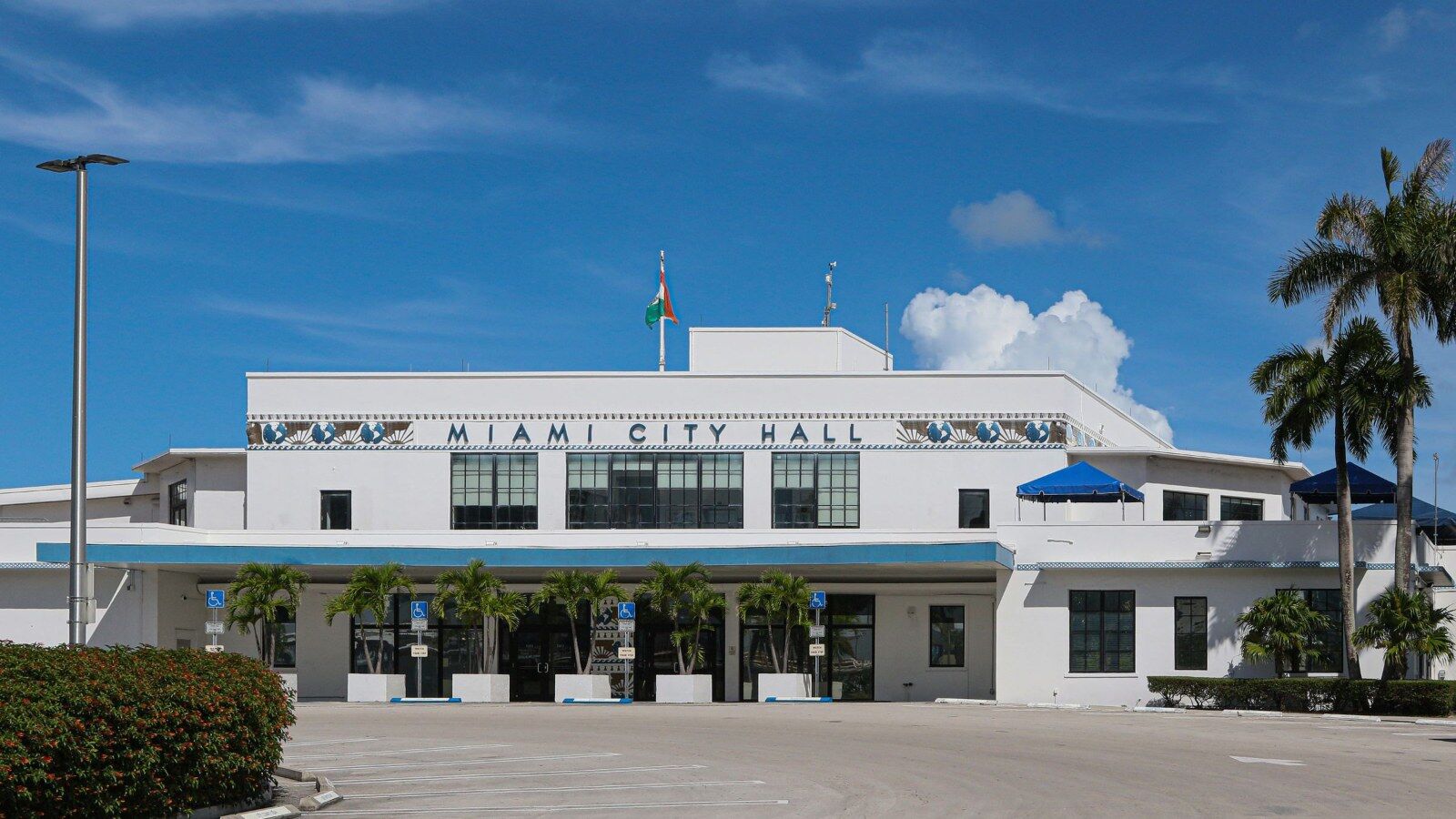
Miami’s LGBTQ Advisory Board would lose nearly all its listed duties under a proposal heading to the City Commission. Commissioners are scheduled to take a first vote Thursday, Nov. 19, as the city prepares for Florida’s new restrictions on local diversity, equity and inclusion programs.
The proposed ordinance would remove 12 of the board’s 13 duties and its designated city attorney. The board would remain as a body of nonelected volunteers with basic administrative support.
The proposal appears on the Nov. 19 meeting agenda. The meeting begins at 9 a.m. at City Hall, 3500 Pan American Drive. This is a first-reading vote; passage would not be final adoption.
What the LGBTQ Advisory Board Would Lose
The deleted responsibilities include advising commissioners on LGBTQ issues, addressing homophobia and transphobia, encouraging understanding of the community and attracting LGBTQ businesses.
The remaining duty would allow the board to carry out assignments the commission gives it by resolution. The proposal also removes the provision making the city attorney its legal counsel.
Commissioners created the board in February 2020, according to the city’s board page. It was designed to give LGBTQ residents a formal voice in local government.
The same ordinance would repeal Miami’s Equal Opportunity and Diversity Programs office, affirmative action policy and Equal Opportunity Advisory Board. It includes a provision restoring the LGBTQ board’s prior code language if the state restrictions are repealed or found unconstitutional.
What Florida’s SB 1134 Says
Gov. Ron DeSantis signed SB 1134 on April 22. The law takes effect Jan. 1, 2027.
The municipal provisions, now Section 166.04971 of Florida law, broadly restrict local governments from funding, promoting or taking official action involving DEI as the statute defines it. Residents can sue over violations, and officials can face findings of misfeasance or malfeasance.
The law also contains exceptions. It exempts actions by bodies composed of nonelected volunteers, along with basic administrative support for those bodies. That support exception does not cover an employee whose sole function is providing it.
Those provisions matter because Miami’s proposal would retain the volunteer board while removing its standing responsibilities.
Legal Guidance Recognizes a Volunteer-Board Exemption
A May 8 memo to the Florida League of Cities identifies the exemption for entirely volunteer boards. Attorney Michael Spellman wrote that their actions and basic administrative support remain permitted.
He cautioned that a local official sitting on a board in an ex officio role could jeopardize that exception. His memo also identifies protections for ordinary equal-employment-opportunity compliance, neutral event permitting and actions required by state or federal law.
The practical question for Miami is how it will apply those exceptions when deciding which responsibilities the board can keep.
Damian Pardo Plans to Vote No
Commissioner Damian Pardo told The Florida Trib he would oppose the ordinance. He criticized the state law as targeting LGBTQ residents and other groups and called for its repeal.
“All of this hurts us,” Pardo said. “It hurts our economy. It hurts our brand throughout the world.”
The Trib reported that a second vote would be necessary after first-reading approval. Mayor Eileen Higgins cannot vote on the commission but has veto power; she had not answered the outlet’s question about a possible veto when it published.
Other Florida cities are already changing plans ahead of the January deadline. Delray Beach said it would not host Pride or its St. Patrick’s Day Parade in 2027. Lake Worth Beach secured a 20-year lease for the Compass LGBTQ+ center before the law takes effect.


