


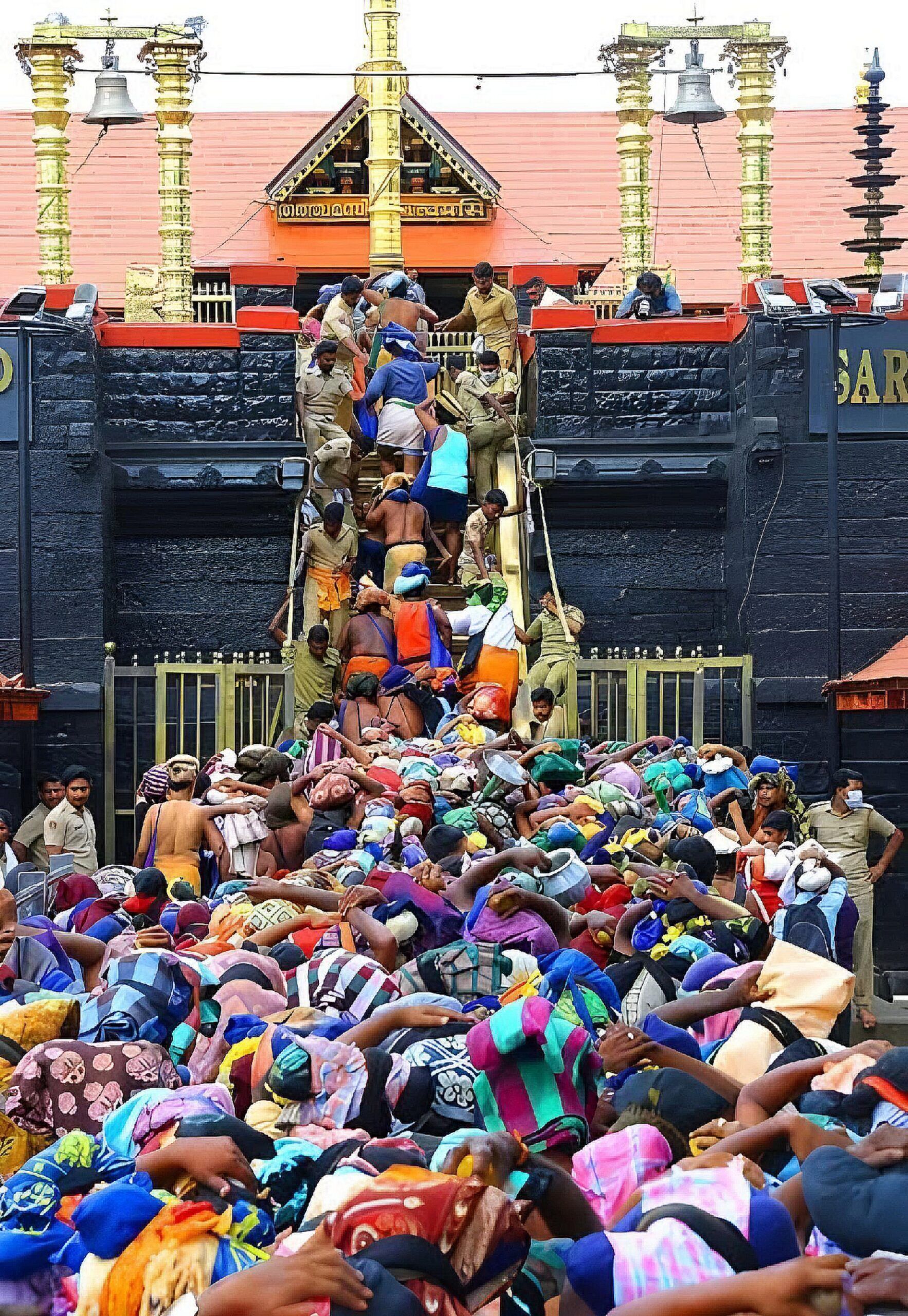
Keralam’s government has backed a demand that a transgender woman provide medical documentation before entering Sabarimala temple. In a Kerala High Court filing, the state supported the Travancore Devaswom Board’s position and opposed her petition for permission to worship.
The board said it could not admit her without a medical examination and certification from a competent authority, the Press Trust of India reported Nov. 12 in a story carried by Deccan Herald. That is the position authorities have put before the court, rather than a new requirement ordered by the judges.
The government argues that the temple must preserve its customs while broader questions about entry rules remain before the Supreme Court. The Times of India reported that argument from the state’s affidavit on Nov. 11.
Why Sathyashri Sharmila Went to Court
Sathyashri Sharmila Rehemathali, a trans woman from Tamil Nadu, filed her petition after police stopped her at Pamba on Aug. 20. She says she had already completed the pilgrimage twice that year, on Jan. 3 and April 15.
The Kerala High Court sought the state’s response in August, Bar and Bench reported. Her petition alleges that officers said the board had directed them not to allow transgender pilgrims to proceed.
Her earlier visits are central to the dispute. She is challenging why she could worship on those occasions but was subsequently stopped because of her gender identity.
The petition invokes Section 3(e) of the Transgender Persons (Protection of Rights) Act, 2019. That provision prohibits discrimination against transgender people in access to services, facilities and opportunities available to the public.
The Temple Board’s Position
The board told the court it lacks the authority to determine the petitioner’s physical or biological characteristics. It says official medical verification is necessary to apply the shrine’s age- and gender-based customs.
The state has adopted that position. Its affidavit argues that the board and temple administration must preserve established religious practices while the Supreme Court considers the wider legal questions.
The Wider Sabarimala Case
In September 2018, a five-judge Supreme Court bench ruled 4–1 that Sabarimala’s exclusion of women ages 10–50 was unconstitutional. The majority found that the practice violated women’s fundamental rights, as Supreme Court Observer explains.
Review proceedings later raised broader questions about religious freedom and judicial scrutiny of religious practices. Those proceedings provide the context for the state’s latest argument, but they are distinct from Sharmila’s challenge to her own exclusion.
A Separate Fight Over Transgender Identity
The case also comes after India changed its transgender-rights law in 2026. The amendment removed the statutory provision recognizing self-perceived gender identity and added medical-board scrutiny to identity certification.
The changes took effect May 25 and face a Supreme Court challenge, Supreme Court Observer reported. Activist Laxmi Narayan Tripathi is among those arguing that the amendment violates constitutional protections for equality, dignity and autonomy.
Those national proceedings concern the identity-certification framework. Sharmila’s petition asks the Kerala High Court to address her access to a specific place of worship.
Gayety has also reported on a separate Bombay High Court case involving a transgender woman’s legal protections.


