

The festival may be over, but some stories don’t end when the credits roll. That’s the case with two standout documentaries from the Sebastopol Documentary Film Festival—Any Other Way: The Jackie Shane Story and Barbara Forever. Both films center on artists whose legacies were nearly lost, and both feel urgent in a moment when queer history is still being contested.
I had the chance to speak with the filmmakers behind each project, and what emerged wasn’t just a look at craft, but a deeper conversation about authorship, memory, and who gets remembered.
Letting Jackie Shane Speak for Herself
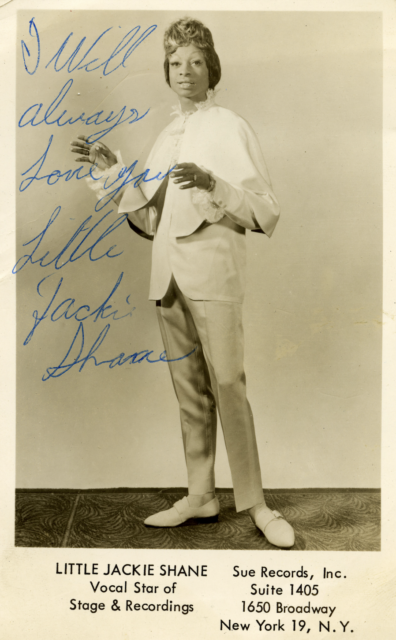
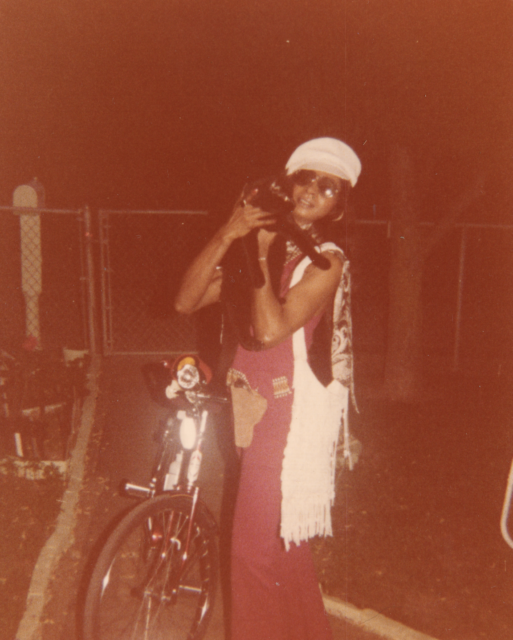
Any Other Way: The Jackie Shane Story brings back a voice that was almost erased. Jackie Shane, a Black trans soul singer who once outperformed legends like Etta James and Little Richard, stepped away from the spotlight and disappeared for decades.
Director Michael Mabbott didn’t expect the film’s emotional core to come from hours of recorded phone conversations with Shane herself.

“The recordings weren’t initially intended to be used in the film,” he told me. “But, as you know, Jackie passed away before we started filming. It was vitally important to us to have Jackie tell her own story, in her own words, in her own voice.”
That decision shapes the entire film. Instead of outside narration, Shane’s voice leads. Her humor and warmth come through in a way that feels immediate.
“Her voice and her words completely shaped the emotional core of the film,” Mabbott said. “Significantly, the joy that she exuded in these conversations was an incredibly powerful and inspirational guide for us.”
The film also leans on rotoscope animation to bring those recordings to life. It’s a striking choice, but not just stylistic.
“It allowed the audience to be part of the intimacy of the conversations,” he explained. “And it allowed us to show the distance that Jackie put between herself and the world when she became a recluse.”
The result is less a standard documentary and more a reconstruction of presence, one that feels personal without crossing boundaries. Mabbott emphasized that respect guided every choice.
“Jackie left us such an enormous treasure trove of material… If something she said in a phone conversation felt like it was a breach of her boundaries… we could find another way to get to the same point.”
Rewriting the Record On Her Terms
If Jackie Shane’s story is about reclaiming a voice, Barbara Forever is about amplifying one that never stopped speaking.
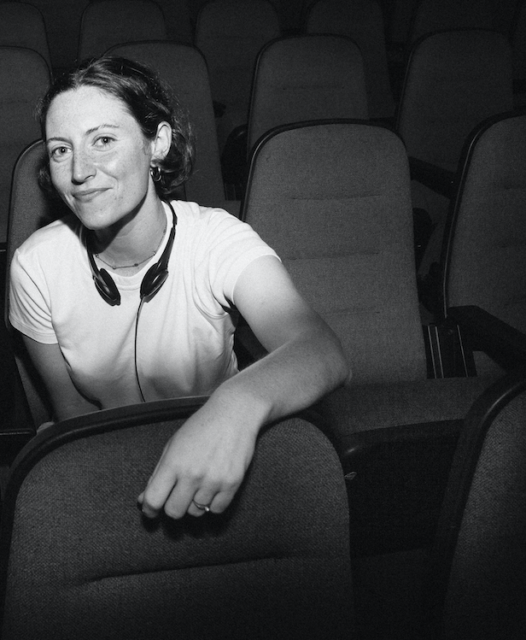
Barbara Hammer, a pioneering lesbian filmmaker, documented her life with intention: her body, her relationships, her art. Director Brydie O’Connor approached the film as a collaboration across time.
“Interrogating why Barbara turned the camera on herself… was the guiding principle of our edit,” O’Connor said. “It helped us shape our narrative arc of what it means to exist in a lesbian body from birth to death.”
Rather than treating archival footage as static, the film pushes it into the present.
“We were really invigorated by the idea of Barbara having a hand in her own legacy,” O’Connor said. “We wanted to further embed this framework of the ‘living archive’ into each of the chapters of her life.”
That concept carries weight beyond the screen. Hammer’s work exists as both art and resistance, an insistence on being seen.
“In this context, Barbara’s work reads not only as a record, but as a form of resistance,” O’Connor said. “A refusal to be erased, and a reminder that documenting one’s own life can be an act of survival.”
The film doesn’t smooth over contradictions. It leans into them, showing how closely Hammer’s art and personal life were intertwined.
“Her films directly reflected her lived experience… and so the stakes were always very real,” O’Connor added.

Why These Stories Matter Now
Both films circle the same question: who gets remembered?
For Jackie Shane, the answer is tied to systemic erasure, but also to her own choices as an artist.
“She preferred to play smaller venues where she could make this connection with her audience on a profound and personal level,” Mabbott said. “That meant she didn’t have the same profile.”
For Barbara Hammer, the answer was to document everything, to leave nothing up to chance.
“I was so inspired by her insistence that her… films be recognized as valid markers of history,” O’Connor said.
What connects these stories is intention. One artist stepped away and trusted her voice would carry. The other documented every step to ensure it would.
Watching both films, it’s hard not to think about how much queer history still depends on who chooses to preserve it, and who gets the chance.
And if there’s a takeaway that lingers, it’s this: the archive isn’t just about the past. It’s about who gets to exist in the future.


