


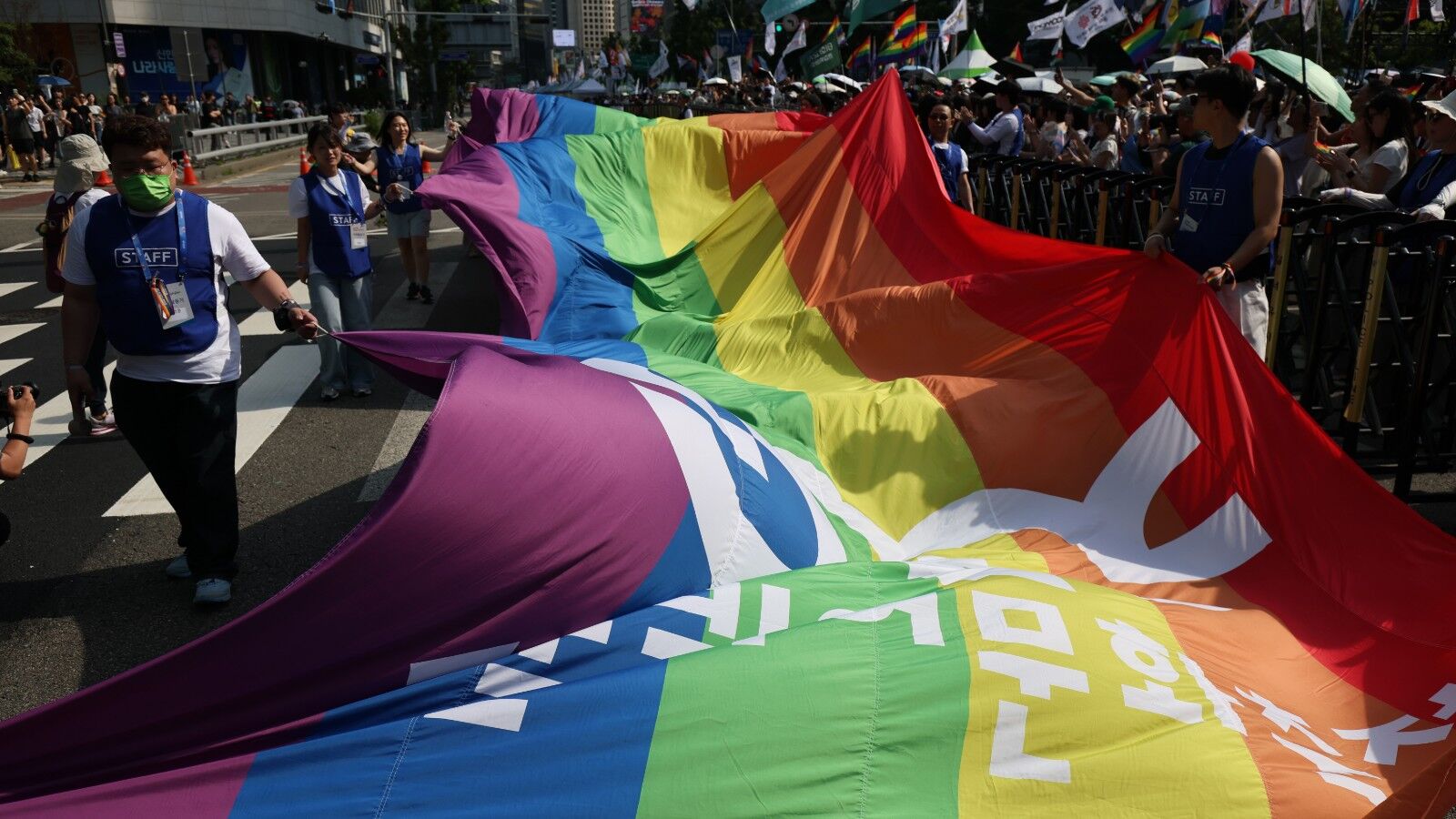
South Korea’s Ministry of Gender Equality and Family says it will fix a government youth counseling manual that listed homosexuality as an example of a delinquency-related problem, next to sexual violence, theft and drugs.
“We regret that the classification of content concerning sexual minorities as a type of delinquency-related problem in the manual has caused discomfort and concern to sexual minority youth and those involved,” the ministry said Wednesday, Nov. 4, the Korea Herald reported.
The Korea Youth Counseling & Welfare Institute, which is affiliated with the ministry, publishes the guide for Youth Companions, counselors who go out to meet young people in crisis. The program is “a flagship support system of youth counseling and welfare centers nationwide,” the LGBTIQ youth center Ddingdong and other groups said in a joint statement. (Quotes from Korean-language sources are Gayety’s translations.)
What South Korea’s Youth Counseling Manual Said About Homosexuality
Under “delinquency-related problems,” a subsection of the manual’s “problem areas,” the Youth Companion Activity Manual listed “sex (sexual violence, homosexuality, etc.), theft, drugs, etc.,” according to OhmyNews and Ddingdong’s statement.
The news site Chamsesang first reported the passage on Nov. 2, OhmyNews said, adding that the wording dates to the third revised edition, in December 2019, and stayed in the fourth, published in December 2025.
Asked by Chamsesang whether it considers homosexuality delinquency, the ministry said, “Of course not,” OhmyNews reported. It added, “There could be room for misunderstanding.”
The text was written “on the premise that counseling is provided for every type of crisis without discrimination,” the ministry said. The institute also said it doesn’t view homosexuality as delinquency and would fix the manual “as quickly as possible.”
Ministry of Gender Equality and Family Promises an Immediate Fix
Two days after the first report, the ministry said it would “immediately correct” the content and revise the rest of the manual with advice from counseling experts, according to Women News and Kyunghyang Shinmun. Neither paper reported a date for a corrected edition.
It would “strive so that all youth can receive counseling and protection without discrimination,” the statement said.
Kyunghyang reported that the ministry also plans in-person training for counselors on protecting the rights of sexual-minority youth, on top of online courses that already cover youth sexual identity.
Korea Still Has No Comprehensive Anti-Discrimination Law
Bills for a broad anti-discrimination law have stalled since a 2007 government proposal, the Korea Herald reported in April.
“Anti-discrimination legislation is highly significant, as it would provide effective remedies against unfair treatment of diverse families within our policy scope,” Minister of Gender Equality and Family Won Min-kyong said in June, the Korea Times reported. She named single-parent families and families with migrant backgrounds. “I think the debate should be led by the National Assembly and the government ministries directly responsible for drafting the relevant laws,” she said.
Officials said then that, given existing Supreme Court precedent, recognizing same-sex marriage would take a new law, the Times reported. The Supreme Court did side with a same-sex couple in 2024 on health insurance benefits, and statistics officials said last year that the census would accept same-sex couples’ answers of “spouse” or “cohabiting partner.”
Article 92-6 of the Military Criminal Act punishes anal intercourse and “any other indecent act” between same-sex soldiers with up to two years in prison. In April 2022, the Supreme Court overturned the convictions of two soldiers prosecuted for consensual, off-duty sex at a private home, Human Rights Watch reported. The ruling narrowed how the law can be enforced. The Constitutional Court upheld the provision 5-4 in October 2023, the Korea Times reported.
Human Rights Watch reported in 2021 that LGBT students it interviewed said they “were not comfortable confiding in teachers or counselors.” “Without clear protections, many students suffer in silence at the expense of their education and well-being,” HRW researcher Ryan Thoreson said.
109 Groups Including Ddingdong Demand the Manual’s Recall
Ddingdong, which says it’s “dedicated to supporting LGBTIQ youth in crisis in Korea,” posted the joint statement Nov. 4 with 109 organizations and 36 individuals signed on. Its title opens, “Homosexuality is delinquency?!”
The groups said the manual treats LGBTQ+ youth “as a problem group” instead of asking what support they need. “This is not a problem that will be solved by revising the wording,” they wrote.
“The government itself carved a stigma into the guidelines for the public counseling young people turn to for help,” Kim Na-yul, a spokesperson for the Justice Party, said in a statement, OhmyNews reported. “How can you call it a misunderstanding when it’s written right there in the manual?” the party asked.
“We are living in 2026,” the joint statement said. “No one can be properly supported with an anachronistic and discriminatory perspective.”
The groups want the ministry to recall the manual from youth counseling and welfare centers across the country and rethink it from scratch. “It has to start over from the beginning,” they wrote.


