


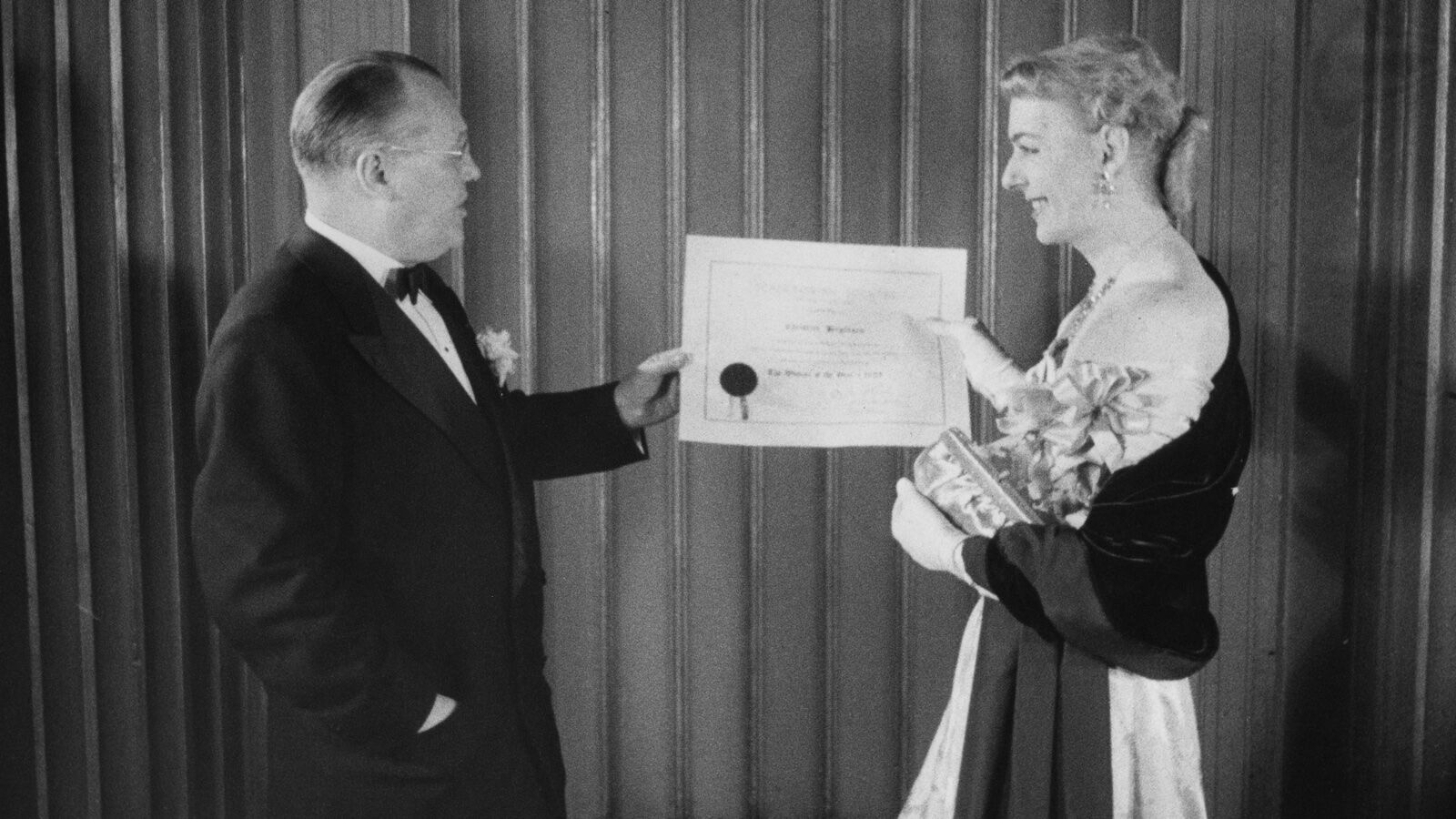
On Dec. 1, 1952, the New York Daily News ran a front-page story by reporter Ben White under the headline “Ex-GI Becomes Blonde Beauty.” The woman in that story was Christine Jorgensen, a 26-year-old Army veteran from the Bronx who had spent more than two years in Copenhagen receiving medical care for her transition, according to the NYC LGBT Historic Sites Project.
Christine Jorgensen (1926 to 1989) was an American trans woman, Army veteran, nightclub entertainer and lecturer. In 1952, news of her hormone treatment and surgeries in Denmark made her one of the best-known trans people in the world. She published her autobiography in 1967 and died in San Clemente, California, in 1989.

Christine Jorgensen’s Timeline, From the Bronx to San Clemente
| Year | What happened |
|---|---|
| 1926 | Born May 30 in the Bronx, New York |
| 1945 | Begins service in the U.S. Army |
| 1950 | Leaves for Denmark in April |
| 1952 | Daily News front-page story runs Dec. 1 |
| 1953 | Returns to New York on Feb. 13 |
| 1959 | Denied a marriage license in April |
| 1967 | Publishes Christine Jorgensen: A Personal Autobiography |
| 1970 | The Christine Jorgensen Story opens in theaters |
| 1989 | Dies May 3 in San Clemente, California |
| 2019 | Named to the National LGBTQ Wall of Honor |
The chronology draws on Biography.com, Making Gay History, the NYC LGBT Historic Sites Project and Mental Floss.
A Danish-American Childhood in the Bronx and Army Service
Jorgensen was born May 30, 1926, and grew up in a close-knit Danish-American family in the Bronx, Making Gay History reports. Home was 2847 Dudley Avenue in the Pelham Bay section, a two-family house her father’s construction company built a few years before she was born, according to the NYC LGBT Historic Sites Project, which includes the house in its survey of LGBTQ places in the city. As a teenager she felt “lost between the sexes,” Biography.com says.
She began Army service in 1945 and worked as a clerk at Fort Dix, New Jersey, per Biography.com. She left the Army in December 1946, Mental Floss writes. She studied photography on the G.I. Bill, read Paul de Kruif’s The Male Hormone and started taking estrogen on her own.
Copenhagen, Dr. Christian Hamburger and the Name Christine
Jorgensen left for Denmark in April 1950, and her treatment there began that August, the NYC LGBT Historic Sites Project reports. Christian Hamburger, a Danish endocrinologist, agreed to give her hormone therapy for free, Mental Floss writes. She chose the first name Christine in his honor.
In a 1957 interview with entertainer Nipsey Russell, later released on LP, she discussed her treatment and the life it made possible. Without it, she told him, “I’d have gone on existing. But I would hardly have gone on living.” Making Gay History’s June 18, 2026, episode includes the recording.
The 1952 Daily News Story and a Crowd at Idlewild Airport
Reporters hounded her parents at the Dudley Avenue house until the family went to stay with relatives nearby, according to the NYC LGBT Historic Sites Project. In a June 1952 letter, quoted by Mental Floss and Making Gay History, she had already told them, “I am now your daughter.”
When she flew home on Feb. 13, 1953, about 300 reporters and photographers were waiting at Idlewild Airport in Queens, now JFK, Making Gay History reports. She sold an exclusive series to The American Weekly for $20,000, Mental Floss says. Biography.com notes she decided that if people wanted to see her, they’d have to pay.

Christine Jorgensen’s Nightclub Act, Records and Lectures
Back in New York, Jorgensen became a patient of Dr. Harry Benjamin, and that summer she started performing, per the NYC LGBT Historic Sites Project. Her manager, Charlie Yates, pushed her toward a touring nightclub act, Mental Floss writes. She was known for singing “I Enjoy Being a Girl,” Mental Floss writes, and she did impressions of stars such as Marlene Dietrich and Tallulah Bankhead and kept performing into the 1980s, according to Making Gay History.
She also recorded. The 1957 Nipsey Russell interview came out in 1958 on J Records under the title Christine Jorgensen Reveals, a title she didn’t want, Making Gay History says.
Lecturing became a second career. She spoke often on college and university campuses about her life as a trans woman, Making Gay History and the NYC LGBT Historic Sites Project both report.

Her 1967 Autobiography and the 1970 Film
Christine Jorgensen: A Personal Autobiography came out in 1967. Historian Joanne Meyerowitz writes that its paperback edition sold nearly 450,000 copies in her account of Jorgensen’s public life. Cleis Press later reissued the book with an introduction by historian Susan Stryker, the NYC LGBT Historic Sites Project notes.
Irving Rapper directed The Christine Jorgensen Story (1970), Mental Floss reports, and United Artists released it, per Making Gay History.
The 1959 Marriage License Denial and Her Final Years
Jorgensen’s plans to marry Howard J. Knox were blocked in 1959. Making Gay History reports that New York refused the couple a marriage license because her birth certificate listed her as male. She never married.
In the early 1970s she moved to Southern California, Biography.com says. She was diagnosed with bladder and lung cancer in 1987, Mental Floss writes, and she died in San Clemente on May 3, 1989, at 62, according to Biography.com.
Was Christine Jorgensen the First Trans Woman to Have Surgery?
No. Trans women, including Dora Richter in Germany, received transition-related surgery before Jorgensen. Her fame should not be mistaken for the beginning of trans medical history. What changed in 1952 was the scale of the publicity around her life.
Christine Jorgensen’s Honors and Where to See Her Today
In 2019, Jorgensen was one of the 50 inaugural honorees on the National LGBTQ Wall of Honor at the Stonewall Inn. The National LGBTQ Task Force’s announcement includes her among the people recognized for their contributions to LGBTQ history.
The Transgender Media Portal lists archive footage of her in the documentaries Disclosure: Trans Lives on Screen (2020) and Framing Agnes (2022), plus a 1953 travel film she directed and shot herself. Read Gayety’s profiles of the Public Universal Friend and Marsha P. Johnson, its guide to Transgender Day of Visibility and its explainer on AFAB and AMAB meaning, or browse more queer history.
Christine Jorgensen FAQ: Fame, Headline and Death
Who was Christine Jorgensen?
Christine Jorgensen (1926 to 1989) was an American trans woman, Army veteran, entertainer and lecturer from the Bronx. News of her medical transition in Denmark made her internationally famous in 1952.
Why was Christine Jorgensen famous?
A Dec. 1, 1952, New York Daily News front-page story reported her transition in Copenhagen, and about 300 reporters met her flight home in 1953. She built a nightclub and lecture career from that fame.
Was Christine Jorgensen the first transgender person to have surgery?
No. Trans women including Dora Richter received transition-related surgery before Jorgensen. The 1952 publicity made Jorgensen internationally famous, but she was not the first trans person to receive medical care.
What was the Daily News headline about Christine Jorgensen?
The headline on Dec. 1, 1952, read “Ex-GI Becomes Blonde Beauty.” Reporter Ben White wrote the front-page story.
How did Christine Jorgensen die?
Christine Jorgensen died of bladder and lung cancer on May 3, 1989, in San Clemente, California. She was 62 and had been diagnosed in 1987.
Is there a movie about Christine Jorgensen?
Yes. Irving Rapper directed The Christine Jorgensen Story (1970), based on her 1967 autobiography. Archive footage of her also appears in Disclosure (2020) and Framing Agnes (2022).


