


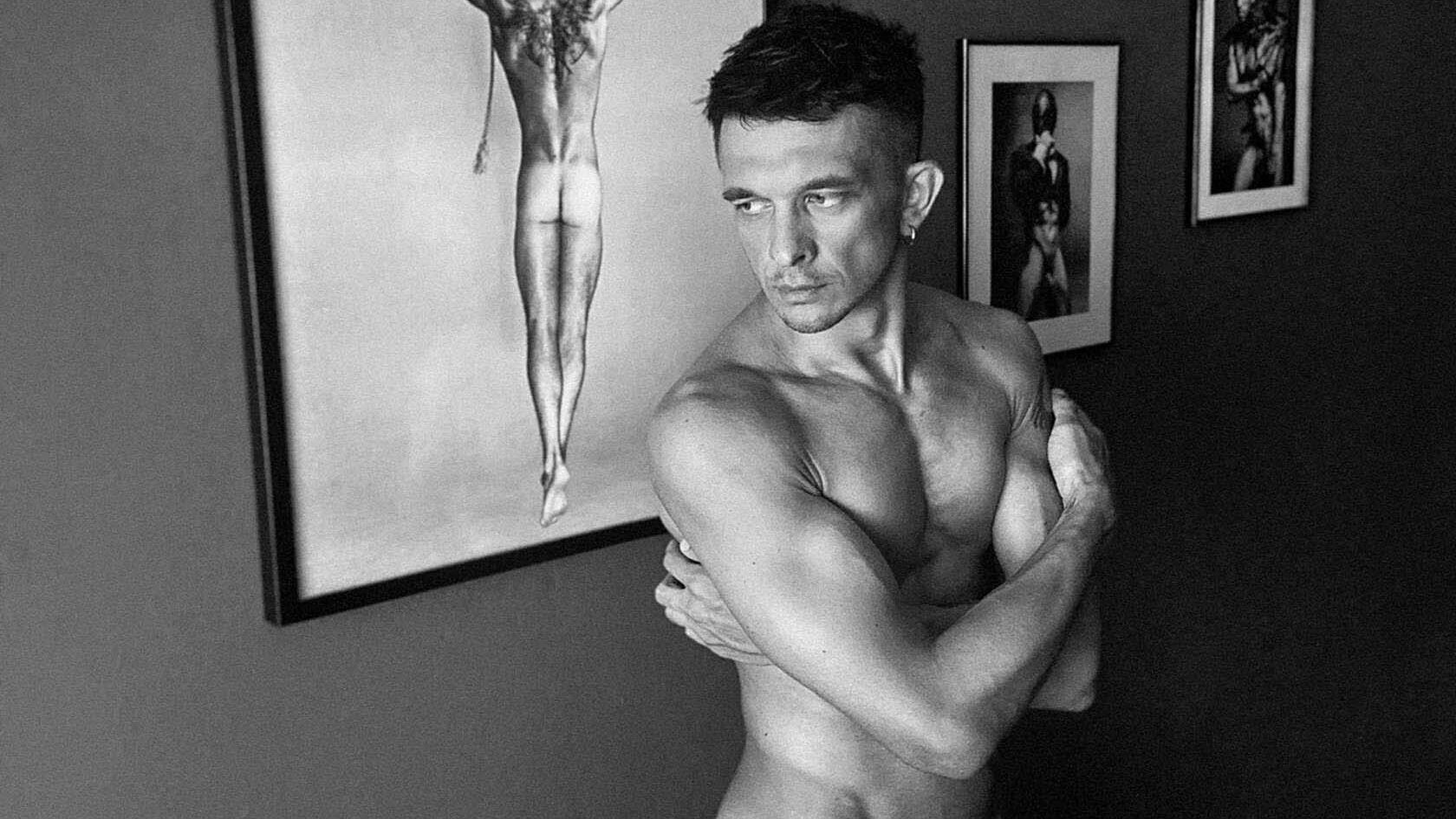
Dmytro Komissarenko’s self-portraits don’t shy away from the sensual. They lean into it. His work captures the provocative pull of the male physique with confidence and control, presenting the body as something to be studied, admired, and, yes, desired.
It helps that Komissarenko is in incredible shape. The chiseled features. The deliberate framing. And with a member like that, let’s be honest, most people would be taking a lot of photos of themselves, too. What separates his images from simple vanity, though, is intention. These aren’t throwaway shots. They’re constructed moments that feel considered even when they look effortless.


Selfies vs. Self-Portraits, Revisited
Komissarenko draws a firm line between selfies and self-portraits, and it’s a distinction that matters when reading his work. A selfie, to him, is quick and reactive. A self-portrait is planned, shaped by light, posture, and emotional direction.
That distinction becomes especially clear in his frequent use of mirrors. Rather than feeling casual, these mirror compositions highlight the curves, tension, and crevices of his body. They allow him to present himself from multiple angles at once, turning reflection into a tool rather than a shortcut.

Why Black and White Works So Well
Much of Komissarenko’s photography lives in black and white, a choice that keeps the images intimate rather than flashy. Without color pulling focus, the eye lingers on texture, shadow, and form. The absence of color makes the work feel quieter, even when the subject matter is overtly sexual.
That restraint gives the images their staying power. Black and white strips away excess and keeps the viewer focused on what’s happening inside the frame, not just what’s exposed, but how it’s presented.
Objectivity, Vulnerability, and Control
Photographing yourself comes with its own set of challenges. Komissarenko acknowledges that self-critique doesn’t disappear just because you’re the one behind the camera. Certain features feel vulnerable. Certain images take longer to accept.
Still, self-portraiture has become a practice in self-acceptance. Each image is an exercise in seeing himself clearly, without rushing past discomfort. That balance between vulnerability and control is what gives the work its charge.
Sex, Intimacy, and “Art Porn”
Some of Komissarenko’s most talked-about images exist in the space between erotic photography and pornography. For him, the difference comes down to intent. Sexuality can be direct without being empty. Lust doesn’t have to cancel out meaning.
Series like Helping Hand and Confession of Roses use explicit imagery as metaphor rather than destination. The images invite interpretation instead of consumption, asking viewers to look beyond arousal.
Letting the Work Speak
Komissarenko believes most things worth knowing about him are already present in his photography, if viewers are willing to slow down and look. Not everyone will, and that’s part of the exchange.
In the end, his self-portraits aren’t about permission or performance. They’re about ownership. Of the body. Of the gaze. And of the narrative that comes with both.
To see the full gallery and explore more stories like this, Gayety’s Substack has you covered.


