


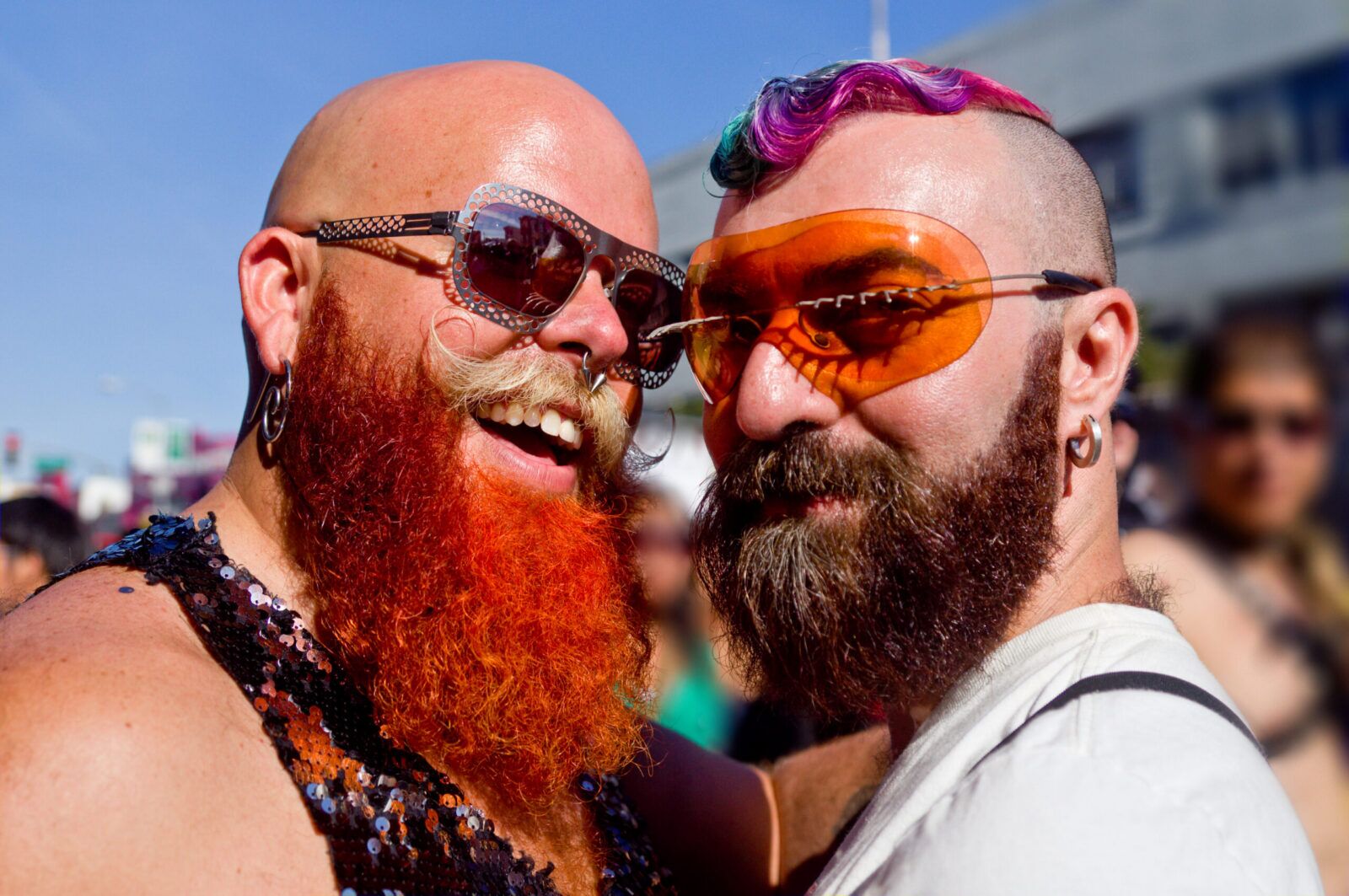
A hairy guy can be a bear, an otter or a wolf. Add muscle and the possibilities multiply. Add gray hair and someone will suggest “polar bear.” I enjoy the vocabulary. I’m less keen on strangers treating another person’s body as a sorting exercise.
Gay tribes are informal labels for body type, age, style, attraction or community. Bear, otter, twink, twunk and daddy are some of the names gay and bi men use. They can help you find people who share your interests, or explain something about yourself in a cramped dating profile.
Start with what a person calls themselves. The definitions below explain common uses, including the differences people tend to ask about. None is an entrance requirement. You can belong without choosing a name, and you can choose more than one.
Jump to: Label chart · Bear vs. otter vs. twink · Bear history · Using labels · Common questions
Gay Tribes Chart: What the Labels Mean
| Label | Meaning and context |
|---|---|
| Bear | A bear is usually a larger, hairy man, often with a beard. The label also describes a community. |
| Cub | A cub is a younger or younger-looking bear, sometimes with a smaller build. There is no fixed age cutoff. |
| Polar bear | A polar bear is a bear with gray or white hair. The term describes appearance, not a required age. |
| Muscle bear | A muscle bear combines body hair with a muscular build. The label does not prescribe personality or sexual preferences. |
| Otter | An otter is usually a lean or slim adult with body hair. Think of a smaller frame than the stereotypical bear. |
| Wolf | A wolf is typically a hairy man with a lean or muscular build. Usage overlaps with otter and muscle bear. |
| Chub | A chub is a heavier-set man who uses that label. Chub and bear communities overlap, but the terms differ. |
| Chaser | A chaser is someone attracted to a particular type, such as bears or chubs. It describes attraction, not body shape. |
| Twink | A twink is a slim, smooth or lightly haired, youthful-looking adult. The label has no official age limit. |
| Twunk | A twunk combines the youthful appearance associated with a twink with a more muscular build. Body hair varies. |
| Jock | A jock identifies with athleticism, sports or a sporty look. The word alone does not specify a physique or sport. |
| Gym bunny | A gym bunny spends considerable time working out, often with an emphasis on physique. Usage overlaps with gym rat. |
| Daddy | A daddy may be older or identify with confidence and a caretaking role. The label does not automatically imply dominance. |
| Silver fox | A silver fox is a gray-haired adult someone finds attractive. It describes appearance rather than a relationship role. |
| Leather | Leather describes an interest in leather gear and its surrounding culture, including clubs and community traditions. It is not a body type. |
| Pup | A pup adopts a puppy persona through consensual adult role-play. The label alone does not specify someone’s activities or boundaries. |
| Femme and masc | Femme and masc describe feminine or masculine presentation. Either can overlap with other labels and neither determines sexual role. |
For app terminology, Grindr’s tag glossary is a useful starting point. I’ve used it alongside the sources discussed below. Its definitions explain tags on Grindr; they aren’t binding rules for every bar, group or person.
Bear vs. Otter vs. Twink vs. Twunk
Hair and build give you the quickest comparison. Bear and otter both suggest body hair, with otter generally describing a slimmer frame. Twink suggests a slim, smooth or lightly haired adult with a youthful look. Twunk adds muscle to that youthful appearance.
Picture a lean man with a hairy chest. “Otter” might suit him. If he builds muscle, he might prefer wolf or muscle bear, or stick with otter. I would not make him defend the choice. These are overlapping descriptions, and people bring their own associations to them.
The chart cannot tell you who bottoms, who wants a relationship or who feels femme. A bear can be feminine. A twink can top. Nor does looking like a familiar “type” invite someone to approach, touch or assign a label. Ask the person.
Why Daddy vs. Bear Is a Different Comparison
Daddy can refer to age, confidence or a relationship dynamic. Bear usually describes hair, build and community. So the same person might use both words without contradiction. Silver fox is different again: it draws attention to gray hair someone finds attractive.
Jock vs. Twunk: Interests or Appearance?
A jock has an association with athleticism, sports or a sporty look. Twunk describes a youthful, muscular appearance. You cannot read a training schedule from either word. Someone may play recreational softball, enjoy lifting weights or simply like wearing sports gear; a conversation fills in the gaps.
Bear Culture Has a History Beyond the App
Bears were in print well before dating apps. George Mazzei included them in his 1979 Advocate article “Who’s Who at the Zoo?” That gives us a dated example of the word. It doesn’t prove that Mazzei invented it.
Historian Les K. Wright places the development of bear culture in 1980s San Francisco. Bigger, hairier men built places to socialize and feel welcome. Richard Bulger and Chris Nelson launched BEAR magazine in 1987. The Bear History Project collection at Cornell holds Wright’s newsletters, club records and other community writing.
Those records matter. A body-type glossary alone leaves out the work of putting together clubs, publications and gatherings. When someone says “bear,” they may be telling you where they feel at home as well as describing their build.
The flag arrived in 1995. The Human Rights Campaign credits Craig Byrnes and Paul Witzkoske with designing the International Bear Brotherhood Flag. San Francisco’s International Bear Rendezvous also began in 1995. The GLBT Historical Society records its run through 2011, including the International Mr. Bear competition.

Bears, Cubs, Polar Bears and Muscle Bears
Bear usually brings to mind a bigger, hairy man, often with a beard. Grindr’s bear guide also describes a community welcoming people of different genders. That broader use is worth remembering before treating a chest, waist or beard as a membership test.
Cub suggests a younger or younger-looking bear, sometimes with a smaller build. There is no birthday that automatically changes a cub into something else. Polar bear points to gray or white hair. Muscle bear combines the hair associated with bears and a muscular physique.
I’d resist adding a personality to those descriptions. A broad chest doesn’t establish dominance. A white beard doesn’t promise a caretaking role. If someone wants you to know about those parts of their life, they can tell you.
Otters, Wolves, Chubs and Chasers
An otter is generally lean or slim and hairy. That is the distinction in Grindr’s glossary. An otter can dress or act femme without surrendering the word. Gender expression and body hair are separate matters.
Wolf usually describes a hairy man with a lean or muscular build. Grindr’s slang guide associates it with a rugged, masculine look. There is obvious overlap with otter and muscle bear. Claims about a wolf’s supposedly assertive personality are another matter; appearance cannot establish that.
Chub describes a heavier-set man who uses the label. Chub and bear communities overlap, although the words aren’t interchangeable. Chaser tells you about attraction instead of build. A chubby chaser is attracted to chubs; a bear chaser is attracted to bears.
That distinction is easy to miss in a long list. A chaser can have any body type. The word describes whom they like, while chub describes how somebody may identify their own body.
Twink and Twunk: Meaning, Age and the Origin Question
A twink is a slim, smooth or lightly haired adult with a youthful appearance. The word often refers to gay or bi men in their late teens or twenties. “Often” matters here. There is no official age at which a person must stop using it.
Linguist Arnold Zwicky examined the dictionary evidence for twink, including a 1963 citation in American Speech. That establishes an early recorded use. It cannot establish the first time anybody said the word. The familiar story connecting it to Twinkie snack cakes remains uncertain.
A twunk combines twink and hunk: a youthful-looking adult with more muscle. Body hair varies. The term offers another description, rather than a compulsory promotion for someone who has started lifting.
I’d be especially careful when somebody else’s age becomes the joke. A person who calls himself a twink may enjoy the word. That doesn’t mean he wants strangers assessing whether he still qualifies. Follow his wording, and leave the body audit out of the conversation.
Jocks, Gym Bunnies, Daddies and Silver Foxes
Jock points toward athleticism or sport. Grindr’s glossary includes people who play, or have played, sports. Gym bunny suggests someone who spends considerable time working out, often with an interest in physique. You may also encounter gym rat or muscle guy. Those descriptions overlap without revealing an exact routine.
Daddy needs more context than gray hair. It can describe an older man, but it can also suggest confidence or a caretaking role. Grindr’s guide includes interviews exploring those uses. Fatherhood is not a requirement, and sexual dominance is not an automatic part of the label.
A silver fox is a gray-haired adult someone finds attractive. The hair is the relevant clue. He may also identify as a daddy or a bear, but those are separate choices. Finding someone handsome doesn’t decide what relationship role he wants.
Leather, Pup, Femme and Masc
Several tags describe interests or presentation, which is why a list of “body types” can become confusing. Leather and pup belong in that broader context.
Leather refers to an interest in leather gear and the culture surrounding it: bars, clubs, contests and community traditions. The Leather Archives & Museum preserves the history of leather, kink, BDSM and fetish communities. You can explore that history without treating leather as a particular shape of man.
A pup adopts a puppy persona through consensual adult role-play. A hood or a handler may be involved. Neither tells an observer precisely what the person enjoys or permits. Grindr places pup play within pet play; this is an adult role, not an age category.
Femme and masc refer to feminine and masculine presentation. Either can sit alongside other labels here. Neither tells you whether someone tops or bottoms.
When Labels Become Exclusion
I like a label that makes an introduction easier. I dislike one that tells somebody their body needs fixing. Losing weight, growing a beard or acting more masculine should never be the price of fitting a profile tag.
Consider “masc4masc,” usually shorthand for a masculine-presenting man seeking only masculine-presenting men. I’d leave it off a profile. It can read as “no femmes,” even when someone intends a straightforward description of attraction. You can say what draws you to people without making feminine men the unwanted comparison.
Racial labels need similar care. Assigning an animal category because of somebody’s race imposes a story that person may never have chosen. A 2009 study by Patrick Wilson and colleagues examined racial stereotypes in interviews with men seeking condomless sex with men online. Participants described race-based expectations of partners. Those expectations were stereotypes, and the specific sample cannot stand for all gay men.
If somebody rejects a label, that settles it for me. Their appearance isn’t evidence to use against them. Drop the word and carry on with the conversation.
Using Gay Tribe Labels on Apps and in Person
Give a profile label some company. Here’s an example: “Otter, amateur baker, looking for a Sunday hiking buddy.” Now there is something to respond to besides appearance. If you prefer no label, describe the date or connection you actually want.
In person, ask rather than announce. “Do you call yourself a bear?” leaves the choice open. “You’re definitely a bear” closes it before the other person has spoken. An answer may tell you more about community than body type.
A label can change with your body or interests. It can also stay because the people and history feel like home. Gayety’s coverage of Bear Week in Provincetown offers one example of that community gathering beyond the profile screen.
And if someone chooses a word for you that feels wrong, “I don’t use that for myself” is enough. You don’t owe them a different category. There is a whole person available to get to know.
Gay Tribes Questions and Answers
What is a gay bear?
Usually a larger, hairy gay or bi man, often bearded. Bear also names a community, with its own gatherings and history. Cubs, polar bears and muscle bears are related descriptions. You do not need to perform masculinity to belong.
What does twink mean?
Twink usually describes a slim, smooth or lightly haired adult with a youthful appearance. It often refers to men in their late teens or twenties. There is no official cutoff, and the person gets to choose the word.
What is a twunk?
Twink plus hunk gives us twunk: a youthful-looking adult with a more muscular build. Body hair varies. Gaining muscle does not oblige a twink to take a new label.
What does otter mean in gay slang?
An otter is generally lean or slim and hairy. The word describes build and body hair, without prescribing masculinity, femininity or sexual role. Ask before using it for someone else.
How is an otter different from a bear?
The usual distinction is size. Both are associated with body hair; bears tend to be bigger, otters slimmer. Real people overlap these descriptions. Follow their own choice of words.


