




As statehouses across the country prepare for another year of legislation targeting LGBTQ+ rights, GLAAD is responding with something deliberately human: love stories.
The organization recently launched “GLAAD I Found You,” a nationwide campaign spotlighting married queer couples whose lives, and legal protections, remain vulnerable amid renewed attacks on marriage equality. The campaign arrives as conservative lawmakers and even sitting Supreme Court justices signal openness to revisiting the legal foundations that protect same-sex marriage.
At the center of this effort are real couples, not abstractions. Among them are Atlanta residents Chad Capers and Jordan Taylor Capers, whose relationship spans pandemic lockdowns, law school, shifting ideas of marriage, and a wedding rooted in both joy and urgency.
When the World Shut Down, Their Relationship Opened Up
Capers and Taylor were still early in their relationship when COVID-19 upended daily life in March 2020. Like many couples at the time, they faced a choice: separate indefinitely or weather uncertainty together. They chose the latter.
As days blurred into weeks, what began as convenience evolved into something harder to name, and harder to ignore.
“It started to get to a point where I couldn’t imagine life without him,” Capers said. A natural planner, he found himself thinking well beyond the present moment. “I was already thinking about the timeline of finishing law school and when we could get married.”
Taylor remembers the turning point differently. After spending nearly every day together and fully integrating into each other’s social circles, Capers asked a direct question about where things were heading.
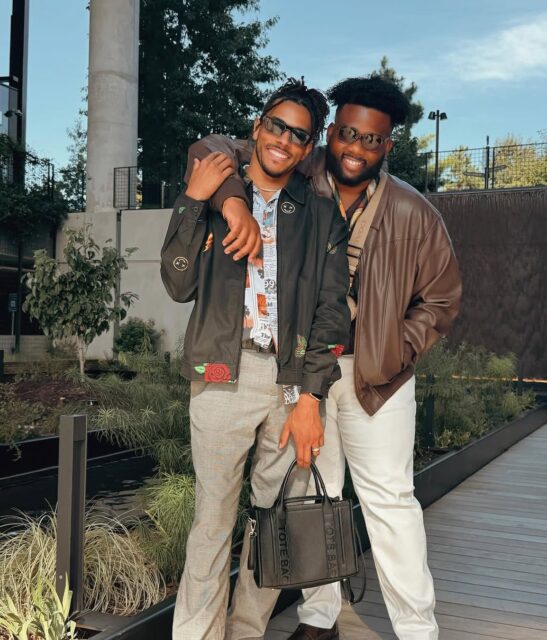
“I don’t think you should be staying at my house all the time or hanging with my friends, or every time I have an event, I’m inviting you over,” Taylor recalls him saying.
The comment landed with weight. “I was like, oh, shit!” Taylor said. After a pause, he agreed. “I was just like, yeah, let’s just do it.”
Bisexuality, Belief, and Being Taken Seriously
While the relationship solidified, Capers carried a familiar concern, whether stigma around bisexuality would complicate the future they were building.
“It’s weird as a bisexual, one, to be believed as bisexual,” he said. “I still see [troubling reactions] when I say it out loud in mixed company.”
For Taylor, the issue never registered as a red flag. “The typical stereotype is that there are two different ways for him to step out. That never crossed my mind,” he said.
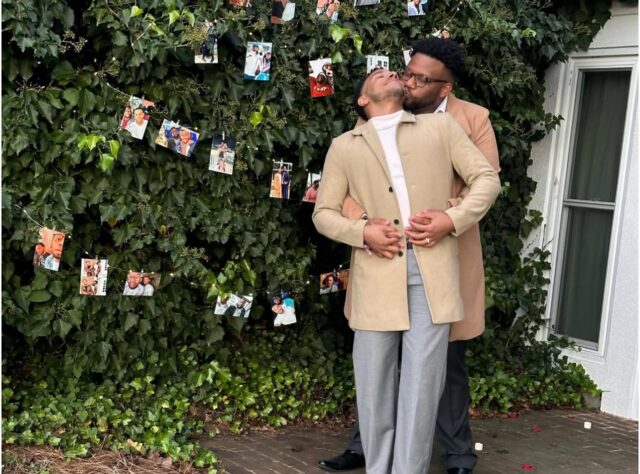
Taylor is careful about how he describes their partnership. “I never say he’s gay. I say we’re in a gay relationship, but he’s bisexual. I just never saw it as an issue.”
That acceptance, Capers says, removed a burden he didn’t realize he was still carrying.
Timing, Law Degrees, and a Proposal That Had to Wait
By 2022, the pieces finally aligned. Both men had completed law school, passed the bar exam, and watched the most isolating phase of the pandemic recede. That summer, they bought a home together in Atlanta.
Capers had already decided what would come next, with one condition.
“I was not going to propose unless I passed the bar exam,” he said. The mental load of retaking the exam alongside wedding planning wasn’t an option.
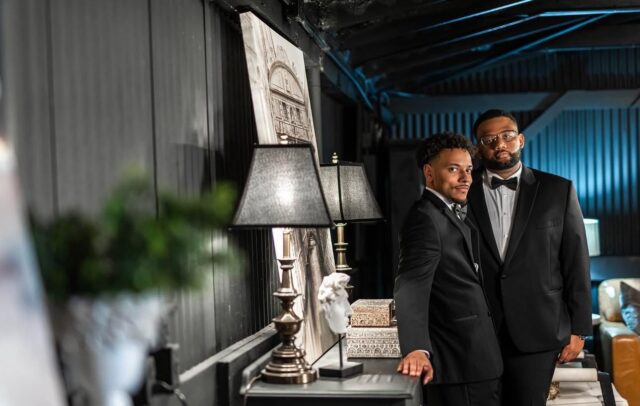
After purchasing a ring in late summer, he waited for the results. A passing score meant moving forward; anything else meant pressing pause.
When the results came in October, Capers booked a weekend at Chateau Elan in Braselton, Georgia. Taylor suspected something might be coming, but not the full scene awaiting him.
A trail of red roses led through their villa, ending outside with candles and a simple directive: “MARRY ME.” Capers was already on one knee.
Redefining Marriage, Together
For both men, marriage was not always part of the plan.
“I never really saw myself getting married,” Taylor said.
Capers echoed the sentiment, tracing his hesitation back to childhood faith and internalized expectations. “When I would pray as a kid… I always thought it was a blessing that at least I was bisexual,” he said, believing it offered a socially acceptable future.
That idea faded over time. “The idea of marrying a man was definitely solidified when I met Jordan,” Capers said.
A Wedding With Intention and Style
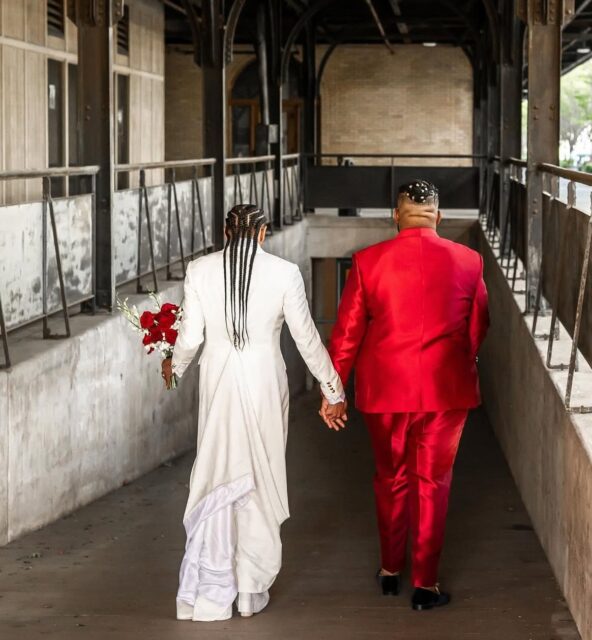
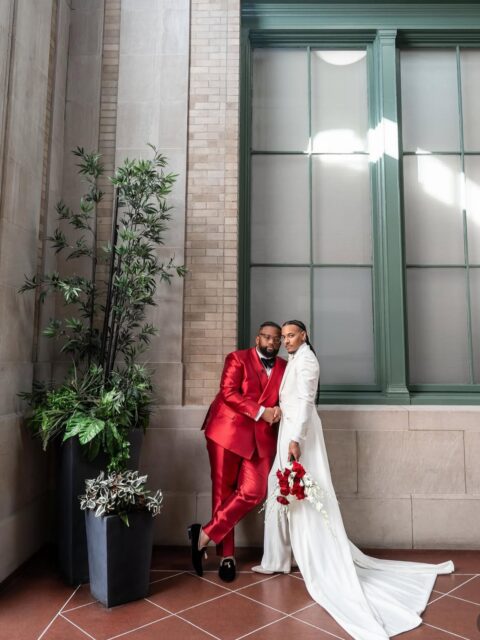
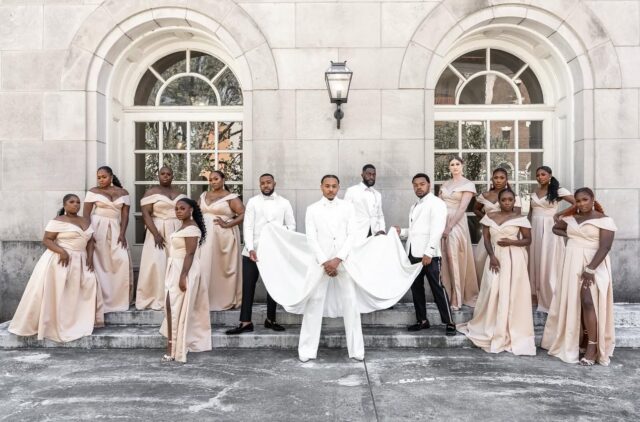
After an 18-month engagement, the couple returned to Macon, Georgia, where they first met, to exchange vows. On April 13, 2024, they married at Macon Terminal Station in front of 213 guests, supported by a 26-person wedding party largely made up of former law school classmates.
Their attire reflected the same intentionality. Capers wore a red double-breasted suit. Taylor chose a custom white Ellis Esquire design featuring a dramatic train and studded heel boots.
“I like blending masculine and feminine aspects together,” Taylor said. “I wanted something unexpected.”
Capers agreed. “It gave the duality that he kind of presents in the world on a daily basis,” he said.
Why Their Marriage Matters Right Now
For GLAAD, stories like the Capers’ serve a purpose beyond celebration. They offer a counterweight to political rhetoric that frames marriage equality as abstract or expendable.
“Our marriage is the center of our life together,” the couple said. “The idea that anyone would try to take away the dignity and stability it gives us is painful to even consider.”
Rather than retreat, they remain committed to visibility and advocacy. “Our appreciation for our marriage has been strengthened,” they added, “and for the community that continues to fight to ensure those rights remain secure for us all.”


