




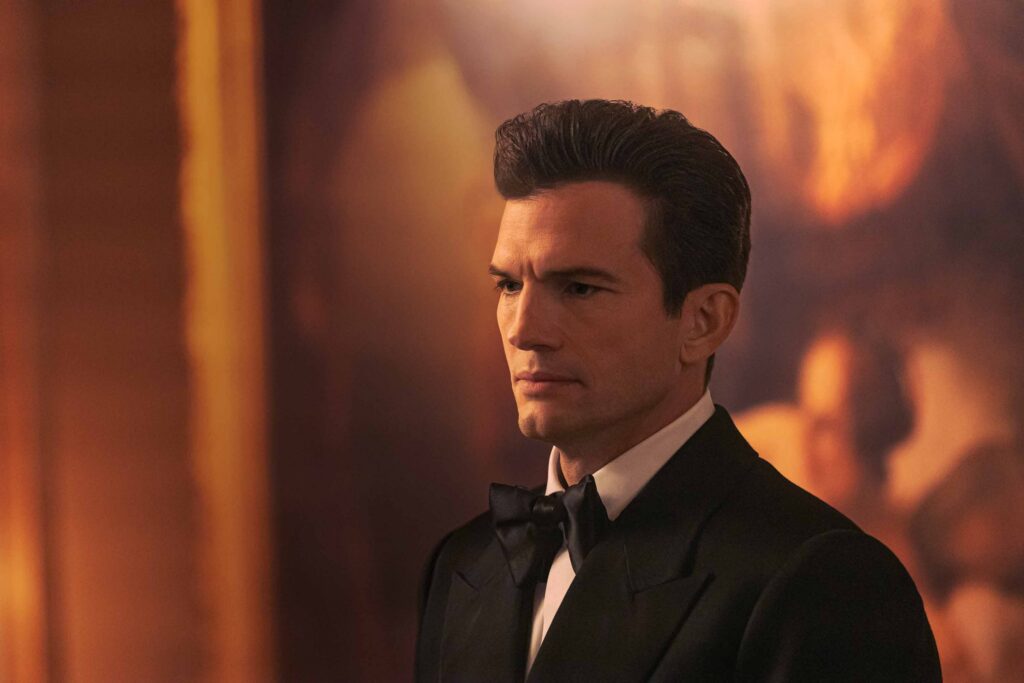
Ashton Kutcher steps into the twisted world of Ryan Murphy’s FX series The Beauty. The actor plays Byron Forst, the creator of a mysterious drug that promises perfection but unleashes devastating consequences. And while the series leans into a heightened, stylized tone, Kutcher says the themes behind the show are what truly drew him in.
In a conversation with Gayety, Kutcher opened up about the deeper ideas driving the series and how Byron fits into the story’s exploration of identity, perfection, and self-acceptance.
A Hyperreal World with Real Themes
While some viewers have described The Beauty as campy, Kutcher sees the show’s tone as something more layered.
“I think that to me, it’s this functional suspension of disbelief where you’re just a little bit hyper reality,” he explained. “Sometimes it jumps into this hyperreal so much so that it explodes.”
Kutcher compared the show’s structure to the very drug at the center of the story.
“It’s almost like the architecture of the show is the drug itself, where it has this level of perfection that continually explodes,” he said. “The minute the show gets too perfect, it explodes and then becomes hyperreal and then starts to get perfect again.”
The Societal Pressure to be “Something Else”
For Kutcher, the biggest draw of the project wasn’t the heightened tone or the villainous character. It was the cultural conversation the show taps into.
“I think that there is a social race that’s happening right now to want to be something other than exactly what and who you are,” he said.
Kutcher stressed that the show doesn’t judge those desires, but it does encourage reflection.
“I think people should be happy, and I think that we should all be accepting of people having a desire to be happy,” he said. “But at the same time, I think that that race can become very fleeting and actually become obsessive.”
Instead, he says the show ultimately raises a more powerful question.
“What do we want to do? Who do we want to be? What level of tolerance do we want to have for our own flaws and how much of that is actually just perfect exactly as it is?”
Byron’s Emotional Anchor
Despite Byron’s extreme actions throughout the series, Kutcher says the character was always grounded by one key relationship in the story.
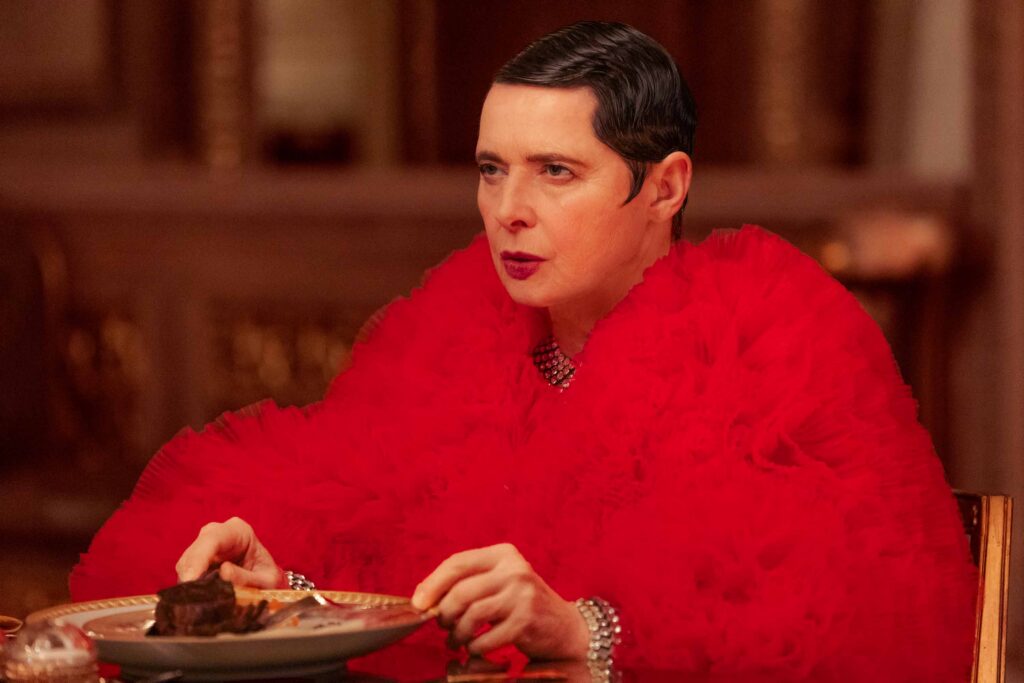
“Ryan and I had a conversation at the very beginning of this about the anchor for this character, what he orbits around, and it was always the idea that Isabella was that,” Kutcher explained, referring to Isabella Rossellini’s character.
Rossellini plays Forst’s wife, Franny, and their on-screen chemistry quickly becomes one of the show’s emotional highlights.
Speaking about the finale, where Forst begins to see things more clearly, Kutcher said the shift in his character’s mindset did not come as a surprise to him. The actor always understood that the character would eventually find his way back to that emotional center.
“Performing it was like, where is the come-to-Jesus moment for him to get there?” Kutcher said.
For him, the bigger question was how far Forst could drift from what truly mattered before finally recognizing it.
“I was like, ‘How far out of orbit can you get it before it snaps back in?’”
As the series builds toward its final moments, that pull back toward Franny becomes one of the most defining elements of Forst’s journey.
“Do I Have Neck Wrinkles?”
Kutcher also had a humorous reaction to some of the commentary online about his character. While fans debated Byron’s fate in the story, many also joked about how the character’s transformation compares to others in the series.
Kutcher said reading the reactions gave him a moment of self-awareness. One comment, sent to the actor by a friend, said, “Byron, as the creator of the drug, got the short end of the stick; all these other people became these beautiful 25-year-old versions, and Byron became this aging 40-year-old man.”
“And I’m going like, ‘Wow, do I have neck wrinkles?’ Because you read the commentary, you’re like, ‘Oh my.’ And I was like, ‘Oh my God, I’m becoming personally self-conscious as a result of it.’”
But for Kutcher, the moment actually reinforced what The Beauty is ultimately trying to say.
“But it’s funny that to me, all of that commentary is the theme of the show, which is wonderful and beautiful,” he said.
The actor noted that the online reactions themselves reflect the societal pressure the series explores: the constant push to look younger, better, and more “perfect.”
“Having the confidence to genuinely accept yourself might be the most beautiful thing in the world.”
The Beauty Season 1 is now streaming on Hulu.


