


Martin Blinder, the psychiatrist whose testimony at Dan White’s 1979 murder trial gave rise to the phrase “Twinkie defense,” died Oct. 30 at his home in San Anselmo, Calif., The New York Times reported on Friday, Nov. 6. He was 89. His wife, Mary Mahima Daily Blinder, said the cause was pancreatic cancer, according to the paper.
On the stand, Blinder told jurors that “there is a substantial body of evidence that in susceptible individuals large quantities of what we call junk food, high sugar content food with lots of preservatives, can precipitate anti-social and even violent behavior,” according to excerpts of the trial transcript.
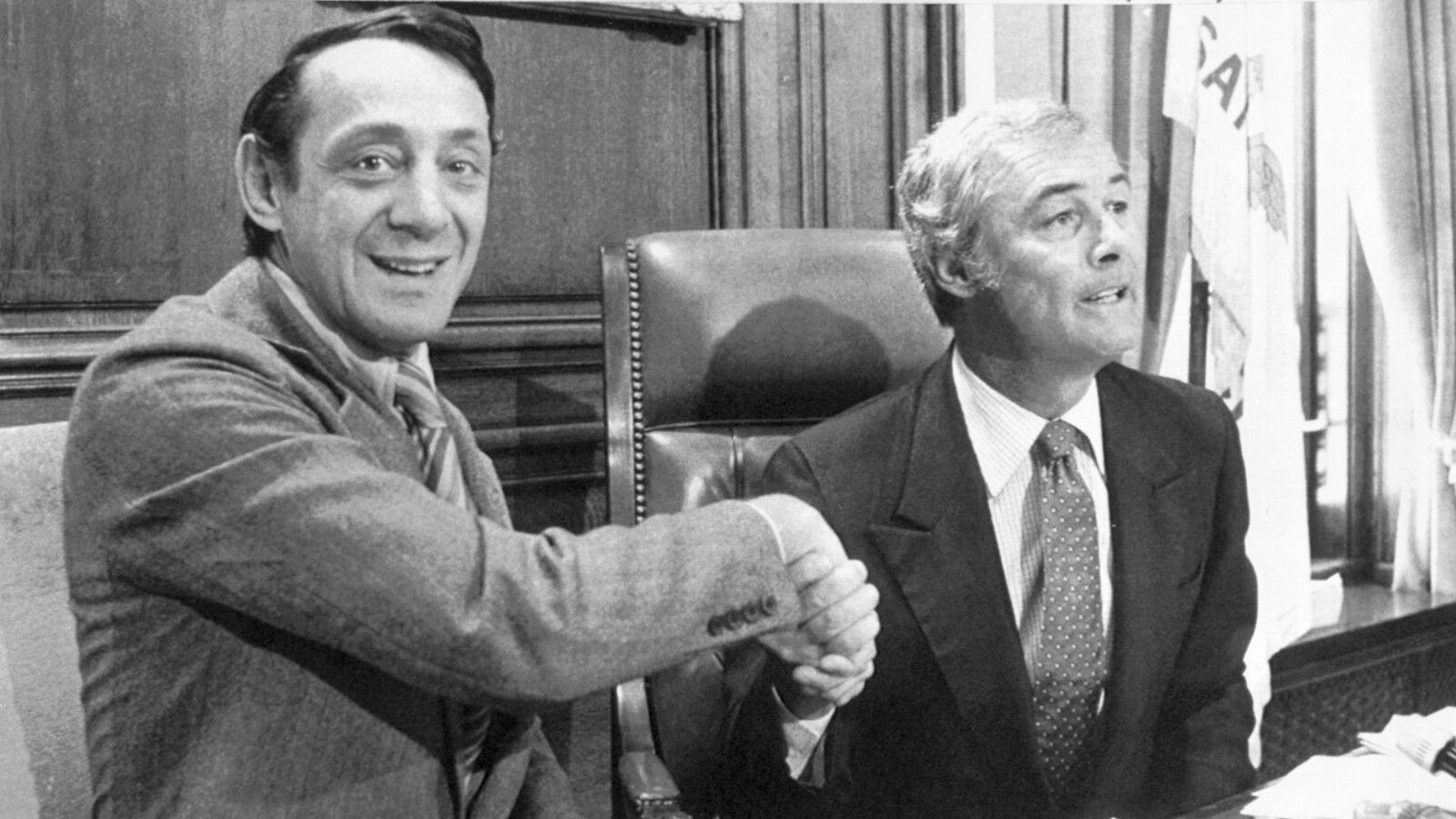
White, a former city supervisor, shot San Francisco Mayor George Moscone and Supervisor Harvey Milk at City Hall on Nov. 27, 1978, according to a 1981 California Court of Appeal opinion. “At the trial, defendant presented a diminished capacity defense,” the court wrote.
Milk, whom Sean Penn played in the 2008 film “Milk,” had won his seat on the Board of Supervisors in 1977. “If a gay can win, it means that there is hope that the system can work for minorities if we fight,” Milk told a cheering crowd in the Castro District, according to Douglas O. Linder’s account of the case.
Born Feb. 22, 1937, in the Bronx, Blinder practiced medicine in San Anselmo, a town north of San Francisco, where he won a Town Council seat in 1972 and was mayor from 1975 to 1976, according to the Times. The label from White’s trial dogged him for decades. “There never was a Twinkie defense,” he told The San Francisco Examiner in 1983, the Times reported.
What Martin Blinder Actually Said Behind the ‘Twinkie Defense’
Blinder spent more than four hours on the stand, according to the Times obituary. Excerpts of that testimony come from Kenneth W. Salter’s 1991 book “The Trial of Dan White” and are posted by Linder’s Famous Trials archive. Asked what he taught at Hastings, Blinder told the jury, “I teach forensic psychiatry, I teach about the uses and abuses of psychiatry in the judicial system.”
He described depressive spells that he said hit White perhaps as often as half a dozen times a year. “During these spells he’d become quite withdrawn,” Blinder testified, “quite lethargic.” He also told jurors, “Second, whenever he felt things were not going right, he would abandon his usual program of exercise and good nutrition and start gorging himself on junk foods: Twinkies, Coca Cola.”
Linder’s account says Blinder presented the Twinkies and doughnuts as a response to White’s depression, one that left him feeling worse.
He called the junk food “this aggravating factor” and set it beside “all the tremendous pressures” on White in the weeks before the shooting. If those factors hadn’t hit White at the same time, he testified, “I would suspect that these homicides would not have taken place.”
The appeals court’s summary of his testimony doesn’t mention food at all. Blinder “concluded that defendant was suffering from depression and intense pressure and that the pressure that he was suffering circumvented the mental processes necessary for premeditation, malice and intent,” the court wrote. The press dubbed the strategy “the Twinkie defense,” Linder’s account says.
Douglas Schmidt’s Depression Defense and Judge Calcagno’s Instructions
“Good people, fine people, with fine backgrounds, simply don’t kill people in cold blood, it just doesn’t happen,” defense lawyer Douglas Schmidt told jurors in his May 1 opening statement, according to Famous Trials. He said White suffered from depression, with symptoms that included “radical changes to the diet.”
Prosecutor Thomas F. Norman told jurors in his opening statement that the evidence would support “the charges of murder in the first degree and the special circumstances which have been alleged here.”
Judge Walter Calcagno told jurors that if they found White had substantially reduced mental capacity, “whether caused by mental illness, mental defect, intoxication, or any other cause,” they “must consider what effect, if any,” it had on his ability to form the required mental states, the archive’s excerpt of his instructions shows.
Dan White’s Manslaughter Verdict and the City Hall Riot
On May 21, 1979, after 36 hours of deliberation, the jury rejected the murder charges, according to the archive’s chronology. “The jury found defendant guilty of two counts of voluntary manslaughter, a lesser included offense of the crime of murder,” the appeals court wrote.
After the verdict, thousands marched from the Castro toward City Hall chanting “Avenge Harvey Milk!” according to Linder’s account. Rioters broke City Hall windows, and police cars were set on fire, in what became known as the White Night riots.
“The trial judge sentenced defendant to a total term of seven and two-thirds years in state prison,” the appeals court wrote. Its March 25, 1981, ruling upheld the conviction: “The judgment is affirmed.”
White was paroled in January 1984 after serving five years, the chronology says.
How California Abolished the Diminished Capacity Defense
“The defense of diminished capacity is hereby abolished,” California’s Penal Code now says. Voters approved a proposition eliminating the defense in 1982, three years after White’s trial, according to Cornell Law School’s Legal Information Institute.


