


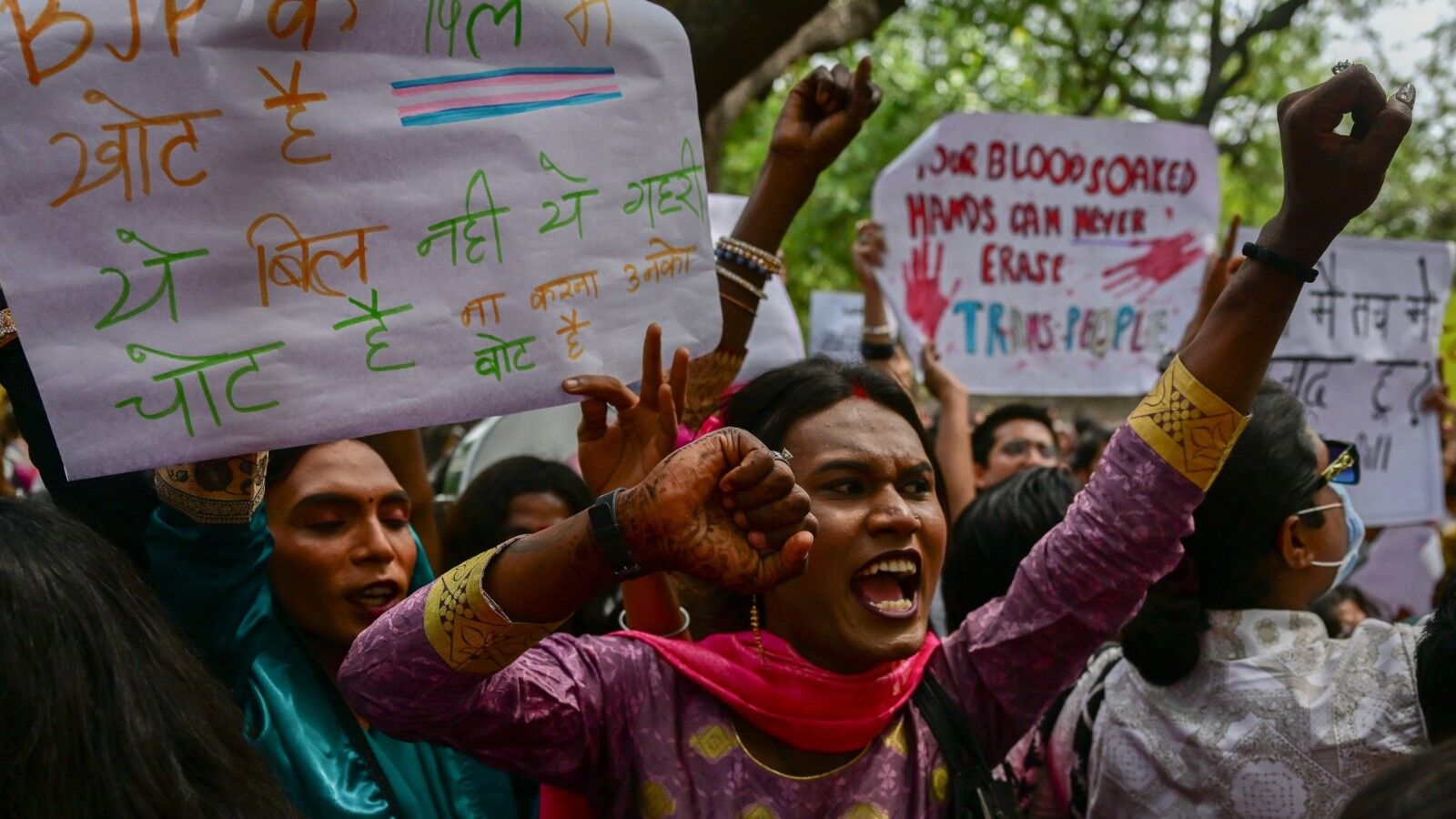
The Bombay High Court on Nov. 3 refused to drop sexual harassment and related charges against an Indian Army Agniveer accused of assaulting a transgender woman. Justice Mehroz K. Pathan of the Nagpur Bench wrote in the order, Criminal Revision Application No. 270 of 2026, that “the allegations of assault and outraging the modesty of a woman can be sustained even where the victim is a transgender person who identifies herself as a woman.”
The accused, Vishal Sunil Ingle, was “serving in Indian Army as Agniveer,” a recruit in the four-year enlistment program launched in 2022, according to the order.
Ingle hasn’t been tried. The case was registered under “sections 75, 296, 351 (2) of Bhartiya Nyay Sanhita, 2023 read with section 18(D) of the Transgender Persons (Protection of Rights) Act, 2019,” the order says.
Those sections of the Bharatiya Nyaya Sanhita, which repealed the Indian Penal Code, cover sexual harassment, obscene acts and criminal intimidation. His lawyer, Anil Thakkar, argued that “the physical relationship, if any, was consensual and was allegedly entered into on the promise of marriage.”
The complainant told police that Ingle assaulted her on Oct. 28 and Oct. 30, 2025, after proposing marriage, the order shows. His consent defense “is a matter to be evaluated during the course of trial,” Pathan wrote.
Why Ingle Argued BNS Section 75 Couldn’t Apply
Thakkar argued that for Section 75 to apply, “the victim must be a woman.” He pointed to the code’s definition, under which “woman” means “a female human being of any age.”
He also argued that the complainant “was declared transgender after the alleged incidents of sexual assault,” since she got her certificate of identity on Feb. 12, 2026. He noted that the code has no counterpart to Section 377 of the Indian Penal Code, which India’s Supreme Court narrowed in 2018 to stop criminalizing consensual gay sex.
Additional Public Prosecutor Swati V. Kolhe answered that Section 75(1) “does not expressly stipulate that the victim must be a woman.” The section, headed “Sexual harassment,” opens with “A man committing any of the following acts,” and only one of its four clauses, “showing pornography against the will of a woman,” mentions a woman.
She also argued that “transgender persons are entitled to self-identify their gender.”
What the Bombay High Court Said About Self-Identification
The 2019 Act’s original definition covered “a person whose gender does not match with the gender assigned to that person at birth.” “The perusal of Section 2(k) of the Transgender Persons (Protection of Rights) Act, 2019, indicates that a person may identify as a transgender person, including a transgender man or a transgender woman, even in the absence of a certificate of identity,” Pathan wrote.
Her lack of a certificate at the time “would not, by itself, preclude the invocation of the penal provisions of the Transgender Act of 2019,” he held.
He also leaned on NALSA v. Union of India, the Supreme Court’s April 2014 ruling, which declared that “Transgender persons’ right to decide their self-identified gender is also upheld.”
In 2023, Justice Amit Borkar of the same court ruled that “a transgender person who has undergone surgery to change their gender to female needs to be termed as an aggrieved person” under India’s domestic violence law, the Free Press Journal reported.
A London case over trans women swimming at Hampstead Heath’s Kenwood Ladies’ Pond rests on a 2025 U.K. Supreme Court ruling that trans women don’t count as women under Britain’s Equality Act. Pathan, by contrast, wrote that the FIR shows the complainant “has identified herself to be a woman and the aforesaid self determination cannot be questioned at least at the present stage while accused is seeking discharge.”
“The charge-sheet shows that there is sufficient evidence to proceed against the Applicant,” Pathan wrote.
India’s 2026 Amendment Removed ‘Self-Perceived Gender Identity’
The 2019 Act said a person recognized as transgender “shall have a right to self-perceived gender identity.” The Transgender Persons (Protection of Rights) Amendment Act, 2026, deleted that sub-section and took effect May 25, according to the government’s India Code database.
“The acts attributed to the Applicant constituted an offence under the law as it stood at the relevant point of time,” Pathan wrote of the change.
The new definition covers socio-cultural identities such as “kinner, hijra, aravani and jogta, or eunuch,” certain intersex variations and people pushed into a transgender identity “by force, allurement, inducement, deceit or undue influence.” It “shall not include, nor shall ever have been so included, persons with different sexual orientations and self-perceived sexual identities,” the amending act says.
Identity certificates now come from a District Magistrate “after examining the recommendation of the authority,” a new medical board. The Lok Sabha passed the bill by voice vote March 24 amid an opposition walkout, and the Rajya Sabha followed the next day, All India Radio reported.
“This Bill ensures justice, dignity, protection from criminalisation and legal safeguards for transgender persons,” BJP lawmaker Medha Vishram Kulkarni said, according to the broadcaster. John Brittas of the CPI(M) told the Rajya Sabha, “I feel this is a day which is a black letter day,” the Press Trust of India reported.
Supreme Court Weighs Challenges to the Transgender Amendment Act
Chief Justice Surya Kant’s bench refused on May 4 to stay the amendment and sent challenges from Laxmi Narayan Tripathi and others to a three-judge bench, Bar and Bench reported. “This amendment changed the substratum of the law under which NALSA examined it,” Justice Joymalya Bagchi said that day.
Tripathi’s petition says the law causes “irreparable constitutional injury,” LawBeat reported.
Solicitor General Tushar Mehta argued Aug. 3 that “169 sections of various statutes will become unworkable” if the court recognized self-perceived identity, the site reported. On Aug. 17, he said identity cards issued before the amendment stay valid, and the bench listed the pleas for final disposal, LawBeat reported.
“The application is devoid of substance and merits and is hereby dismissed,” Pathan’s order concludes. Ingle’s case stays with the sessions court that refused to discharge him on July 6.


