



The Human Rights Campaign’s annual Los Angeles Dinner returned Saturday night with a clear message: visibility still matters, and storytelling remains one of its most powerful tools.
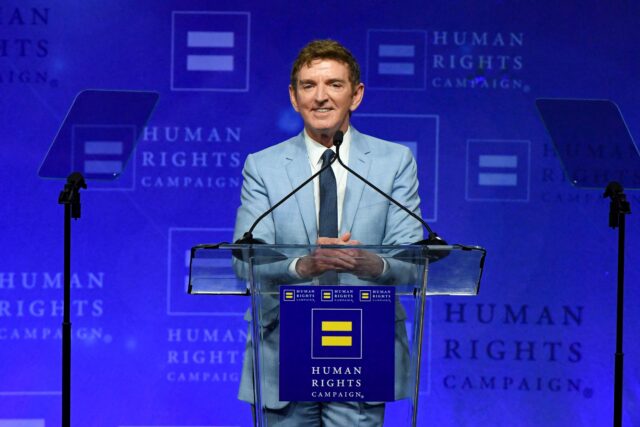
Held on March 28, the event gathered a mix of entertainment figures, political leaders and LGBTQ+ advocates under one roof, with writer-director Michael Patrick King at the center of the evening. The longtime creative force behind Sex and the City and co-creator of The Comeback was presented with HRC’s Visibility Award.
A Night of Familiar Faces and Fierce Support
The crowd reflected the breadth of the community and its allies. RuPaul and Lisa Kudrow took the stage to present King with his honor, bringing both humor and reverence to the moment.
They were joined by a wide-ranging guest list that included Niecy Nash-Betts, Brittany Bowe, Karen Bass and Kirsten Gillibrand. The mix of Hollywood talent and public officials underscored the dual focus of the night: culture and policy.
Comedian Dana Goldberg kept the energy high during a live auction, while attendees moved between celebration and reflection as the program unfolded.


Why Visibility Still Hits Home
When King took the stage, he leaned into the power of television to shift perception. His remarks centered less on personal accolades and more on the ripple effect of representation.
He described how a single character or storyline can reach viewers who may not knowingly have queer people in their lives. In those moments, he said, barriers begin to soften. The distance between “us” and “them” shrinks, not through debate, but through connection.
For King, the work isn’t finished. He emphasized the need to keep telling stories that center individuality, especially when those stories challenge expectations or social norms. The goal, he suggested, isn’t perfection, it’s presence.

A Call to Action Beyond the Ballroom
Kelley Robinson delivered one of the night’s most pointed speeches, addressing what she described as a pivotal period for LGBTQ+ rights.
Rather than dwell on fear, Robinson focused on momentum. She pointed to recent advocacy efforts and local victories as proof that progress is still possible, even in a tense political climate. Her message was direct: change isn’t coming from the top down, it’s being driven by communities willing to organize and push forward.
She also reflected on the legacy of allies Rob Reiner and Michele Reiner, recalling their role in the fight for marriage equality following California’s Proposition 8. Their work, she noted, helped lay the foundation for a legal challenge that ultimately reshaped the national conversation.
By revisiting that history, Robinson framed the current moment as part of a longer arc, one that depends on sustained effort and collective memory.


Celebration Meets Urgency
While the evening carried the polish of a major Hollywood fundraiser, its tone never drifted far from urgency. The applause, speeches and celebrity appearances all circled back to a shared understanding: visibility alone isn’t enough, but it remains a critical starting point.
Events like the HRC Los Angeles Dinner serve as both a checkpoint and a catalyst. They honor the people shaping culture while reminding attendees that cultural wins must translate into real-world protections.
As guests filtered out into the Los Angeles night, the takeaway felt less like a conclusion and more like a continuation. The stories being tol, on screen and off, are still evolving. And if King’s remarks landed as intended, the next chapter depends on who gets seen, and who gets heard.


