


Spoiler warning: This guide explains the ending of Portrait of a Lady on Fire, including its final shot.
Portrait of a Lady on Fire ends with Marianne watching Héloïse at a concert, without Héloïse seeing her. They do not reunite. As Vivaldi’s “Summer” fills the room, Héloïse cries, smiles and struggles to catch her breath. We recognize the music because Marianne once played it for her.
That recognition is what makes the ending hurt. The women have separate lives, but the film keeps bringing their shared past into view. A final look, a book opened to page 28 and a familiar piece of music each carry something forward.

Why Marianne and Héloïse Separate
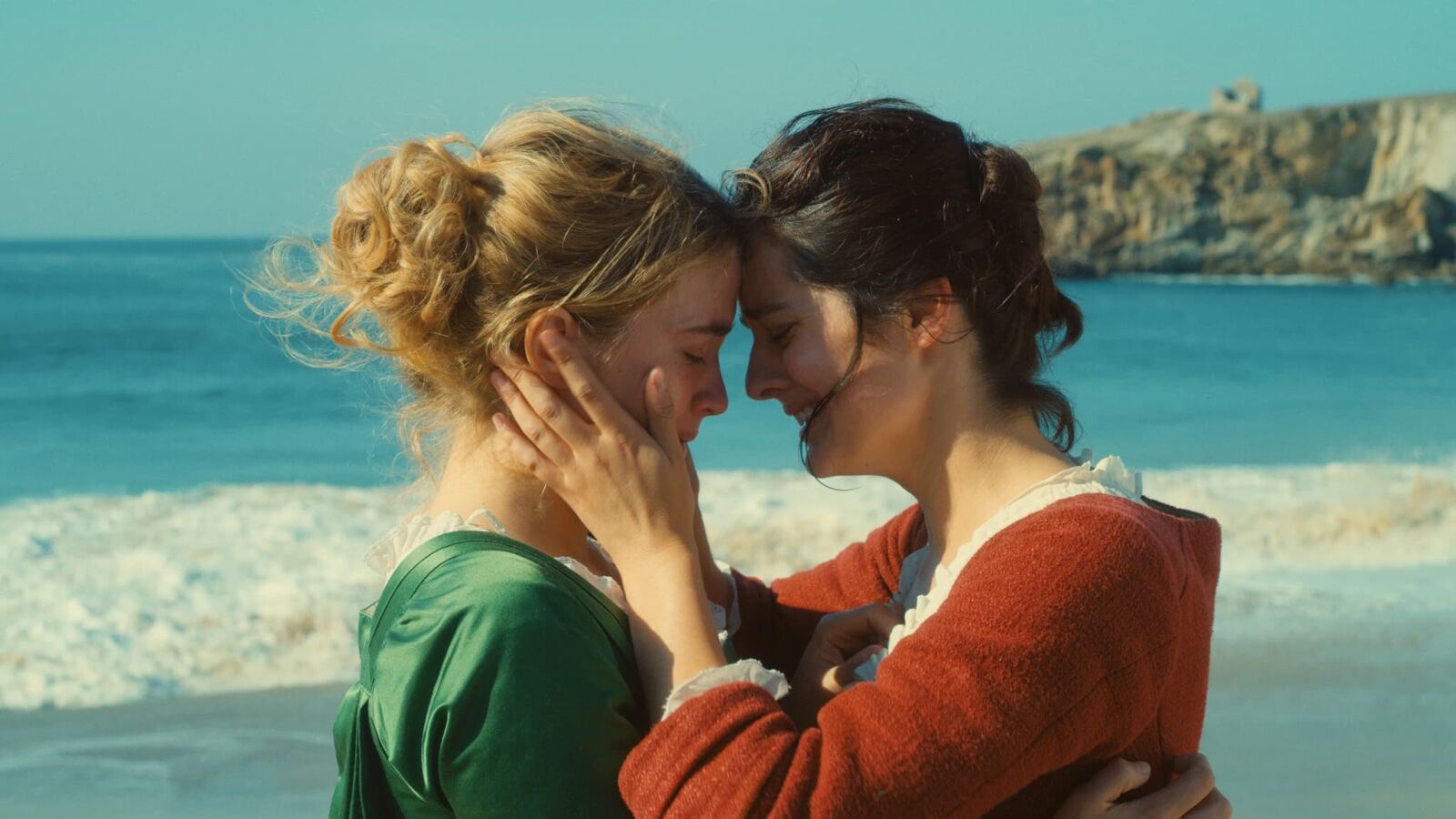
The story begins in 18th-century Brittany. Marianne, played by Noémie Merlant, arrives to paint Héloïse’s wedding portrait. Adèle Haenel plays Héloïse, who has left a convent and faces a marriage arranged by her mother. Her prospective husband lives in Milan.
Héloïse refuses to pose, so Marianne pretends to be her walking companion. She studies Héloïse during their outings and paints from memory. Criterion’s synopsis describes the secret assignment that puts them together.
Héloïse challenges the first portrait when Marianne reveals it. She cannot recognize herself in the painter’s polished version of her. Marianne damages the canvas, then starts again with Héloïse’s cooperation. Their conversations change the painting and the relationship.
While Héloïse’s mother is away, the women have room to fall in love. Her return ends that brief freedom. Finishing the portrait also advances the marriage that will separate them. The painting Marianne wants to get right helps take Héloïse away.
Orpheus and Eurydice: Why Héloïse Says ‘Turn Around’
Earlier, Marianne, Héloïse and the maid, Sophie, discuss the story of Orpheus and Eurydice. Orpheus may bring Eurydice out of the underworld if he reaches the world above without looking back. He turns too soon and loses her.
Marianne proposes that Orpheus chooses the memory of his beloved. Héloïse offers another possibility: perhaps Eurydice asks him to look. Their disagreement matters because each woman imagines a different person making that final decision.
When Marianne leaves, Héloïse calls, “Turn around.” Marianne looks back. Héloïse stands in her wedding dress, resembling the pale apparitions Marianne has already glimpsed. Here, the woman being left behind asks for the look.
In her BAFTA screenwriting lecture, director Céline Sciamma explained how the myth connected the affair with its memory. It also gave her the idea for Héloïse’s ghostlike appearances. Those visions anticipate a loss; they do not mean Héloïse dies.
I read the farewell as Héloïse taking part in the image Marianne will carry away. That does not make their separation voluntary or painless. It gives Héloïse a voice inside a moment she cannot prevent.
What Page 28 Means in ‘Portrait of a Lady on Fire’
Before they part, Héloïse asks Marianne for a picture of herself. Marianne draws a nude self-portrait on page 28 of Héloïse’s book. It becomes a small, portable record of their intimacy.
Years later, Marianne sees a formal portrait of Héloïse with a child. Héloïse holds a book, with her finger marking page 28. Marianne recognizes the number. So do we.
The public painting contains a private reference. Héloïse appears in the expected role of a married mother, while keeping their shared memory within the frame. The film gives us good reason to read this as a deliberate tribute. It does not establish that Héloïse knew Marianne would see the portrait.
Sciamma told Sight and Sound’s Isabel Stevens that she wanted a secret inside the painting. She chose a number whose meaning the film could teach its audience. We do not need an art-history lesson to recognize it. We need to remember the drawing.
The Final Scene: Vivaldi’s ‘Summer’ and Héloïse’s Tears
The ending moves from a painting to a living face. Marianne sees Héloïse across a concert hall as the orchestra plays the Presto from Vivaldi’s “Summer” concerto. It is the third and final movement of “Summer,” part of The Four Seasons.
On the island, Marianne had played a little of it for Héloïse on a harpsichord. Now Héloïse hears its rushing strings in full. Her expressions shift as the camera stays with her. She seems overwhelmed, but the film never translates every tear into a single feeling.
We can connect her response to Marianne because the earlier scene taught us that association. Pleasure, grief and recollection can coexist here. There is no dialogue confirming which memory crosses Héloïse’s mind at any particular second.
Marianne tells us Héloïse did not see her. Her reaction remains private. Héloïse experiences the music for herself, while Marianne witnesses it from a distance.
Sciamma told Film Comment’s Amy Taubin that she wanted music to feel scarce and precious. She chose a familiar work so viewers could bring their own memories to it. At BAFTA, she described the concert scene as her starting point for the film.
| Moment | What happens | What it suggests |
|---|---|---|
| The farewell | Héloïse asks Marianne to turn around before she leaves. | Héloïse’s request echoes her reading of Eurydice and shapes their last shared look. |
| Page 28 | Marianne finds the number marked in a later portrait of Héloïse. | The private drawing remains important enough for Héloïse to reference publicly. |
| The concert | Marianne watches Héloïse respond to the music they once shared. | The scene invites us to connect Héloïse’s emotions with their past, without explaining every feeling. |
Is the Ending Sad or Hopeful?
Both readings have room. Héloïse and Marianne lose the chance to build a life together within the story we see. The film does not soften the social conditions behind that separation.
It also shows what survives. Marianne makes art and teaches. Héloïse preserves a reference to their affair. Music can still move her. In the same Film Comment interview, Sciamma described a love whose emotional life continues after the relationship ends.
For me, the ending’s power comes from allowing that survival without offering a reunion. Remembering someone can bring pleasure and pain at once. Haenel’s final close-up gives those feelings time to exist together.
The Bonfire Painting Behind the Title
During a nighttime gathering, Héloïse’s dress catches fire as women sing around a bonfire. Marianne later paints that moment. A student discovers the canvas near the film’s beginning, prompting Marianne to remember the woman in it.
The painting gives Portrait of a Lady on Fire its title. It also establishes the film’s structure: we enter the affair through a work Marianne made afterward. The fire belongs to a remembered encounter, kept visible through art.
The film’s credits name Jean-Baptiste de Laubier and Arthur Simonini as its original composers. Vivaldi’s concert piece is separate from their contribution.
Cast, Runtime and the Official Trailer
Sciamma wrote and directed the 2019 film. Merlant and Haenel lead the cast, with Luàna Bajrami as Sophie and Valeria Golino as the Countess. Criterion lists a running time of 121 minutes. NEON lists its Cannes honors: Best Screenplay and the Queer Palm.
For another film to put on your list, explore Gayety’s guide to lesbian movies, including Carol and Desert Hearts.
‘Portrait of a Lady on Fire’ Ending FAQ
What is on page 28?
Marianne draws a nude self-portrait on page 28 of Héloïse’s book. In a later formal portrait, Héloïse marks that page with her finger.
Why does Héloïse tell Marianne to turn around?
Her request echoes their discussion of Orpheus and Eurydice. Héloïse had suggested that Eurydice might have asked Orpheus to look back. At their farewell, she makes that request herself.
What music plays at the end?
The orchestra plays the Presto, the third movement of “Summer” from Antonio Vivaldi’s The Four Seasons. Marianne plays part of it for Héloïse earlier in the film.
Does Héloïse see Marianne at the concert?
No. Marianne’s narration says Héloïse did not see her. Marianne watches from across the concert hall, and the women do not speak.
Do Marianne and Héloïse end up together?
No reunion occurs in the film. After their separation, Marianne sees Héloïse in a formal portrait and later at a concert. The story does not show their lives beyond that final encounter.
Why is it called ‘Portrait of a Lady on Fire’?
The title refers to Marianne’s painting of Héloïse during the bonfire gathering, when her dress catches fire. A student’s discovery of that canvas prompts Marianne’s recollection.


