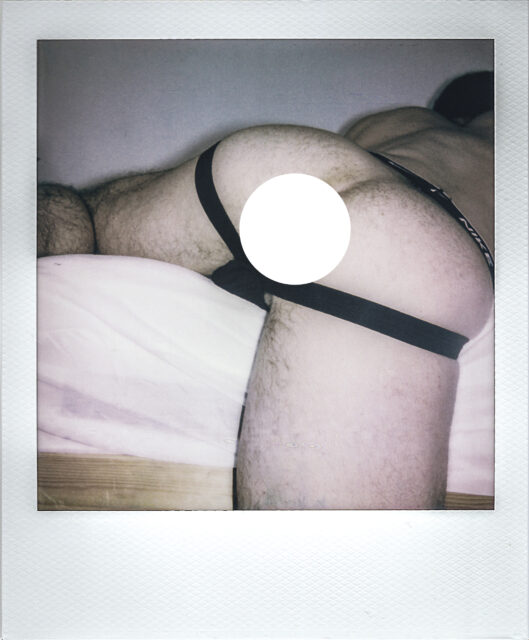




There’s something about Ahmad Naser’s Polaroids that stops you in your tracks. Not because they’re loud or shocking or deliberately provocative, but because they feel private. They feel like something you weren’t supposed to see — like slipping into someone else’s weekend, bedroom, or heat-soaked little world.


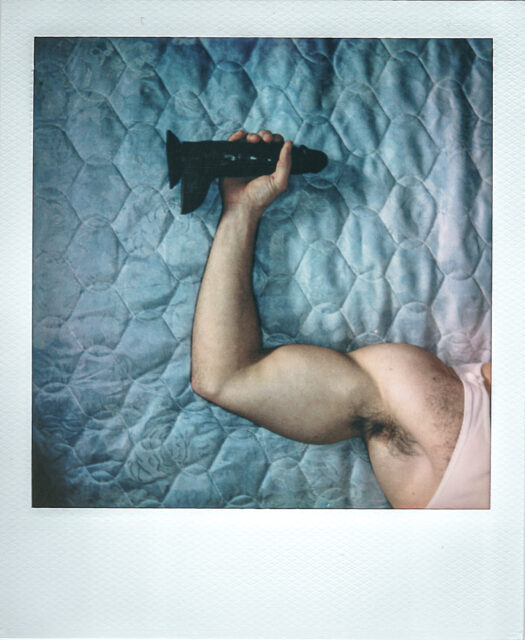
This set of 17 images reads less like a curated art project and more like a box of Polaroids discovered at the back of a friend’s closet. The kind they forgot were there. The kind they’d blush if you found. Each photo feels like a moment captured too quickly to perform for the camera, and too honestly to be staged.
Related | 91 Close-Up Studies of the Male Form by Ahmad Naser
The Intimacy of Polaroids
Some of the scenes unfold at a beach; others look like they were taken by a pool or in the bathroom. A few resemble snapshots from a party that blurred into something looser and more intimate. Bodies on floors, bodies leaning into each other, bodies resting or teasing or simply existing. Someone’s covering their face. Someone else is holding a toy. One man is caught mid-pee. Nothing about it is tidy. Everything about it feels real.

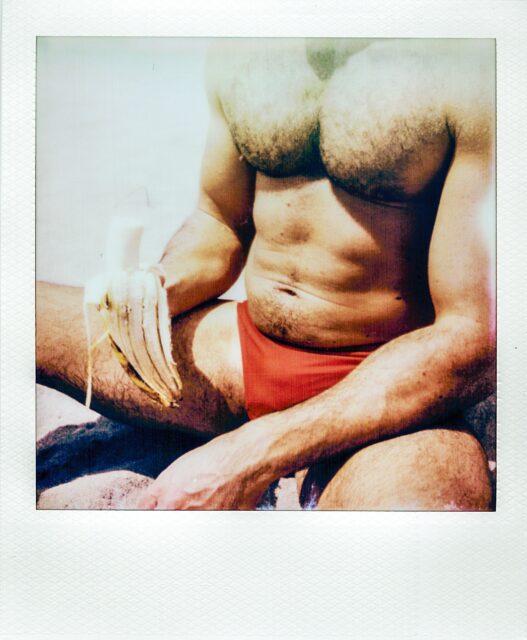

Anyone well-versed in gay photography may be reminded of Tom Bianchi’s iconic Polaroids from Fire Island in the mid-1970s. Naser’s collection evokes the same intimacy and playfulness that almost pays tribute to Bianchi, whether intentional or not.
You May Remember…
If you’ve spent time with Ahmad’s larger project — the 91-image series of close-up studies of the male body — you’ll recognize his fascination with closeness. In that earlier collection, the camera moved close enough that skin became landscape, light became texture, and every curve and pore carried its own meaning. The work was contemplative, focused, and almost meditative in tone. It invited viewers to slow down and really look.


Closeness VS Intimacy
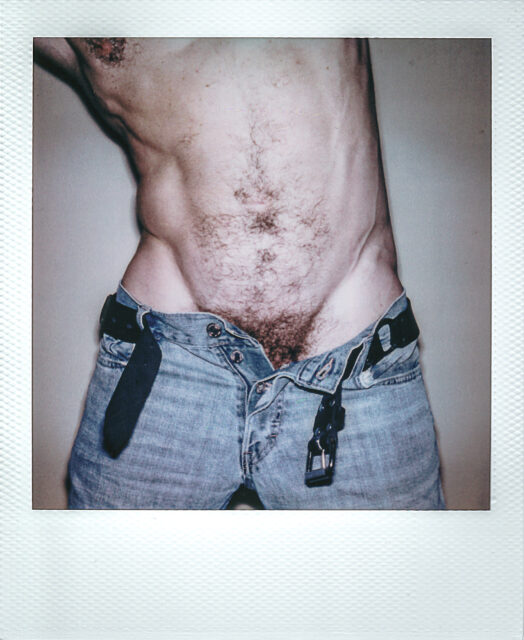
The Polaroids move differently. They’re faster, looser, more mischievous. Where the close-up portraits were controlled and deliberate, the Polaroids feel impulsive, like they were taken between drinks or between lustful moments. The earlier series highlighted form; these Polaroids highlight energy. You get the sense that the camera wasn’t the focus — it was just nearby.
Related | 8 Polaroids of Fire Island Back in the Day by Tom Bianchi
What connects both bodies of work is Ahmad’s instinct for presence. He isn’t interested in spectacle or shock value; he’s interested in the honesty that happens when people forget to perform. In the close-up series, that honesty came through in stillness. The quiet confidence of a bare shoulder, a hip, a stretch of skin illuminated just right. In the Polaroids, it emerges through movement and chaos: a house party that has gone tender at the edges, a sunburnt afternoon that gave way to touch, a room where everyone seems comfortable taking up space.
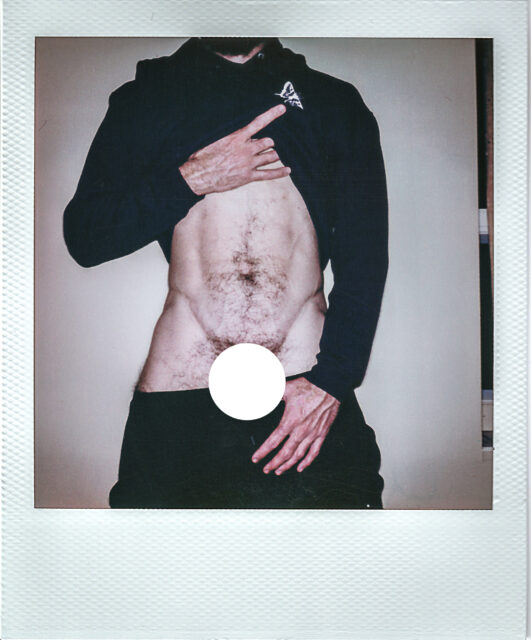

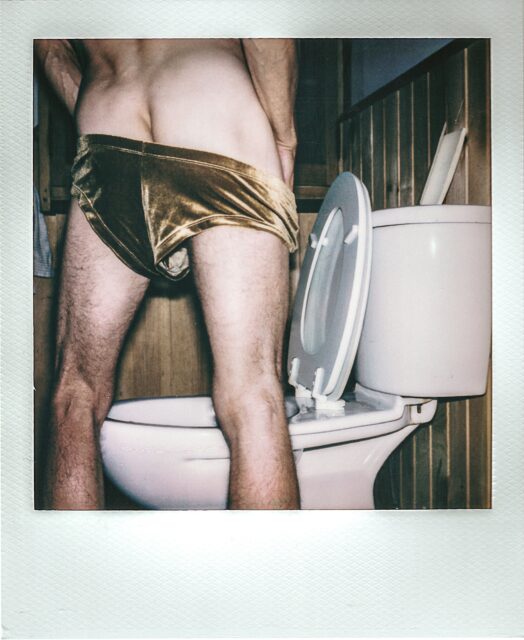
The contrast between the two projects reveals the breadth of Ahmad’s approach to the male form. One collection studies the body; the other captures the atmosphere around it. One is about detail; the other is about mood.
About Ahmad Nasser
Born and raised in Jerusalem, Ahmad Naser has become known for his ability to blend emotional presence with visual restraint. His work isn’t about performance; it’s about access — to texture, to atmosphere, to the small human truths that appear when people stop trying to look perfect. Whether he’s shooting controlled close-ups or impulsive instant film, Ahmad brings a rare sincerity to the frame.
Want to see the good stuff?
We’ve published more of Naser’s work — including the shots too spicy for this site — over on our Substack.
CLICK HERE FOR MORE

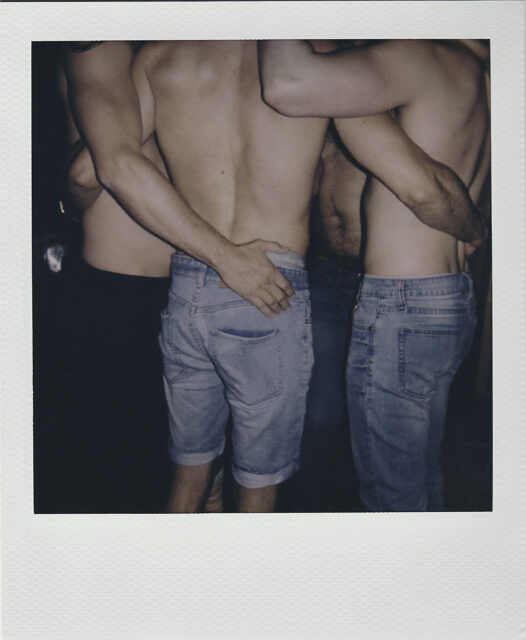

With these 17 Polaroids, he offers something different: moments that feel unguarded, quick, and charged with the kind of intimacy that happens when no one is thinking too hard about being photographed. Even the medium, a Polaroid camera, evokes a sense of nostalgia. All of these factors compound, making the collection feel like a distant memory. One you never knew you had.