


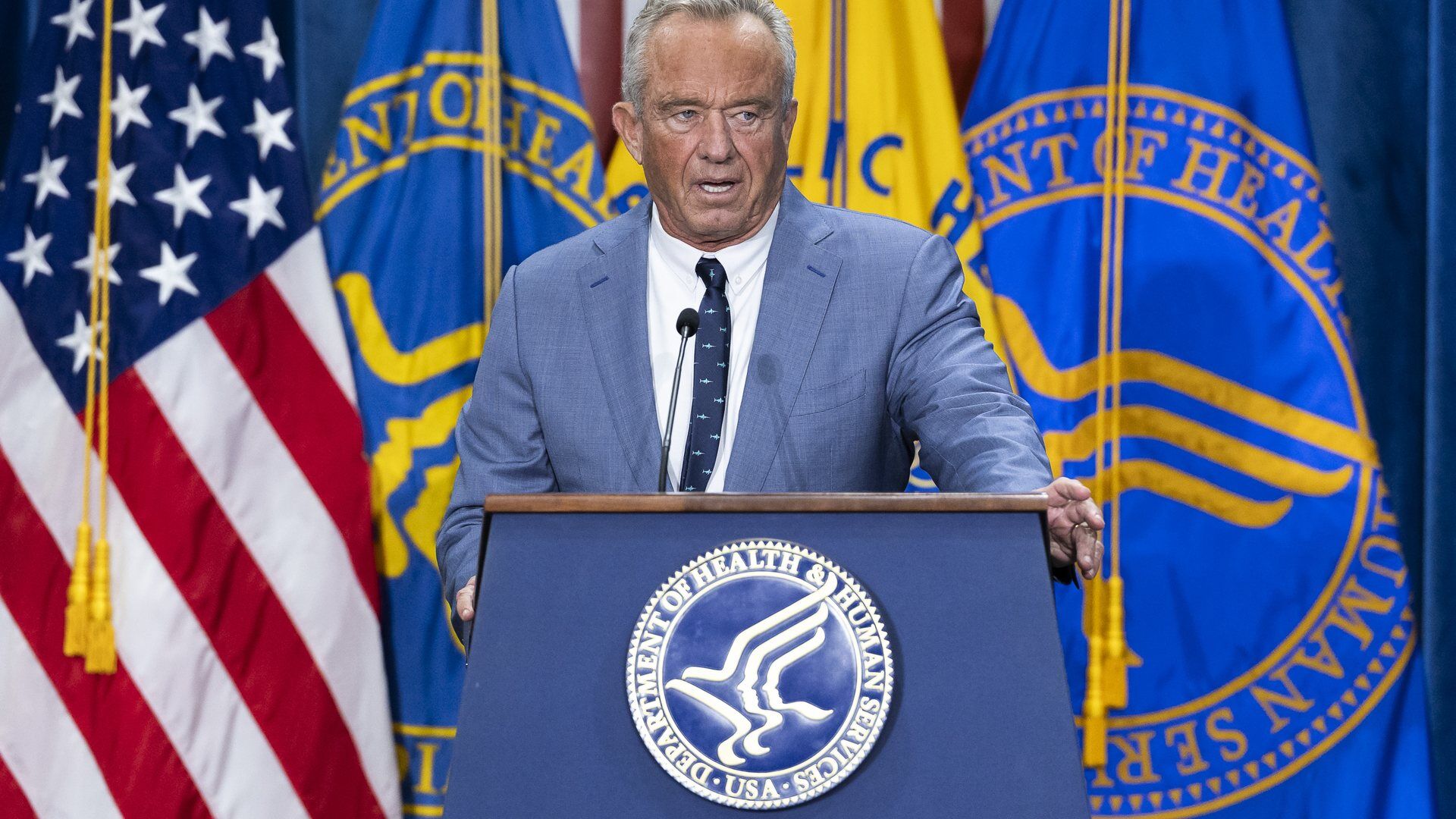
The Department of Health and Human Services finalized a rule Friday, Oct. 30, saying gender dysphoria that doesn’t result from a physical impairment isn’t a disability under its Section 504 regulations. Section 504 of the Rehabilitation Act bars disability discrimination by programs that take federal money, and HHS’s gender dysphoria Section 504 rule covers the ones it funds.
“This final rule restores clarity to our regulations, respects the distinctions Congress established, and ensures that HHS administers Section 504 according to its statutory text,” HHS Secretary Robert F. Kennedy Jr. said in an HHS news release. The rule was published in the Federal Register on Tuesday, Nov. 3. It lists Jan. 4, 2027, as its effective date.
“This rule is not about clarity. It is about exclusion,” Michelle Uzeta, executive director of the Disability Rights Education & Defense Fund, said in a Nov. 2 statement. The rule “applies to every hospital, clinic, health plan, child welfare agency, and human services program that receives HHS funding, and it invites those programs to turn people away,” the group said.
What the Gender Dysphoria Section 504 Rule Changes at HHS
The Rehabilitation Act already carves “gender identity disorders not resulting from physical impairments” out of its disability protections. HHS now reads that phrase to cover “gender dysphoria not resulting from a physical impairment,” and the rule copies the law’s exclusions into HHS’s regulation.
“For decades, HHS’ Section 504 regulations have defined disability consistently with the words Congress chose,” said Paula M. Stannard, who directs the HHS Office for Civil Rights.
HHS proposed identical wording on Dec. 19, 2025, then reopened comments through Feb. 20, citing “administrative technical issues.” More than 380 came in. The agency wrote that the rule “is not intended to restrict or remove any civil rights protection” for people whose gender dysphoria isn’t caused by a physical impairment.

Biden’s 2024 Preamble and the Texas-Led Lawsuit Over It
Biden’s HHS published its own Section 504 disability rule on May 9, 2024. The regulatory text never called gender dysphoria a disability, but the rule’s explanatory preamble said it could be one. Texas and 16 other states sued, KCRG has reported. Their suit attacked that language in part, HHS notes in the new rule.
In April 2025, Kennedy signed a notice declaring the preamble language “is not, and never was, enforceable.” On Jan. 30, Iowa Attorney General Brenna Bird, one of the plaintiffs, said, “Iowa has concluded the lawsuit we joined in 2025 with a win,” the station reported.
Kennedy also went after the Biden language. “The Biden-era pronouncements that indicated gender dysphoria may be a disability served the commercial interests of a predatory, multi-billion-dollar industry and betrayed the original intention of those laws,” he said.
Williams v. Kincaid Still Binds Federal Courts in Five States
Kesha Williams, a transgender woman, spent six months in a Fairfax County, Virginia, jail, where her jailers housed her with men and delayed her hormone treatment, Reuters reported. In 2022, the 4th U.S. Circuit Court of Appeals ruled in her case that the Americans with Disabilities Act can cover gender dysphoria.
The Supreme Court turned away the sheriff’s appeal on June 30, 2023. Justice Samuel Alito, joined by Justice Clarence Thomas, dissented. The ruling “makes an important provision of a federal law inoperative,” Alito wrote. Katherine Hermann, an attorney for Williams, said the dissent “understates the seriousness of gender dysphoria,” The Associated Press reported.
HHS’s new rule says Williams “applies only to the Fourth Circuit.” It also concedes the decision is “binding precedent within federal courts in Maryland, North Carolina, South Carolina, Virginia, and West Virginia.” DREDF’s statement answers in one line: “An agency rule cannot change a law passed by Congress.”
The justices dealt with trans care in custody again Oct. 21, rejecting the Trump administration’s emergency bid to halt gender-affirming care in federal prisons.
Who Fought RFK Jr.’s Disability Rule, and Who Cheered It
California Attorney General Rob Bonta co-led 19 attorneys general against the proposal in January. “HHS wants to ignore precedent from numerous federal courts and advance discriminatory policy changes while minimizing the public’s chance to respond,” Bonta said in a Jan. 16 release.
“Gender dysphoria is a well-researched medical condition, and courts have been clear that it is not excluded from disability protections,” Mia Ives-Rublee, senior director of the Disability Justice Initiative at the Center for American Progress, said Jan. 27.
The conservative Independent Women’s Forum welcomed the rule, saying the old reading of disability law “has been used to elevate gender identity claims over the concerns of incarcerated women,” Just the News reported.
A separate HHS rule, in effect since Oct. 13, bars federal Medicaid and CHIP money for gender dysphoria treatment for minors. Four New Hampshire families have asked a federal judge to block it for their daughters.
“Transgender people, including disabled trans people, are part of our community,” Uzeta said. “An attack on their civil rights is an attack on ours, and we will fight together to defend all of us.”


