


On September 11, 2001, four hijacked planes transformed the World Trade Center, the Pentagon, and a field in Shanksville, Pennsylvania into sites of unimaginable loss. Among the 2,996 people killed were at least 27 confirmed LGBTQ+ individuals. They were firefighters running toward collapsing towers, flight crews working until the final seconds, and passengers who organized a cockpit revolt.
Twenty-five years later, honoring their memory means looking at how they lived, how they loved, and the immediate battles their surviving partners faced just to be recognized.


Courage in the Air and on the Ground
Mark Bingham and Father Mychal Judge came from radically different worlds. Bingham was a 31-year-old public relations executive and former college rugby player. Judge was a 68-year-old Franciscan priest and official chaplain for the New York City Fire Department. Both were gay, open to those closest to them, and stepped into danger without hesitation.
When hijackers took control of United Airlines Flight 93, Bingham joined passengers Todd Beamer, Tom Burnett, and Jeremy Glick to storm the cockpit. Their actions forced the plane down in Shanksville, saving hundreds of lives at the intended target in Washington, D.C. During the hijacking, Bingham managed to reach his mother, Alice Hoagland. “I only got three minutes with him and when I tried to call back, I couldn’t get through,” Hoagland told the Iowa City Press-Citizen.
At the World Trade Center, Father Mychal Judge rushed directly to Ground Zero as the North Tower stood burning. He entered the lobby to minister to rescue workers and pray over victims, repeating the words, “God, please end this.” Debris from the collapsing South Tower struck and killed him, making him the first officially certified fatality of the attacks.
Journalist Andy Humm interviewed Judge frequently before 2001. “I saw him at many demonstrations for gay and AIDS causes, showing up in his Franciscan monk’s cassock,” Humm said. “And he was equally beloved by the fire department, there at every major fire tragedy in the city, lending moral support to firefighters.”


Lives Marked by Humor and Truth
Beyond their final acts, friends remember Bingham and Judge for their energy and warmth. LGBTQ+ activist Brendan Fay described Judge as a naturally funny priest who filled rooms with his laughter and loved to sing. Judge navigated his identity with quiet determination, offering sacraments to LGBTQ+ Catholics, assisting organizations like DignityUSA and PFLAG, and supporting the inclusive St. Pat’s for All parade despite strict church hierarchy.
“Mychal Judge took risks,” Fay noted. “He pushed boundaries … he figured out how to weave around and do what he felt needed to be done without suffering the wrath of the church.”
Bingham brought the same unfiltered energy to his personal life. His former roommate, Amanda Mark, recalled him once impulsively tackling an opposing team’s mascot during a college game. “He was the life of the party,” Mark remembered.
While living in New York, Bingham shared a specific dream with Mark: he wanted to write a famous novel with a gay protagonist. “So that you’d have to read it in high school, and people would understand that gay people were always among us and were totally normal and a part of our lives,” Mark remembered him saying.
Other Heroic Lives Lost
The roster of LGBTQ+ victims extended across every site attacked that morning. David Charlebois, the 39-year-old co-pilot of American Airlines Flight 77, was an out gay man and active member of the National Gay Pilots Association. He died when hijackers crashed his plane into the Pentagon. At his funeral mass at St. Matthew Cathedral in Washington, uniformed pilots and flight attendants filled the pews alongside Charlebois’s partner of 14 years, Tom Hay.

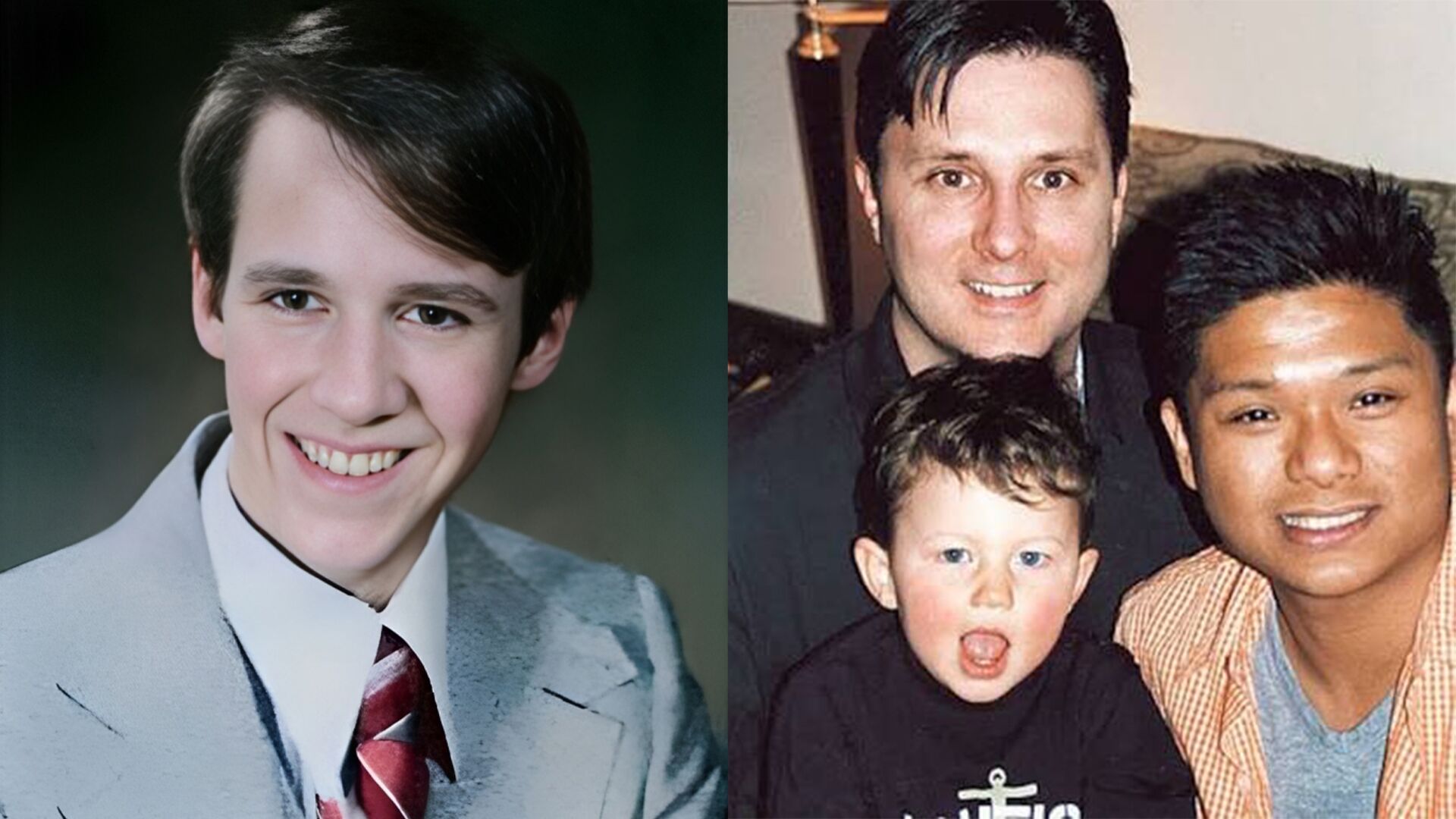
On United Airlines Flight 175, attorney Daniel Brandhorst and store manager Ronald Gamboa were returning home to California with their adopted three-year-old son, David. All three were killed when the plane struck the South Tower.

The Fight for Surviving Partners
As the nation mourned, surviving same-sex partners encountered an immediate, rigid system that refused to acknowledge their grief or their relationships. In 2001, same-sex couples possessed no legal status under federal or state law.
At relief centers near Ground Zero, volunteers turned partners away. “Literally, gay people had to go there, turn around, go back home, and get some paperwork that spouses didn’t have to get to prove a relationship existed,” said Ross Levi, former executive director of the Empire State Pride Agenda. “And worse yet, other people turned them away, even with the paperwork, saying sorry you’re not a family according to our guidelines.”
Local leaders moved quickly to fix these disparities. New York Governor George Pataki signed an executive order in October 2001 allowing surviving same-sex partners to collect state spousal benefits. Activists also created the September 11 Gay & Lesbian Family Fund to supply direct financial support.
Federal aid was far more restrictive. Managers of the federal September 11th Victim Compensation Fund stated they lacked legal authority to pay unmarried partners directly, deferring to state probate laws. Some partners broke through the barrier. Peggy Neff, who lost her partner of 18 years, Sheila Hein, at the Pentagon, received a $557,390 award from fund director Kenneth Feinberg, one of the earliest federal payments granted to a surviving same-sex partner.
A Legacy That Shifted History
The public exposure of these legal inequities built crucial momentum for the modern marriage equality movement, laying groundwork that led to the 2015 Supreme Court ruling legalizing same-sex marriage nationwide.
Meanwhile, physical memorials continue to honor these individual lives. In 2002, International Gay Rugby launched the inaugural Mark Kendall Bingham Memorial Tournament, known as the Bingham Cup. What started as a small San Francisco tribute has grown into the world’s largest amateur gay rugby championship, drawing dozens of international teams.
“Bingham is someone who is really respected,” Jeffrey Thorpe of the Atlanta Bucks told CNN, noting that the tournament helped “mitigate the homophobia gay athletes often encounter.”
Twenty-five years later, the heartbreak of that day remains real, but so does the clarity of their contributions. “The terrorist attack on September 11th is a tragedy that touched every American, impacting people and families from all walks of life,” said Jonathan Lovitz, Senior Vice President for Campaigns and Communications at the Human Rights Campaign. “As in all moments in American history, LGBTQ+ Americans were there, and feel the impact of this day. As we remember the lives lost 25 years later, the heartbreak remains strong and the work to ensure that every person can live safe from violence in this country continues.”


