


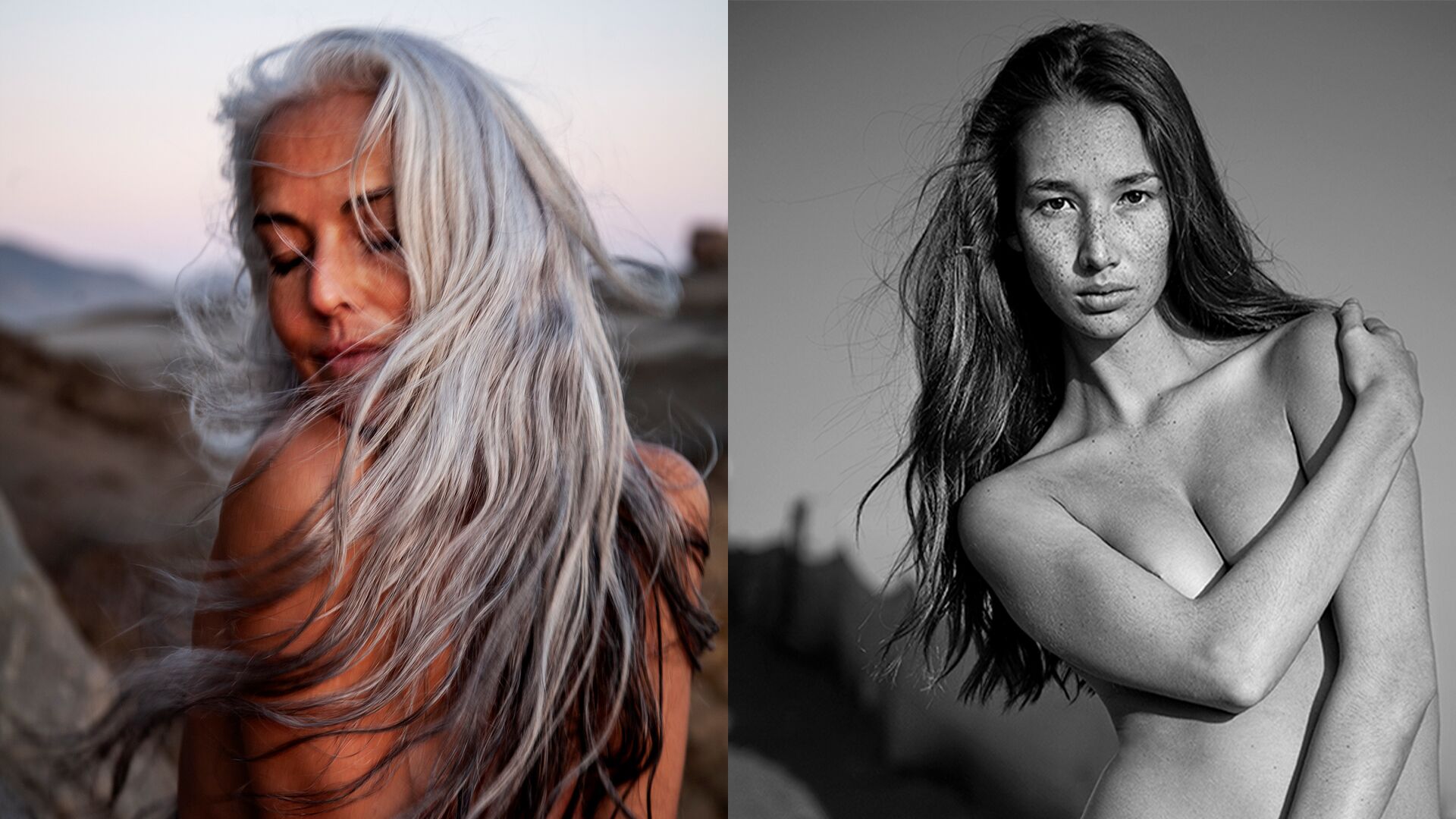
For decades, Renée Jacobs has been fighting for LGBTQ+ visibility. Before she became an internationally recognized photographer, she was helping shape queer legal history as a civil rights and constitutional litigator, bringing some of the earliest gay rights cases in the United States.
Today, her newest photography collection, Dreams from America, continues that mission through a different medium.
The book gathers photographs captured primarily during the Obama years, documenting a period of optimism, intimacy and self-expression before Jacobs and her wife moved from Los Angeles to France in 2016. While the images celebrate queer women, particularly femme-femme relationships, they also serve as a reminder that progress has never been guaranteed.
When I spoke with Jacobs, our conversation ranged from marriage equality and representation to the complicated idea of the “male gaze.” Throughout, one theme remained constant: joy itself can be political.


Looking Back at an Era of Hope
Although Dreams from America is filled with sensual portraits and moments of connection, Jacobs said revisiting the work today comes with mixed emotions.
“We felt that we were on an historical knife’s edge,” she told me. “I lived in Los Angeles, not far from West Hollywood so we thought we were ‘safe’ when really we weren’t.”
The book’s title intentionally references both the American Dream and Barack Obama’s memoir Dreams From My Father. Jacobs said the photographs capture a time when LGBTQ+ rights appeared to be moving forward, even if the road was anything but straightforward.
“These images remind me of how many different ways we seek our tribe(s) and how joyful it is when we find them.”
She also pointed to California’s Proposition 8 as a reminder that victories often arrive alongside painful setbacks.
From Courtrooms to Cameras
Long before photography became her full-time focus, Jacobs was challenging discrimination through the legal system.
She recalled representing a music teacher who lost her position after school officials learned she had written music for a play about a lesbian softball team. In another early case, she sued The Oregonian after the newspaper refused to publish same-sex wedding announcements.
Looking back, she sees a direct connection between that work and the images she creates today.
“I’m seeking to understand myself and where I fit on the spectrum of needs and desires,” she said. “I saw others’ voices and sexuality being smothered and I wanted to help them express who they were and who they loved.”
Rather than directing her subjects into carefully crafted poses, Jacobs prefers collaboration.
“Instead of telling women how to pose or dress, I encourage them to show me, and the world, who they are, how they want to be seen and how they love.”

Why She Calls It ‘Visual Activism’
Jacobs frequently describes her photography as “visual activism,” a phrase she believes carries even greater urgency today.
“We have to continue to stand up and make our voices heard,” she said. “We have to fight the censorship of our lives, our art and our rights.”
She believes representation within queer spaces still has room to grow.
“Every element of who we are deserves a seat at the table.”
That philosophy extends beyond politics and into the stories LGBTQ+ people tell about themselves.
“There is an absolute deficit of queer femme joy in the ether today,” Jacobs said. “And expanding from that, an absolute deficit of acceptance, acknowledgement and appreciation of female desire.”
For Jacobs, visibility isn’t just about appearing on screen or in galleries. It’s about allowing queer women to define themselves instead of being defined by someone else’s perspective.

Rethinking the ‘Male Gaze’
One of Jacobs’ most provocative ideas is her belief that conversations about the “male gaze” and “female gaze” have become too limiting.
Instead, she’d rather people think about an “empowering gaze.”
“I think men are perfectly capable of taking empowering images of women,” she said. “I think women are perfectly capable of taking disempowering images of women.”
For Jacobs, the question isn’t who is behind the camera.
It’s whether the subject has agency.
“As long as they are empowered doing it,” she explained. “They drive it, they want it, they shape it.”
She hopes that same sense of agency will eventually reshape how queer women are portrayed across media.
“Not every queer woman needs to die, be unhappy, inflict self-harm or stare somberly into the camera as her love rides off in the distance,” Jacobs said with a laugh before adding, “Plot twist: we can be happy, joyful and sensual AF. And femme. That too.”

Finding New Meaning Through Color
While assembling Dreams from America, Jacobs revisited decades of work alongside her wife, Wendy, who edited and sequenced the collection.
Rather than discovering one defining image, Jacobs found herself seeing her archive differently.
“I was surprised at my new appreciation for color in my work.”
Unlike her previous books, which leaned heavily on black-and-white photography, Dreams from America embraces California’s golden-hour light.
She compared it to a famous New Yorker anecdote about someone unexpectedly becoming emotional while watching the O.J. Simpson freeway chase because they missed Los Angeles’ unmistakable glow.
“It’s the light,” she recalled. “I miss that light.”

Life in France Changed Her Perspective
Moving overseas also transformed how Jacobs thinks about identity.
She contrasted today’s political climate in the United States with France’s expectations for new citizens, noting that immigrants formally agree to respect equality and sexual orientation.
Living there, she said, has removed anxieties she once carried in America.
“Since we moved to France, we don’t even think about holding hands or showing affection in public,” she said. “Everyone… ‘gets us’ as a couple. It never even enters our minds anymore.”
Holding Up a Mirror
When I asked how she creates photographs that feel intimate without becoming voyeuristic, Jacobs returned to trust.
“I’m less interested in molding ‘the gaze’ than I am in holding up a mirror.”
She sees every portrait as an opportunity to celebrate, rather than reshape, the person standing in front of her camera.
“The women I’ve photographed have shared an incredible gift with me,” she said. “I am not judging or trying to change them, I’m celebrating them.”
That celebration is especially meaningful for femme-femme relationships, which she believes remain overlooked in many corners of the art world despite growing visibility in music and entertainment.
“I can’t think of a single institution or group show that includes, let alone centers, our experiences.”
As our conversation came to a close, I asked what she hopes a young queer person searching for representation takes from Dreams from America.
Her answer was simple, but it felt like the mission statement for both the book and her career.
“We’re here. We’re everywhere. Don’t let anyone question the authenticity of what you need and who you are.”


