


A tense library board meeting in Rutherford County, Tennessee, has placed a spotlight on growing attempts to restrict LGBTQ literature across the state. What began as routine public business on Dec. 1 shifted sharply when Luanne R. James, the recently appointed director of libraries for the Rutherford County Library System, told board members she feared retaliation for refusing to deliver private patron information to the board chair.
A Request That Raised Alarms
According to James, Rutherford County Chief Information Officer and board chair Cody York demanded that she hand over “an Excel spreadsheet with the names of patrons, their addresses, zip codes, [book] barcodes, [the number of] children and adults in each household, and what [books] they were checking out” only days into her new role. James said she was so uneasy about the request that she sought whistleblower protection.
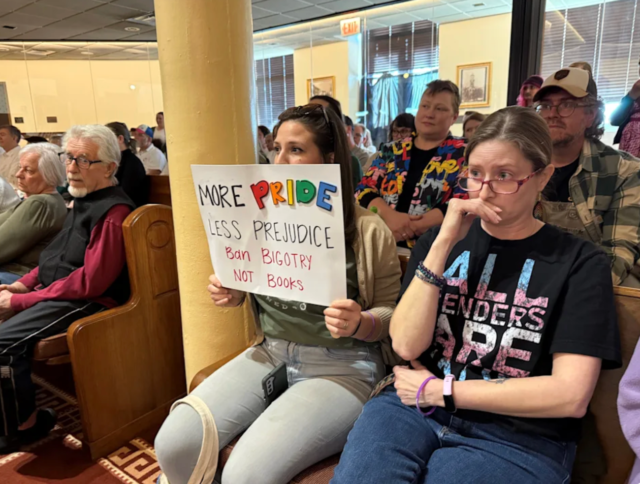
Her testimony added fuel to an already volatile debate about library governance in Tennessee. York has denied wrongdoing, but the concern over data privacy landed in the middle of a broader culture fight playing out across the state’s public libraries.
WATCH: Luanne R. James Testimony [54:00 mark]
A Statewide Push to Monitor LGBTQ Youth Books
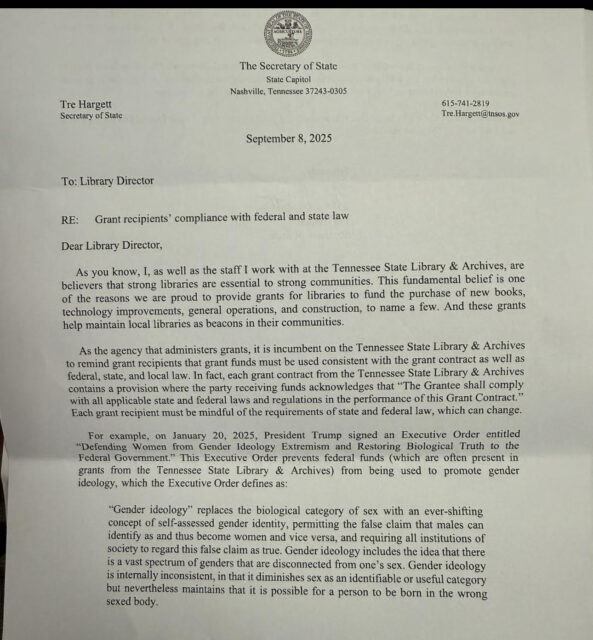
Tennessee libraries have been under sustained pressure since October, when 181 branches were instructed by the Secretary of State to audit juvenile book collections. The directive was framed as aligning with a federal executive order titled “Defending Women from Gender Ideology Extremism and Restoring Biblical Truth to the Federal Government.” Staff in at least two branches in Rutherford County closed their doors for almost a week in November to sift through roughly 60,000 books for LGBTQ themes.
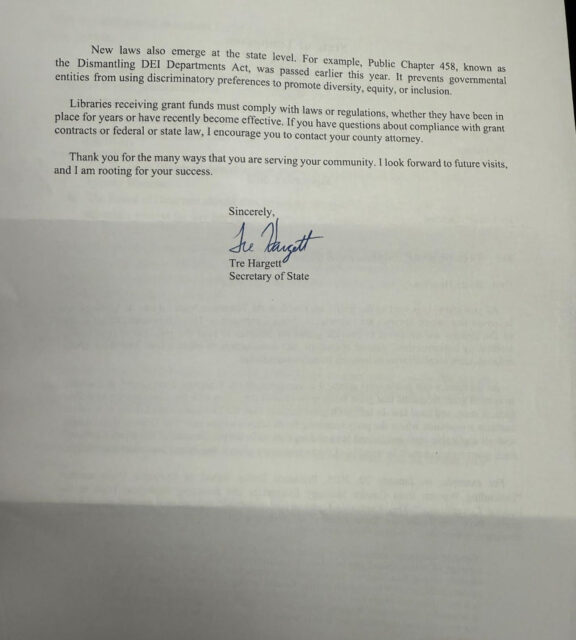
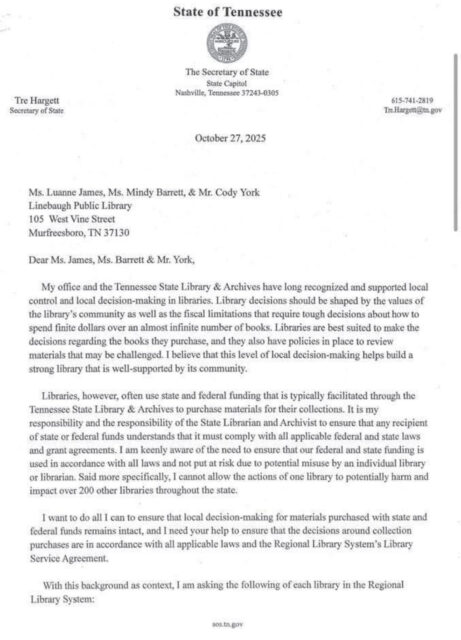
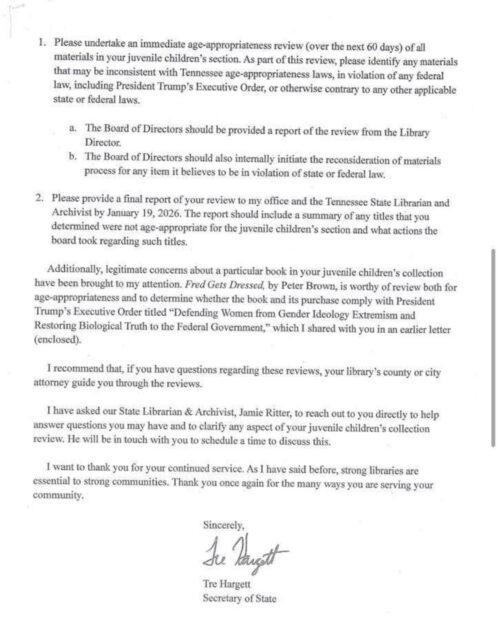
Among the titles York’s supporters want removed is Judy Blume’s 1975 coming-of-age novel Forever, which recently received a Netflix adaptation. The controversy has energized the Rutherford County Library Alliance, a local group fighting what they view as an escalating censorship campaign.
Local Advocates Warn of Broader Consequences
In a Newsweek op-ed, alliance vice president Keri Lambert contrasted long-standing age-based access policies with a push from conservative activists to strip materials from shelves altogether. “The board devised an opt-out graduated library card system,” she said. “This denies anyone under the age of 18 the right to access any information not in their assigned area, youth and children’s sections, including non-fiction and reference materials for school or other educational needs unless their parents physically come into the library to fill out a form.”
Her husband, Frank Lambert, a Library and Information Science associate professor at Middle Tennessee State University, put it plainly: “I believe it’s all driven by one motive only, and that’s to basically eliminate a certain class of people from the library collection as if they didn’t exist. To figuratively put them back in the closet if you will.”
Keri Lambert added that bypassing trained librarians in favor of personal ideology undercuts the profession entirely. “If a librarian has put a book in our library, it’s because our community needs it,” she said. “So by bypassing all of the professionals and saying, ‘Well, I don’t like it, so it should go because I don’t want my kid reading it,’ that goes against the First Amendment.”
Board Refuses to Remove Chairman
Board member Allison Belt called for York to be removed as chair, a move backed by Angela Frederick. York abstained, and the board voted 7-2 to keep him in the role.
Alliance communications director Tatiana Silvas later said the vote reflected misplaced priorities. “It appears that the majority of the board is more concerned about protecting one individual rather than upholding the duties and responsibilities that come with serving on our public library board, eroding public trust in the governance of this body,” she said. Silvas also praised James for speaking up, adding that the director acted despite potential consequences to “her family, her livelihood, and her staff.”
The dispute has become another flashpoint in Tennessee’s ongoing battles over access to LGBTQ literature, and for now, the community’s librarians and advocates appear determined to keep the shelves intact.


