


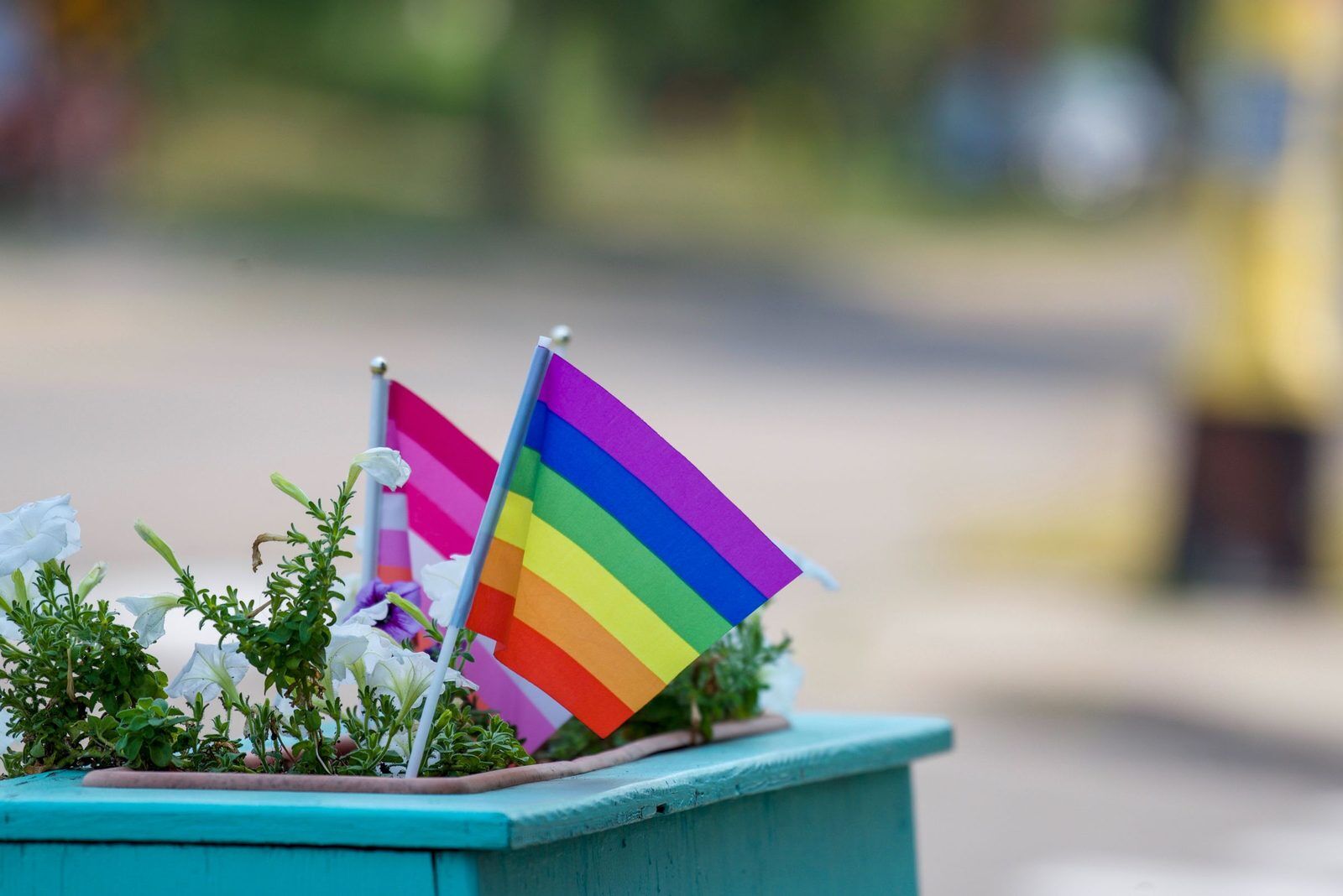
Abrosexual describes a sexual orientation that changes over time. Merriam-Webster defines it through fluidity in orientation. Those changes can involve who someone feels attracted to, the intensity of attraction, or both.
Someone might feel attracted mainly to men for a period, then to people of any gender, then experience little attraction. Abrosexual gives them a word for that pattern. It doesn’t require a fixed sequence or schedule.
What Abrosexual Means, in Plain Terms
Nobody hands out a schedule. Some people notice shifts over years, and others describe faster swings, and neither dictionaries nor campus glossaries require a particular sequence or speed.
Indiana University of Pennsylvania’s terminology list folds the sexual and romantic versions into one entry: “someone who experiences a fluid and/or changing orientation.” Its source is author Ashley Mardell’s 2016 book, The ABC’s of LGBT+.
The romantic version has its own name. Abroromantic means romantic attraction that shifts over time. Some people use both words and some use one. Plenty of people whose attractions wander never use either, and that’s their call.
Where the Word ‘Abrosexual’ Came From
The dictionaries cited here do not identify a person who coined the term. Merriam-Webster dates its earliest known use to 2012.
Merriam-Webster dates the first known use to “2012, in the meaning defined above.” Dictionary.com’s gender and sexuality dictionary tells it a little differently. The term is “thought to have first been used around 2013 in the online art community DeviantArt,” it says, and it “spread in online stories about gender and sexual identity around 2016.” Those dates don’t quite line up. Neither source names a person.
Merriam-Webster calls the prefix abro- “of uncertain origin.” Its note describes an online theory linking it to the Ancient Greek habrós, associated with grace and refinement. The dictionary does not present that connection as a confirmed origin of the identity label.
Abrosexual vs. Bisexual, Pansexual and Sexually Fluid
Lots of people use more than one of these labels, because they overlap. GLAAD’s glossary defines bisexual as the potential for attraction to more than one gender, “not necessarily at the same time, in the same way, or to the same degree.” The same glossary describes a bi+ umbrella “inclusive of those who call themselves bisexual, pansexual, fluid, queer” and similar labels. For many people, change over time already fits inside bisexuality.
| Label | What it centers | How it relates to abrosexual |
|---|---|---|
| Abrosexual | Orientation that changes over time | Names the change itself as the identity |
| Abroromantic | Romantic attraction that changes over time | Same idea, applied to romance |
| Bisexual | Attraction to more than one gender | Attraction can vary in timing and degree; a bi person may never feel the need for another label |
| Pansexual | Attraction regardless of gender | Says who someone can be drawn to, not whether that changes |
| Fluid / sexually fluid | Shifts in attraction, often used both as a label and as a research term | The closest cousin; some people use “fluid” and “abrosexual” interchangeably |
| Asexual | Little or no sexual attraction | Can be one point an abrosexual person passes through, as in Merriam-Webster’s example |
Mostly it comes down to emphasis. Bisexual and pansexual describe the range of genders someone can be drawn to, while abrosexual describes the pattern over time. That’s how a person can be bi and abrosexual at once. Demisexual sits on a separate axis again, since it’s about attraction that shows up only after an emotional bond.
What Research on Sexual Fluidity Shows
The studies below examine sexual fluidity, rather than people who specifically identify as abrosexual. They offer context for changes in attraction and identity.
“The findings demonstrate considerable fluidity in bisexual, unlabeled and lesbian women’s attractions, behaviors and identities,” psychologist Lisa Diamond of the University of Utah said in an American Psychological Association release. She’d followed 79 women who identified as lesbian, bisexual or unlabeled for 10 years, interviewing them five times, in a study that ran in Developmental Psychology in 2008. According to the release, 17% of participants switched from bisexual or unlabeled to heterosexual during the study. More than half of those women later switched back. APA’s headline: “Bisexuality not a transitional phase among women.”
Big surveys catch change too. It’s just less common than stability.
- Midlife adults: Mock and Eibach tracked 2,560 adults from the national Midlife in the United States (MIDUS) survey, average age about 47, between 1994 to 1995 and 2004 to 2006. Somewhat more than 2% reported a different orientation identity 10 years later (Archives of Sexual Behavior, 2012). Heterosexual identity held the steadiest.
- Young adults: Savin-Williams, Joyner and Rieger checked in on 12,287 young adults in the National Longitudinal Study of Adolescent Health about six years apart. Identity stayed the same more often than it changed, and bisexual was the least stable category (Archives of Sexual Behavior, 2012).
Fluidity is “a capacity for situation-dependent flexibility in sexual responsiveness,” Diamond wrote in a 2016 review in Current Sexual Health Reports (PDF). She keeps this kind of “unintentional” change separate from deliberate efforts to get rid of same-sex attraction. “The existence of sexual fluidity does not imply that ‘everyone is bisexual,’ or that sexual orientation does not exist,” she writes.
None of this props up conversion therapy. “There is currently no evidence that therapeutic attempts to extinguish same-sex attractions are effective,” Diamond writes in the same review, adding that “these attempts have been found to cause psychological harm.”

Is Abrosexual Real, or Just a Phase?
Real people use it to describe their own experience, which makes it a real label. Merriam-Webster lists it, and university LGBTQ+ centers define it. The fluidity research above shows that shifting attraction is a documented human pattern.
A label can change while the attraction stays put, and the reverse happens too. Someone might find a better word for feelings that never moved. Someone else might feel their attraction shift and keep one label for life. Neither case gives anyone else the right to assign a label, and the only person who decides whether “abrosexual” fits is the person using it.
The Abrosexual Flag and Its Tumblr Roots
The abrosexual flag has five horizontal stripes: green, pale green, white, pink and deeper pink. Dictionary.com records a version shared on Tumblr in 2016. Its account does not establish a designer or original meaning for each stripe.
Color meanings vary across community guides. Avoid treating one interpretation as a universal rule. Gayety’s guide to the bisexual flag explains another orientation flag’s history.
Abrosexual Meaning FAQ
What does abrosexual mean?
It’s a sexual orientation that changes over time, in who someone is attracted to, how strongly, or both. Merriam-Webster gives the example of moving from bisexuality to pansexuality to asexuality.
What is the difference between abrosexual and bisexual?
Bisexual describes attraction to more than one gender, and abrosexual describes change in orientation over time. Per GLAAD, bi attraction can vary in timing and degree, so some people use both labels and some use only one.
Is abrosexual the same as sexually fluid?
They’re very close. CU Boulder’s guide defines abrosexual as attraction “that is fluid or changes over time.” “Fluid” works as a label and as a research term for shifting attraction, while abrosexual is a specific identity label for that experience.
Who created the word abrosexual?
No coiner is documented. Merriam-Webster dates the first known use to 2012. Dictionary.com points to DeviantArt around 2013.
What does ‘abro’ mean in abrosexual?
Merriam-Webster calls the prefix “of uncertain origin.” It notes an online theory connecting it with Ancient Greek habrós, but does not confirm that derivation.
What is abroromantic?
It means romantic attraction that changes over time. Indiana University of Pennsylvania’s glossary lists the two together as abrosexual/romantic.
Can a person be abrosexual and gay or straight?
Some abrosexual people spend stretches of time feeling gay, straight, bi or ace, and they may describe those stretches that way. Gayety’s explainer on the Kinsey scale takes a broader look at how researchers have mapped attraction on a spectrum.
What colors are on the abrosexual flag?
Five horizontal stripes run from green through pale green, white and pink to a deeper pink.


