


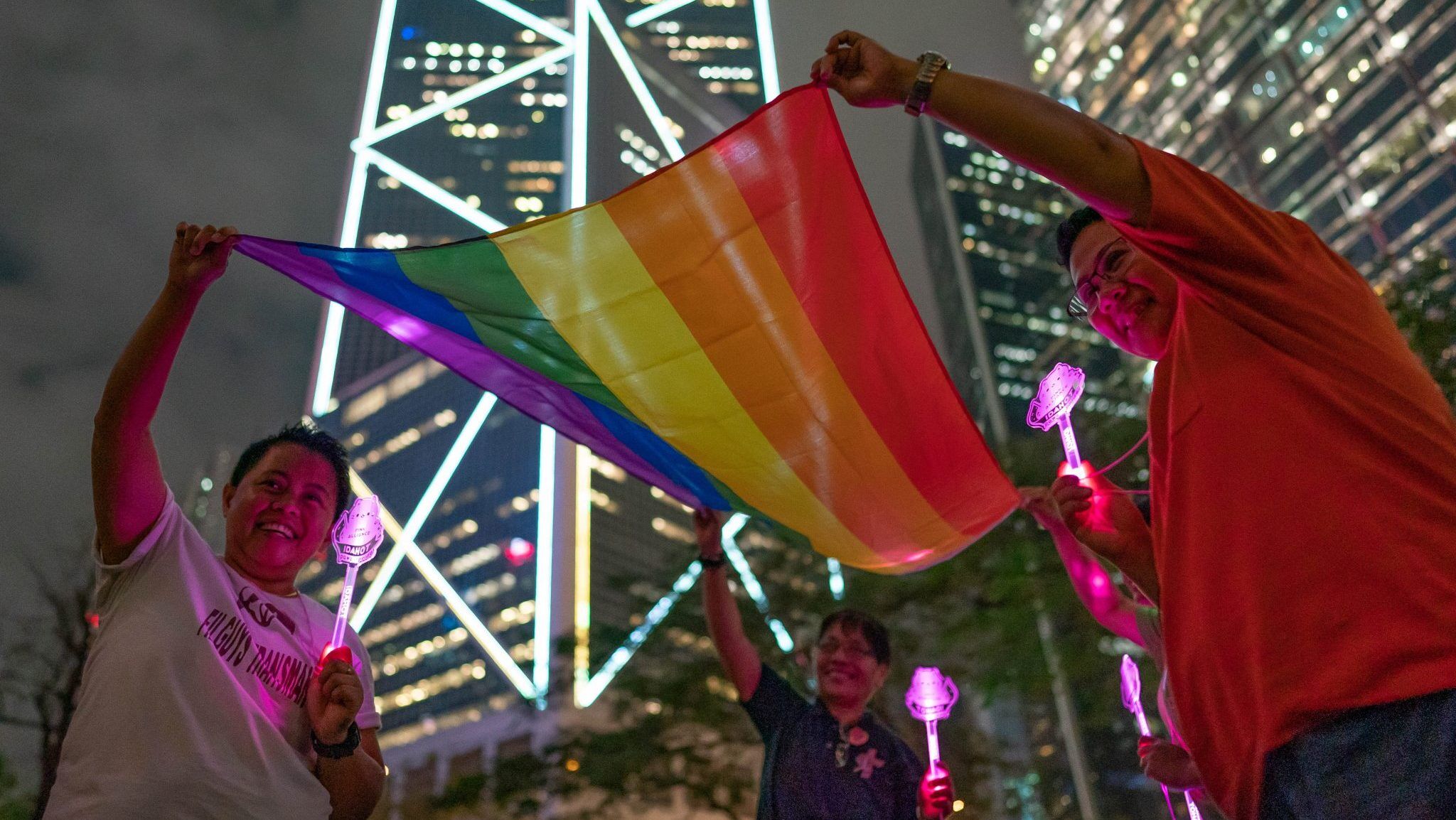
Hong Kong lawmakers are scheduled to take up a rewrite of the city’s sex crime laws on Nov. 25. Some of those laws still single out men who have sex with men, years after judges found them discriminatory. The Security Bureau announced the date Nov. 11, setting first and second readings of the Sexual Offences Legislation (Amendment) Bill 2026 for that meeting. It scheduled gazette publication for Nov. 13.
The bureau says much of the current wording came from English legislation enacted in 1956. Its spokesperson singled out “distinctions based on sexual orientation” as one reason for the overhaul.
The government wants to finish the legislation before its term ends in June 2027, Hong Kong Free Press reported. Lawmakers still have to consider and pass it.
Repeated child sexual abuse and cyberflashing are also part of the package. For gay men, the changes would remove distinctions that have survived on the books through two decades of court challenges.
The Men-Only Offences Slated for Replacement
The Security Bureau’s July consultation paper says some current offences “are rooted on homosexual sexual act, such as the offences of buggery and gross indecency by males.”
The July paper lists 23 offences for replacement in Appendix C. They include sections 118C and 118H, which concern sexual acts with or by males under 16. Sections 118G and 118K address procuring sexual acts between men; section 118J concerns acts between men outside private settings. This list comes from the consultation proposals, which preceded the bill.
Rape would get a broader definition under the July proposals, too. It would cover nonconsensual penetration of the vagina, anus or urethra with a body part or object, as well as penile penetration of the mouth and causing those acts. The definition would allow for male victims and female principal offenders.
Courts Have Already Ruled Against These Laws
Judges have been ruling against these laws for two decades. In Leung TC William Roy v Secretary for Justice in 2006, a court found it unconstitutional to set a higher age of consent (21) for sex between men than the 16 that applied to sex between men and women, the consultation paper says. Lawmakers didn’t align the statute until the Statute Law (Miscellaneous Provisions) Ordinance 2014.
In May 2019, the Court of First Instance’s ruling in Yeung Chu Wing v Secretary for Justice declared sections 118G, 118H, 118J(1) and 118K inconsistent with “Article 25 of the Basic Law and Article 22 of the Hong Kong Bill of Rights,” according to the Law Reform Commission’s December 2019 report. The sections stayed in the ordinance.
The government says the bill draws on Law Reform Commission recommendations. The commission’s 2019 report called for a uniform age of consent of 16 “irrespective of gender and sexual orientation.”

What Trans Advocates Want From the Rewrite
Christine Chu, a spokeswoman for the transgender rights group Quarks, supported the gender-neutral rewrite in July, the South China Morning Post reported in a story republished by The Star.
“The explicit inclusion of surgically constructed body parts within legal definitions reduces ambiguity for those who have undergone gender-affirming procedures,” she said.
Chu cautioned that policing and court proceedings could still reflect assumptions about gender, from identifying victims to taking statements and assessing credibility.
The bureau counted 6,228 written submissions in the July 7 to Aug. 5 consultation and says 99.3% of them “showed support and made positive comments.”
A Different Fight From Partnership Recognition
The same chamber killed the Registration of Same-sex Partnerships Bill at second reading on Sept. 10, 2025, with “14 votes in favour, 71 votes against and one vote abstaining,” the government said.
Gayety covered the bill when it was introduced. It offered limited rights to same-sex couples registered overseas. Officials wrote it to answer the Court of Final Appeal’s 2023 ruling in Sham Tsz Kit v Secretary for Justice, which called for an “alternative framework” for legal recognition of same-sex partnerships, according to news.gov.hk.
The November proposal will put a different set of questions before lawmakers: who the criminal law protects, and whether it treats sexual offences equally. It does not establish legal recognition for same-sex couples.


