


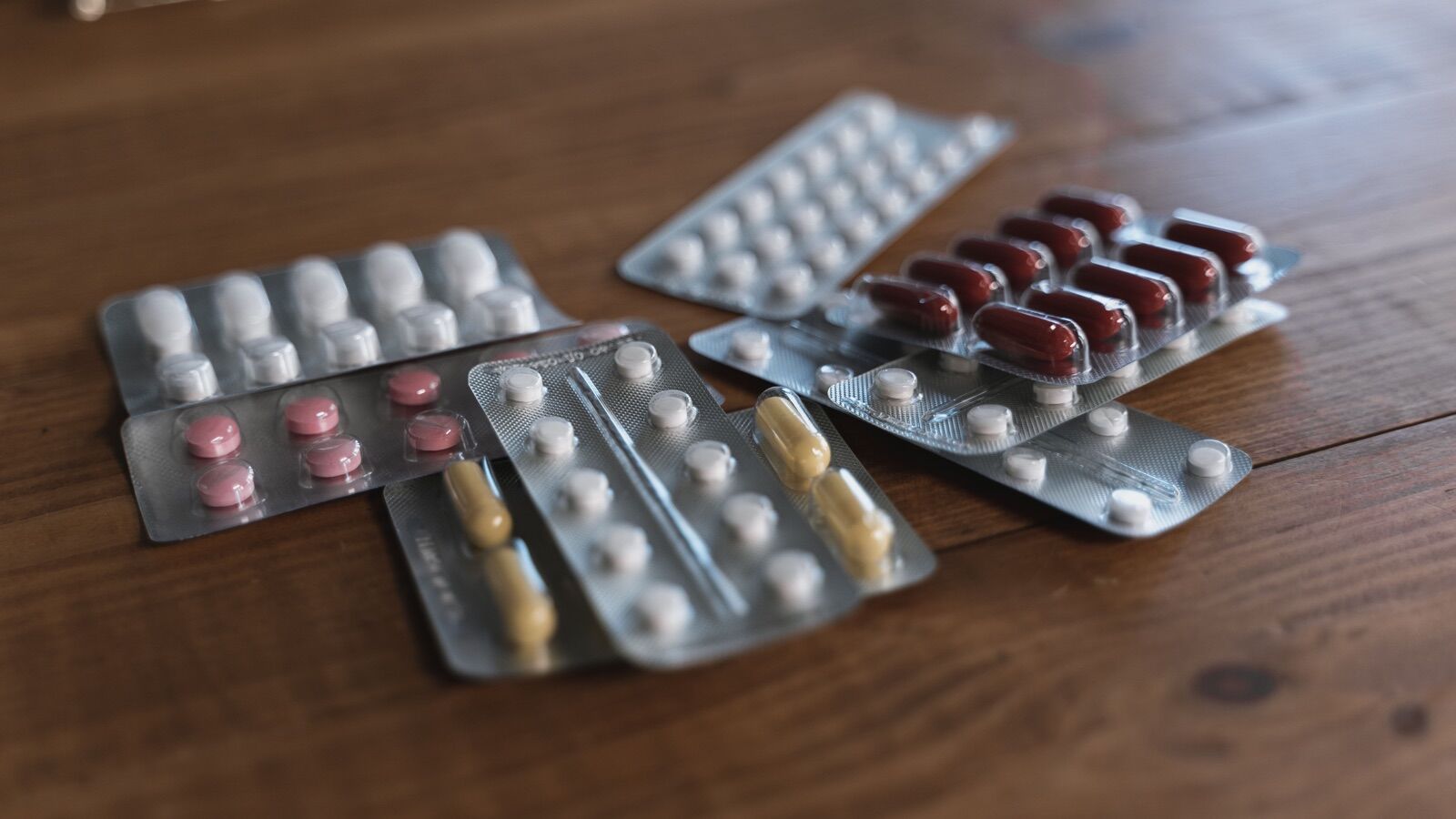
“PrEP, or pre-exposure prophylaxis, is medicine people at risk for HIV take to prevent getting HIV from sex or injection drug use,” HIV.gov says.
The CDC’s clinical guidance for PrEP says, “When taken as prescribed, both oral and injectable PrEP reduce the risk of getting HIV from sex by about 99%.”
Two pills, Truvada (or its generic) and Descovy, have FDA approval for PrEP, according to HIV.gov. So do two shots, Apretude and Yeztugo.
PrEP Pills and Shots Compared: Truvada, Descovy, Apretude, Yeztugo
The FDA labels clear all four for adults and adolescents who weigh at least 35 kilograms, about 77 pounds. Schedules in the table come from CDC guidance and those labels.
| Option | Drug | How it’s given | How often | HIV testing per CDC |
|---|---|---|---|---|
| Truvada or generic | Emtricitabine/tenofovir disoproxil fumarate (F/TDF) | Pill | Daily | At least every 3 months |
| Descovy | Emtricitabine/tenofovir alafenamide (F/TAF) | Pill | Daily | At least every 3 months |
| Apretude | Cabotegravir | Shot from a provider | Two shots a month apart, then every 2 months | At least every 2 months |
| Yeztugo | Lenacapavir | Shot under the skin, plus starter tablets | Every 6 months | Before each injection |
How Well Does PrEP Work Against HIV?
The 99% is for sex. For people who inject drugs, the CDC says oral PrEP reduces that risk “by at least 74%.”
“PrEP reduces the risk of getting HIV from sex by about 99% when taken as prescribed,” HIV.gov says. Both numbers carry that same condition.
“PrEP protects you against HIV but not against other STIs or other types of infections,” HIV.gov says. Gayety’s World AIDS Day 2026 guide has the latest global HIV numbers.
Daily Oral Options: Truvada, Generic F/TDF and Descovy
The CDC says, “Daily oral PrEP with F/TDF is recommended to prevent HIV among all people with sex or injection drug use risk factors.”
Descovy’s FDA prescribing information covers sexual exposure “excluding individuals at risk from receptive vaginal sex.”
“F/TAF has not yet been studied for HIV prevention for people assigned female at birth,” the CDC says.
HIV.gov says, “Some people taking PrEP may have side effects, like nausea, diarrhea, headache, fatigue, and stomach pain.”
2-1-1 means taking pills only around sex. “Off-label 2-1-1 dosing is not approved by the FDA,” the CDC says. It is also “not recommended by the Centers for Disease Control and Prevention (CDC).”
The agency says the method “has only been studied in adult gay and bisexual men.” It warns that stopping and starting tenofovir “can cause hepatic flares in people with active HBV infection and should be avoided.” People with hepatitis B should talk with a clinician before considering 2-1-1.
Apretude, the Cabotegravir PrEP Shot Every Two Months
Apretude, the first long-acting HIV prevention shot, won FDA approval Dec. 20, 2021. Debra Birnkrant, M.D., then director of the FDA’s Division of Antivirals, called it the “first option to prevent HIV that does not involve taking a daily pill.”
“CAB for PrEP is started by administering the first injection followed by a second injection 1 month after the first,” the CDC says, and “CAB injections are given every 2 months thereafter.”
Yeztugo (Lenacapavir), the Twice-Yearly HIV Prevention Injection
The FDA approved Yeztugo on June 18, 2025, for “sexually acquired HIV-1 in adults and adolescents,” Gilead announced.
Gilead reported “zero HIV infections among 2,134 participants” taking Yeztugo in PURPOSE 1 and “two HIV infections among 2,179 participants” in PURPOSE 2.
The CDC’s lenacapavir recommendation, out Sept. 18, 2025, starts people with shots on day one and tablets on days one and two. After that it’s “Every 6 months (26 weeks) ±2 weeks, from the date of the last injection.”
“This is a strong recommendation, based on high certainty of evidence,” the CDC wrote. “Additional research is needed to understand LEN’s effectiveness in persons who inject drugs,” the same report says.
Gilead lists injection site reactions first among common side effects. The label’s boxed warning reads, “Drug-resistant HIV-1 variants have been identified with use of Yeztugo by individuals with undiagnosed HIV-1 infection.” The CDC calls for an HIV test before each injection.
The World Health Organization added lenacapavir to its guidelines in July 2025, and Director-General Tedros Adhanom Ghebreyesus said, “While an HIV vaccine remains elusive, lenacapavir is the next best thing.”
In Gilead’s PURPOSE 5 trial, 86% stayed on the twice-yearly shot over a year, against 46% on daily pills, Gayety reported Nov. 7, 2026.
Does Insurance Cover PrEP and Yeztugo in 2026?
HIV.gov says, “Under the Affordable Care Act, PrEP is free under almost all health insurance plans.”
The U.S. Preventive Services Task Force gave PrEP a Grade A on Aug. 22, 2023. “The USPSTF recommends that clinicians prescribe preexposure prophylaxis using effective antiretroviral therapy to persons who are at increased risk of HIV acquisition to decrease the risk of acquiring HIV,” it says.
The Supreme Court kept that system in place on June 27, 2025. KFF wrote that “the Court ruled (6-3)” the preventive services requirement is constitutional. KFF added that “the HHS Secretary has the power to remove USPSTF members at will and to review the recommendations they issue.”
Health Secretary Robert F. Kennedy Jr. named “eight new members” to the panel on Sept. 17, 2026, HHS announced. “The panel hasn’t met in more than a year, after its meetings were canceled by Kennedy,” STAT reported that day.
It met again Sept. 29 and 30, according to AHRQ. The 2023 PrEP page on the task force site is still headed “Final Recommendation Statement.”
The National Alliance of State & Territorial AIDS Directors, or NASTAD, wrote in March 2026 that “many plans are not yet applying the zero-cost-sharing mandate to Yeztugo®,” because the 2023 review came before its approval.
At one St. Louis clinic, about 4 in 10 patients prescribed injectable PrEP never started it, mostly over insurance. Yeztugo’s U.S. list price is $28,218 a year, Gayety reported, citing The Associated Press, in its story on generic lenacapavir’s FDA tentative approval.
Medicare’s PrEP coverage page says, “People with Medicare don’t pay deductibles, copayments, or coinsurance,” and that “Medicare now covers Yeztugo® (lenacapavir) for Pre-exposure Prophylaxis (PrEP).”
“State Medicaid programs must cover Yeztugo®,” NASTAD says. Cost-sharing and prior authorization rules vary by state.
How to Get a PrEP Prescription and Your First HIV Test
“PrEP is only available by prescription,” HIV.gov says. Its HIV Services Locator lists clinics near you.
“HIV testing is required to confirm that patients do not have HIV before starting PrEP,” the CDC says. Repeat tests are part of every option after that.
Tell the clinician about any hepatitis B history and other medicines you take. “People who inject drugs that are not prescribed to them should be offered PrEP,” the CDC says.
PrEP FAQ
What Is Yeztugo?
HIV.gov describes Yeztugo, Gilead’s brand name for lenacapavir PrEP, as “an injection given by your health care provider twice yearly instead of daily pills.”
Is the PrEP Shot Better Than the Pill?
CDC guidance says oral and injectable PrEP each cut the risk from sex “by about 99%” when taken as prescribed. Which one fits depends on the schedule you’ll keep and what your plan covers.
Is PrEP Free?
HIV.gov says PrEP “is free under almost all health insurance plans,” though NASTAD reports some private plans still charge for Yeztugo.


