



There’s a moment every pop artist dreams about: realizing a song no longer belongs only to you.
For Puerto Rican pop artist José Alfredo, that moment arrived with “PERRO.”
Originally released in Spanish, the track quickly became more than a dance record. Its title, a word that can carry judgment depending on context, sparked conversation among LGBTQ+ listeners who saw something else in it: permission. Permission to take up space. Permission to be desired. Permission to stop apologizing.
Now José Alfredo is opening the door even wider.
His new single, “Untamed,” releases June 5 at the start of Pride Month, reimagines the spirit of “PERRO” for English-speaking audiences. Rather than translating line for line, José built something new from the same emotional DNA.
When I spoke with him for Gayety, our conversation moved beyond the music itself and into identity, performance, confidence, and what happens when queer audiences see themselves reflected back.

When A Song Stops Being Personal
Artists often talk about wanting connection. What they don’t always expect is how deeply that connection can land.
José admitted the response to “PERRO” caught him emotionally.
“It was honestly very emotional for me. When I released ‘PERRO,’ I knew the song came from a place of confidence and liberation, but seeing LGBTQ+ audiences connect with it so deeply made me feel understood.”
That reaction shifted his relationship with the song.
“It reminded me that sometimes what feels personal can become collective. For me, ‘PERRO’ became more than a song, it became a way of saying: I am not ashamed of who I am, how I move, how I love, or how I take up space.”
That idea, taking language that once carried shame and turning it into something celebratory, became central to the project.
Reclaiming The Narrative
Reclaiming language can create empowerment, but it also asks people to misunderstand you before they understand you.
José told me there was hesitation before fully committing to the concept.
“Yes, absolutely. The word ‘perro’ can carry different meanings depending on the context, and I knew some people might misunderstand it at first.”
But discomfort became part of the creative challenge.
“I wanted to take something that could be used as an insult or judgment and turn it into something playful, powerful, and confident.”
He continued:
“There was vulnerability in that, but also freedom. Once I understood that the message was coming from self-love and empowerment, I stopped being afraid of it.”
That refusal to shrink shows up throughout the project’s visuals and messaging.
Why ‘Untamed’ Isn’t A Translation
When artists cross into English-language releases, the expectation is often straightforward translation.
José wasn’t interested in that.
“I didn’t want ‘Untamed’ to feel like a direct translation. I wanted it to have its own soul.”
Instead of recreating “PERRO,” he focused on preserving the emotional experience.
“I focused more on the feeling behind the song: freedom, desire, confidence, and not allowing anyone to tame who you are.”
The result, he said, became something independent.
“It became a new version of the same spirit, but with its own identity.”
There’s a confidence in that approach, not treating English as an entry point that requires dilution, but as another language to tell the same truth.
Pride Isn’t Always Polished
With “Untamed” arriving during Pride Month, I asked José how intentional it was to avoid polished messaging.
His answer came quickly.
“It was very important. Pride is beautiful, but it is not only about perfection or polished messages.”
Instead, he wanted something that felt alive.
“It is also about survival, desire, rebellion, joy, sensuality, and truth.”
And for anyone expecting provocation just for headlines, José drew a clear line.
“For me, being provocative is not about shock value — it is about being honest enough to make people feel something.”
That mindset extends into the visual world of “PERRO.”
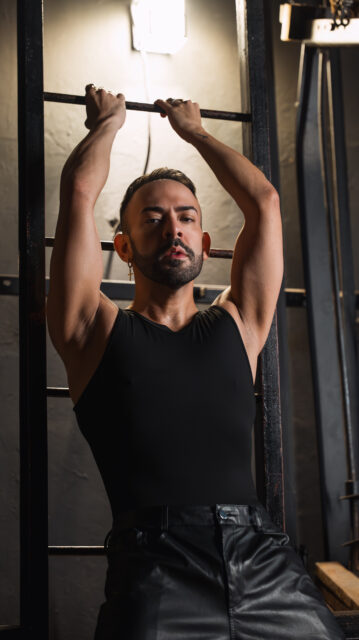
Owning Space As A Puerto Rican Queer Artist
The video embraces sensuality without apology, but José said the intention went deeper.
“I wanted people to talk about confidence, freedom, and the right to exist without asking for permission.”
He added:
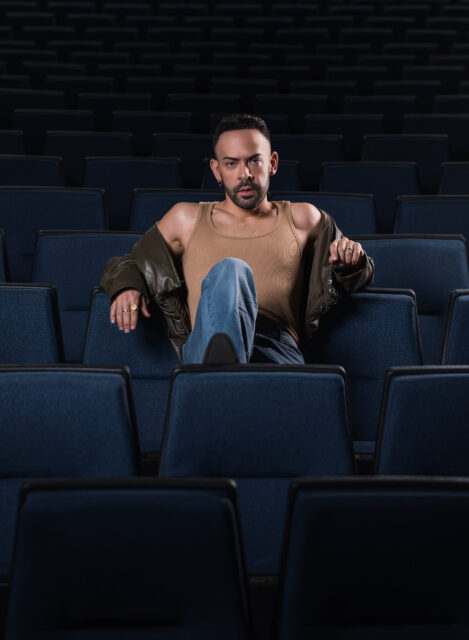
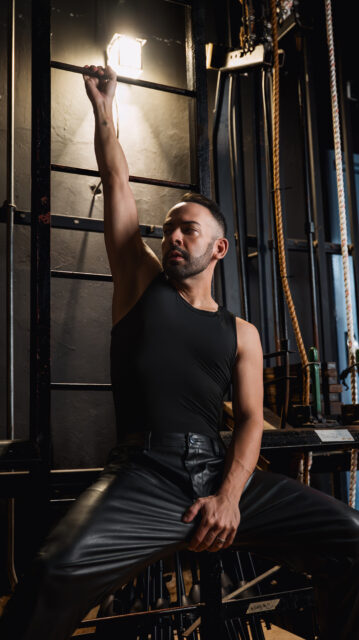
“I wanted people to see a Puerto Rican pop artist embracing his body, his energy, and his identity without hiding.”
His cultural identity remains inseparable from his music.
“Being Puerto Rican is a huge part of how I understand music. We come from a culture full of rhythm, emotion, drama, color, and passion.”
Pair that with queer storytelling and it shapes his whole perspective.
“My music lives somewhere between those two worlds: the intensity of being Puerto Rican and the vulnerability of being queer.”

The Pop Stars Who Made Him Feel Seen
José’s musical influences read like a queer pop starter pack.
“Growing up, artists like Ricky Martin, Madonna, Britney Spears, Gloria Trevi, Mónica Naranjo, and Paulina Rubio made a big impact on me in different ways.”
What connected them wasn’t genre.
“Some gave me drama, some gave me freedom, some gave me fantasy, and others gave me strength.”
And ultimately:
“They helped me understand that pop music can be a place where you create your own world.”
What Being ‘Untamed’ Means Now
At this point in his career, José says freedom looks less like rebellion and more like trust.
“Being untamed means not shrinking myself anymore.”
He paused the definition there before expanding.
“It means trusting my instincts, my body, my voice, and my story.”
Then came the line that feels closest to a mission statement for this era:
“I am no longer interested in that. Being untamed means allowing myself to be bold, emotional, sensual, imperfect, and completely free.”
Ironically, offstage, he says he’s much quieter than audiences expect.
“People might be surprised that I am very sensitive and sometimes even shy offstage.”
He laughed describing himself.
“I overthink everything, and I care deeply about the people around me. The performer is bold, but the person behind it is very human.”
And if “Untamed” could soundtrack one iconic queer movie moment?
José didn’t name a title.
He imagined something bigger.
“A final scene where someone leaves fear behind, steps into a club, a street, or a stage, and fully owns who they are.”
Then he gave the visual mood board:
“Paris Is Burning meets a modern pop fantasy: glamorous, defiant, emotional, and completely free.”
“Untamed” releases across platforms on June 5.


