


Respecting someone’s pronouns might seem like a small act. For transgender and nonbinary (TGNB) young people, research shows it can carry life-altering weight.
New findings from The Trevor Project’s 2024 U.S. National Survey on the Mental Health of LGBTQ+ Young People reveal a sobering reality: fewer than half of TGNB youth say their pronouns are consistently respected by people in their daily lives. The gap isn’t just social, it’s tied to mental health outcomes, including suicide risk.
How TGNB Young People Use Pronouns
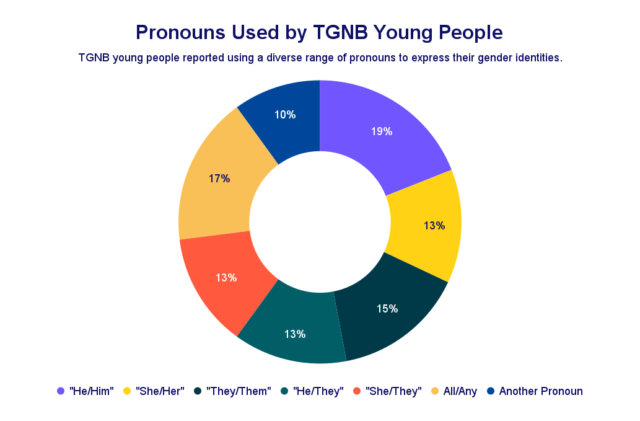
Pronoun use among TGNB youth reflects a wide range of identities, with many moving beyond strictly binary language.
According to the survey:
- About 32% reported using only binary pronouns such as he/him or she/her.
- 26% used a mix of binary and nonbinary pronouns, including he/they or she/they.
- 15% used nonbinary pronouns like they/them.
- Others reported using all or any pronouns, while a smaller group used alternatives often called neopronouns, including it/its or variations like xe/xir and ze/zir.
These choices often reflect a desire for language that better mirrors personal identity or challenges rigid definitions of gender altogether.
Who Gets Their Pronouns Respected and Who Doesn’t
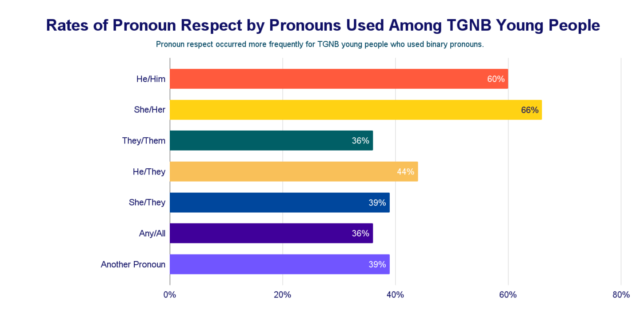
Pronoun respect isn’t evenly distributed.
Transgender boys and men reported the highest levels of affirmation, with 52% saying their pronouns were honored by most or all people in their lives. Transgender girls and women followed closely at 48%.
That number dropped for youth questioning their gender (40%) and fell further for nonbinary young people, with only 37% reporting consistent respect. Those using mixed or less familiar pronouns were more likely to experience misgendering, whether intentional or accidental.
The Mental Health Stakes Are Real
The consequences of pronoun disregard extend far beyond discomfort.
TGNB young people whose pronouns were respected reported lower rates of suicide attempts in the past year compared to peers who faced regular misgendering. The data shows a 31% reduction in odds of a suicide attempt among those who experienced consistent pronoun respect.
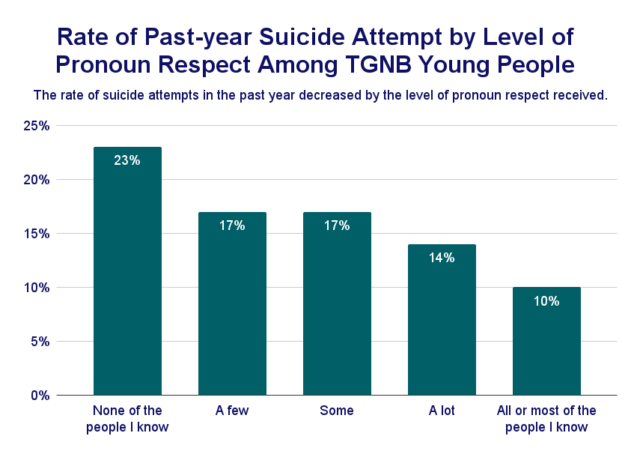
This aligns with earlier research linking affirmation to reduced anxiety, distress, and emotional harm. In short, language can function as a protective factor.
Why Pronoun Respect Still Falls Short
Barriers often stem from unfamiliarity rather than malice. Some TGNB youth use pronouns that are not widely taught or understood, increasing the likelihood of mistakes by peers, educators, caregivers, and health professionals.
While memorizing every pronoun variation may not be realistic, experts emphasize a simpler approach: listen, follow cues, and correct mistakes without defensiveness.
Building Safer, More Affirming Spaces
Creating environments that respect pronouns requires intention across multiple settings: schools, digital platforms, healthcare spaces, homes, and friend groups.
Practical steps include:
- Normalizing pronoun sharing without pressure
- Offering inclusive training for adults and professionals
- Designing systems that allow chosen names and pronouns to be updated easily
These efforts help reduce harm while reinforcing dignity and recognition.
Support Beyond the Data
The Trevor Project continues to expand resources for TGNB youth, including TrevorSpace, a moderated online community for LGBTQ+ people ages 13 to 24. The organization also offers free, 24/7 crisis services staffed by counselors trained to consistently respect names and pronouns.
As research evolves, one message remains clear: affirmation isn’t optional. For TGNB young people, being seen, and addressed correctly, can be a matter of survival.


