

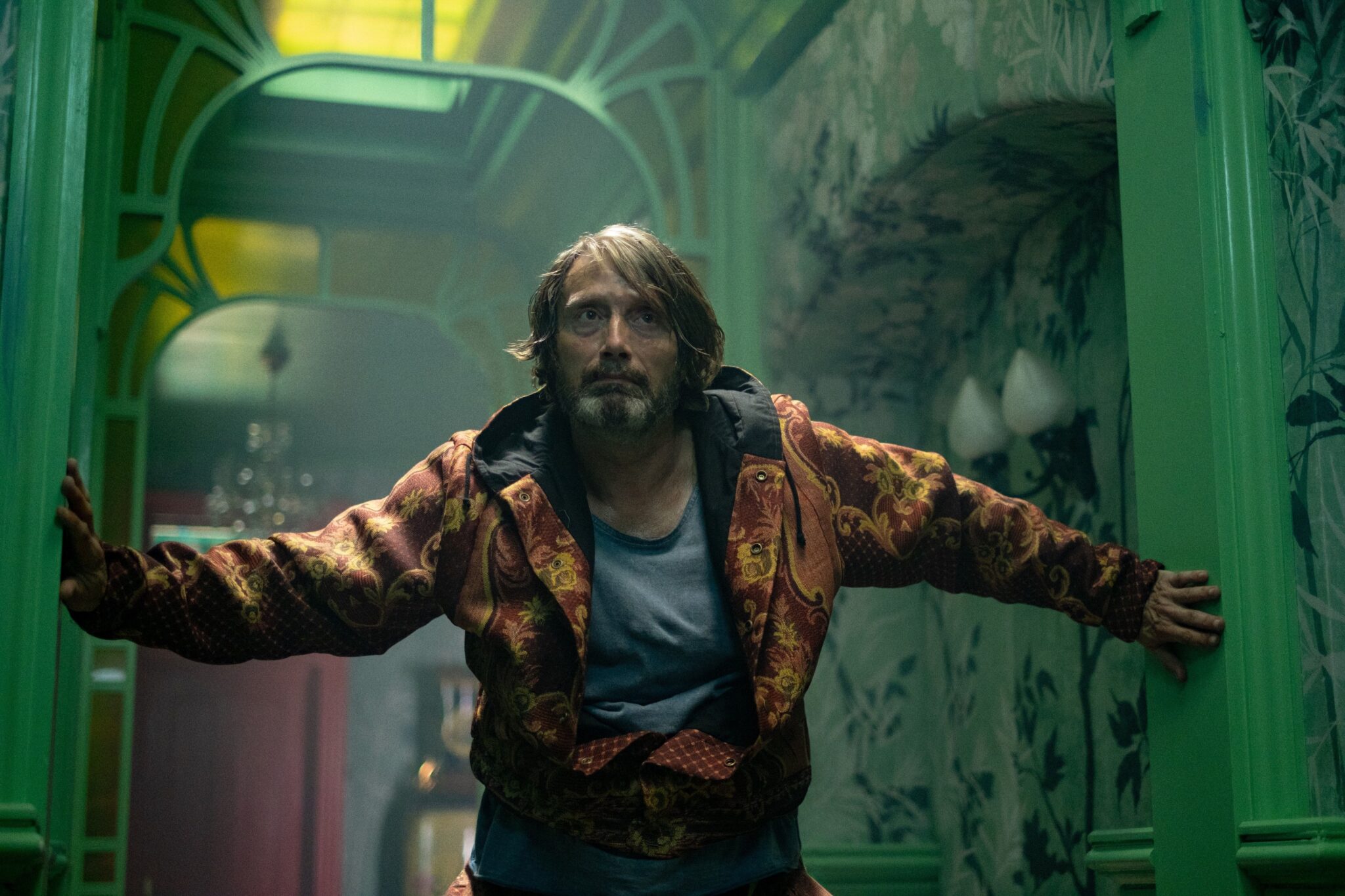
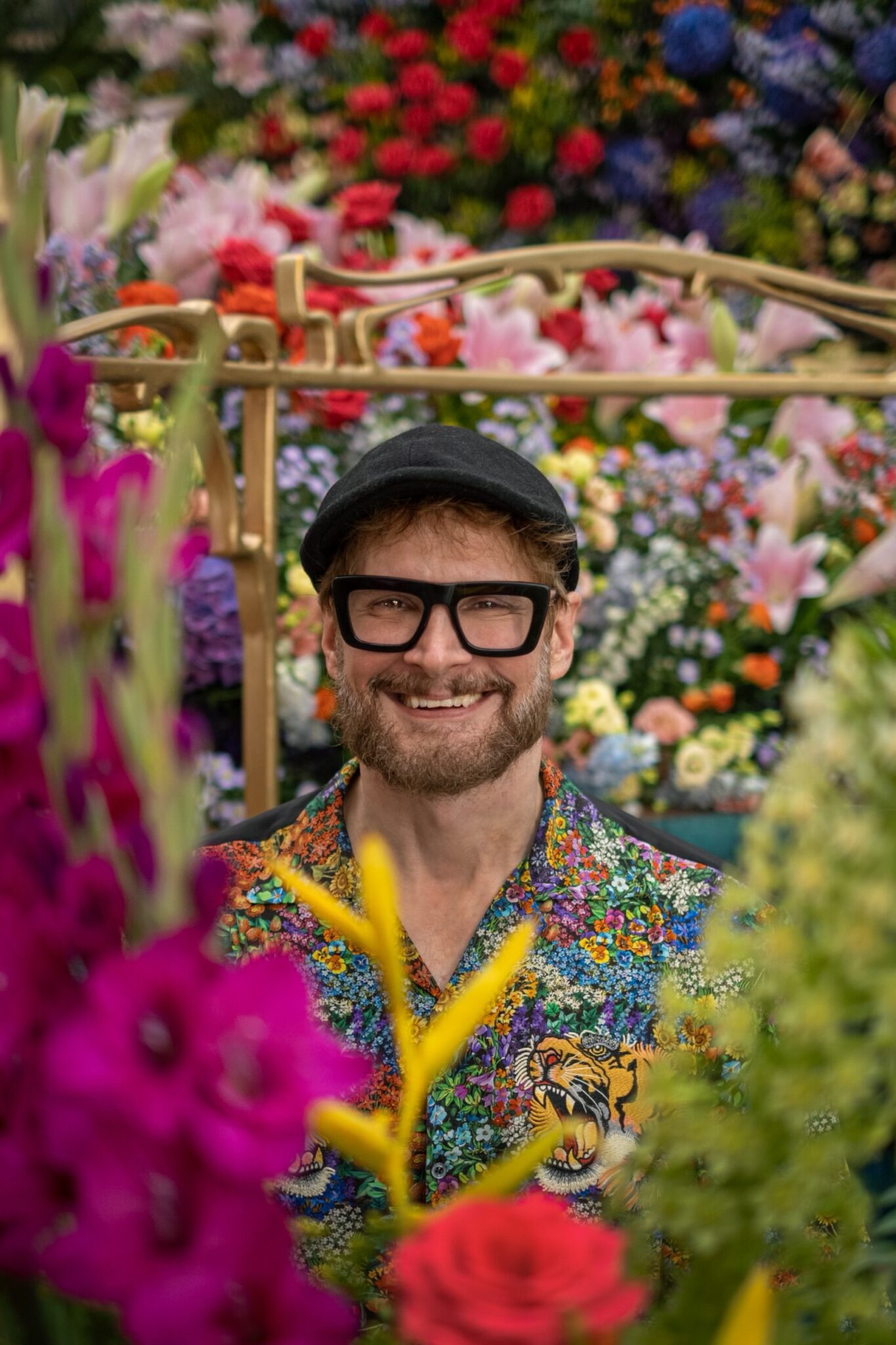
Openly gay writer-director Bryan Fuller, the visionary behind Pushing Daisies, Hannibal, Wonderfalls, Dead Like Me and American Gods, is stepping behind the camera for his first feature film. His debut, the whimsical horror-fantasy Dust Bunny, opened nationwide Dec. 5 and is already earning critical praise.
Starring Mads Mikkelsen and Sigourney Weaver, Dust Bunny follows a 10-year-old girl who hires the hitman living next door to kill the monster under her bed, the same one she believes ate her parents.
In an interview with Gayety ahead of his nomination for an Independent Spirit Award for Best First Feature for Dust Bunny, Fuller discussed the inspirations behind the film, casting its young star, and how queer audiences may connect with the story, even without explicit LGBTQ+ themes.
Dust Bunny is your first feature film directorial debut. What inspired you to step behind the camera for this particular story?
Bryan Fuller: This started out as and it was designed to be very much like an Amblin brand of “gateway horror”— children in peril, high concept storylines, the big heart, and at a certain point in the process, it just felt like it would be a great first story. Not only my first feature as a writer, but also direct as my first feature as a director. And what I loved about the opportunity with a story that’s relatively simple but has a lot of nuance, is that it really gave me an opportunity to tell a story cinematically in a way that I never could before.
The concept of an assassin killing the monster under a child’s bed is both whimsical and terrifying. How did this idea come to life?
Bryan Fuller: Okay, you know, there’s so many pieces of a film that have to come together. And the most important piece of this film is very likely Sophie Sloan, who imbued the character of Aurora with such charm and vulnerability. We needed a very special actor. So we cast an incredibly wide net with our amazing casting director, Margie Simpkins, who had thousands of submissions for the role. And of those thousands of submissions, she had thousands of auditions, and those auditions got whittled down to hundreds of auditions that got whittled down to 12 auditions, which is what I saw.
That’s the gift that you have with the great casting director. And Sophie stood out from the group, immediately. She has all of those tell-tale signs of fantastic child actors that capture our imaginations, whether it’s Drew Barrymore or Fairuza Balk or Chloë Grace Moritz, she definitely was in that category of charmer, and the only issue was that she had a very thick Scottish brogue. And she came in to audition, we talked to her about the accent and how it was a little difficult to understand her because we already had Mads Mikkelsen cast, who also has a very thick accent. We were worried that if we have both of these actors in the movie, it may be difficult to understand what they’re saying. Sophie took that note and went off to watch TikTok videos for two weeks and came back and auditioned with the perfectly flat American accent, won the role over thousands of other girls and charmed us every day on set.
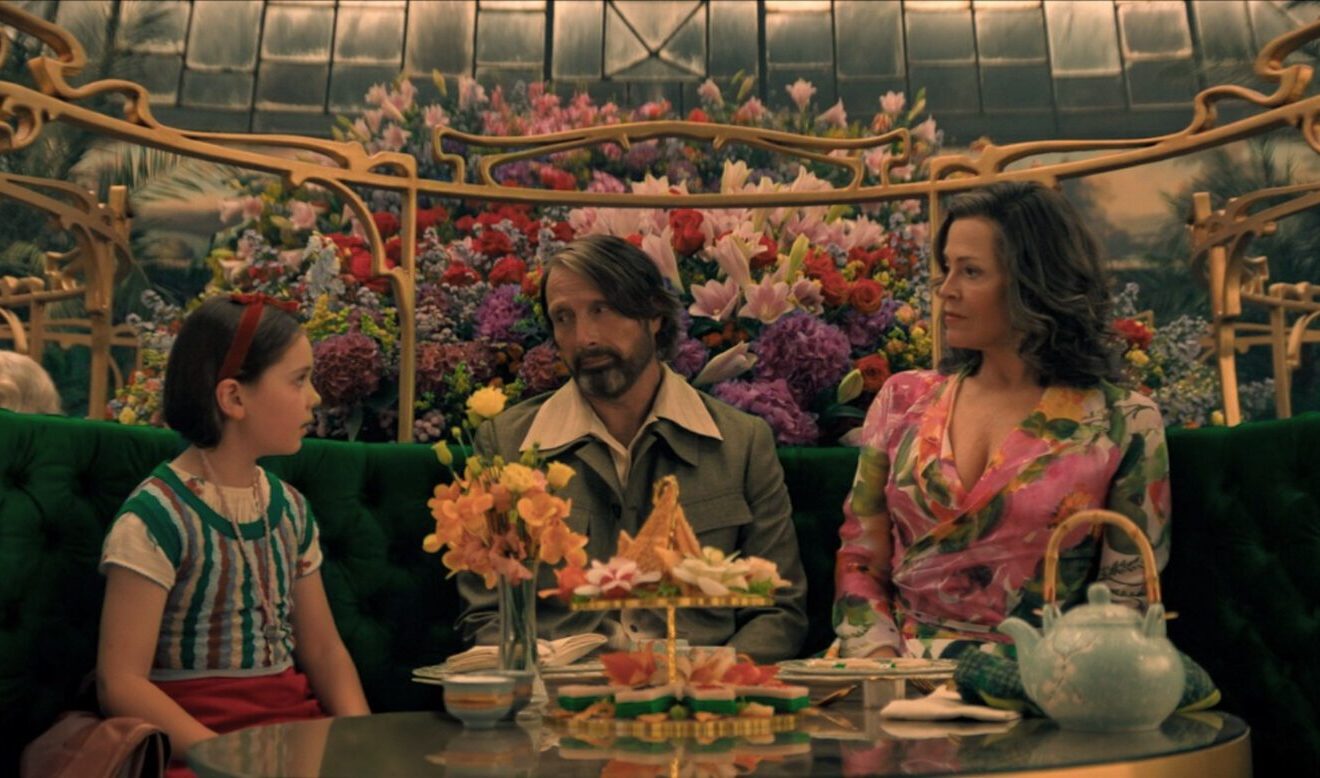
One of the things that we were very keen on was providing the best experience for a child coming to make a movie, and that was a responsibility was shared by myself and Mads Mikkelsen and Sigourney Weaver and our wonderful acting coach, who also played Sophie’s on screen mother early on in the film.
The film’s already drawn comparisons to Gremlins and labyrinth. How do you feel about those comparisons, and were those films influential to you as a storyteller?
Bryan Fuller: Gremlins and Labyrinth were two of my favorite gateway horror movies as a child. Gremlins, Labyrinth, Poltergeist, Goonies, Indiana Jones and the Temple of Doom… Anytime that we had children in danger that were forced by their circumstances to step into adulthood earlier than anyone would expect them to, were always stories that I was attracted to as a kid. And so it was wonderful to delve deep into that genre and tell a new version of children in danger being their own heroes and those stories excited me as a kid. There’s so much about the intention of this movie being a callback to those fantastic Amblin movies of the ’80s that were beacons for me and my friend group as we went to movie theaters and got lost in somebody else’s daydream.
So I wanted to create that same sensibility with these movies, because I missed them in the marketplace. We got a little bit of that with Guillermo del Toro and Pan’s Labyrinth and The Devil’s Backbone, where we got to see children in circumstances where they would be their own heroes. And I miss those stories. They really do apply to adults and children of all ages, and those kids movies aren’t just for kids. I enjoy Goonies just as much today as I did as a young person, and I want to provide a similar film going experience for people like me who love gateway horror and also to introduce this genre to a lot of kids, this may be their first quote, unquote, horror movie, and that’s an incredible honor.
The film has been called a mix of Guillermo del Toro and Dr Seuss. Can you unpack that for us?
Bryan Fuller: That is a great comparison. I’ll take that comp. It really does all go back to the design of these stories being crafted to feel like an Amblin movie in the ’80s. And I think you see those inspirations in Guillermo del Toro’s work, and you also see the impact of Dr. Seuss on those stories of fantastical, whimsical, yet filled with danger, types of narratives that excite the audience and also invite kids to keep exploring these kinds of stories, because there’s so many out there.
Even the great horror story authors like Clive Barker and Stephen King all have wonderful children’s stories in their libraries that influence them and that they’ve also written and contributed to the genre. So I feel like whenever we’re getting scared about anything, it takes us to a childlike place as an audience member, whether that is an. Rated R horror movie or a G rated horror movie, there’s something about feeling unsafe that reminds us of those primal fears as children that will always have an impact on our place in the audience.
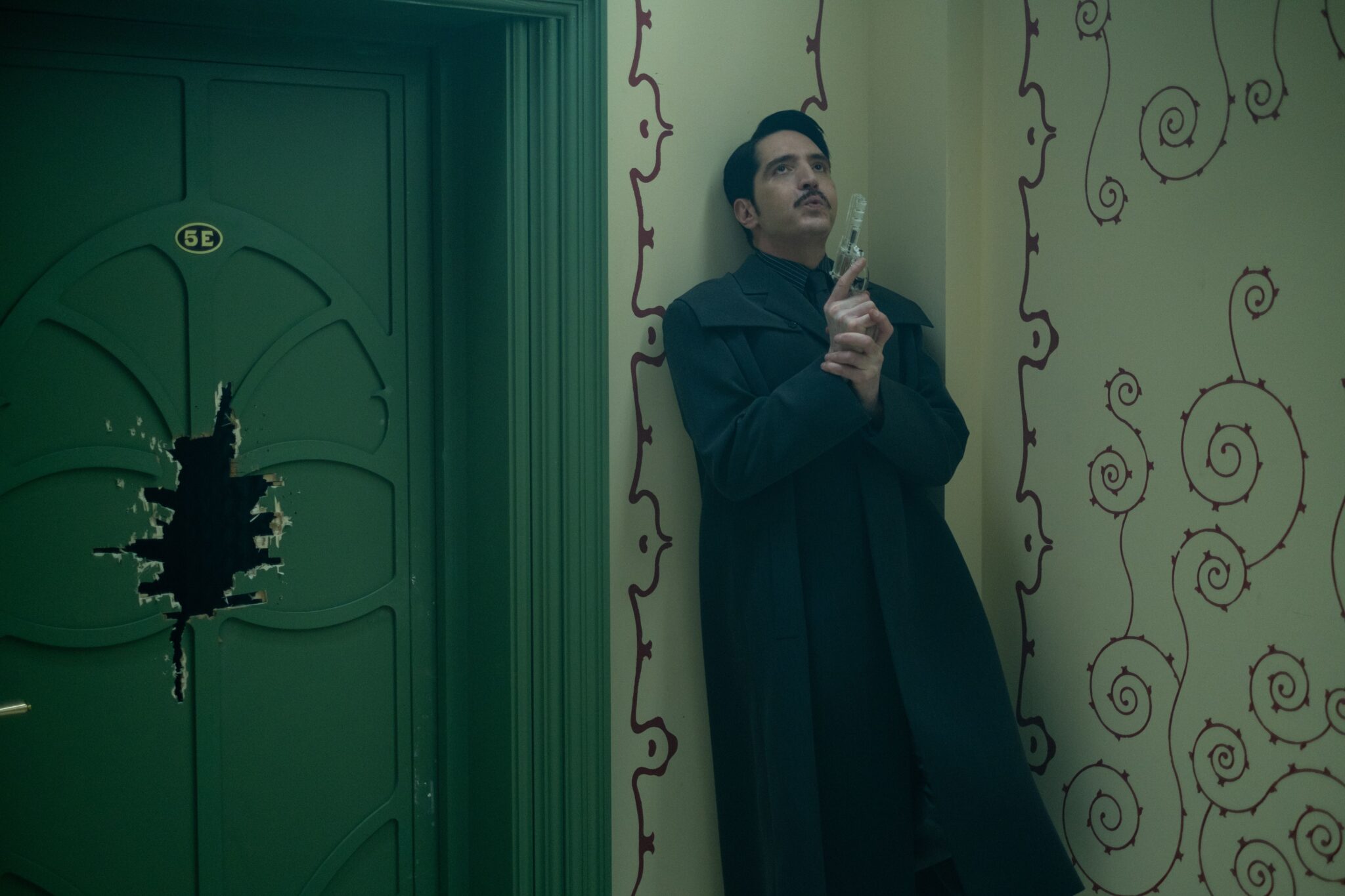
What was it like working with the icons like Mads Mikkelsen and Sigourney Weaver in the world you created?
Bryan Fuller: It was surreal to say the least, to work with Sigourney Weaver. I had worked with Mads Mikkelsen before, and understood his iconography with audiences, but also had the extra added benefit of just being my friend and a friend that was going to have my back and support me, and a way that an actor who I didn’t have the experience and the history with might not have been so free to do so. Sigourney Weaver was a whole new experience for both of us as major fans.
This movie blends horror, fantasy and Dark Comedy genres you’ve always played with on TV. How did that translate to the big screen?
Bryan Fuller: Well, there’s a big difference between being a showrunner and being a feature director, and I would say the biggest difference is the gift of being present on a feature set that you don’t necessarily get on television because after you finish that episode of TV, you have more to do. You have episodes six, seven, eight, nine… used to be 20 more episodes that you had to continue filming. I got to be there on set every day, instead of back in my hotel room doing rewrites and getting the next week’s material all in a line because everything was written in advance. We had the script locked, and I just got to enjoy working with these actors and these craftspeople and building a movie that allowed me to be there on stage with these people at every moment and point of the production, and that was really special, and something that I hope to do again. I love television. I love television storytelling. But there’s nothing like being present on a movie set with like minded people who are all rowing the same direction as you are,
Even though the film has absolutely no gay content whatsoever. How do you as a gay man feel like you infused your own sensibility into this?
Bryan Fuller: I would argue that the gay content is implicit in a child trying to make their way in the world, which is a very relatable experience for people of all varieties of the alphabet gang. And there’s something unique about queer experiences where we are often isolated and without a structure that makes us feel safe. I feel like this film is going to be very relatable to queer audiences who could remember times in their childhood where they were afraid, maybe not necessarily of the monster to the bed, but maybe the monster down the hall, or the monster at school or the monster at their work, who filled them with a fear that was hard for them to navigate at that point in their life, and so we’re creating an opportunity for everyone to have fun being scared.
Dust Bunny opens nationwide Dec. 5.


