



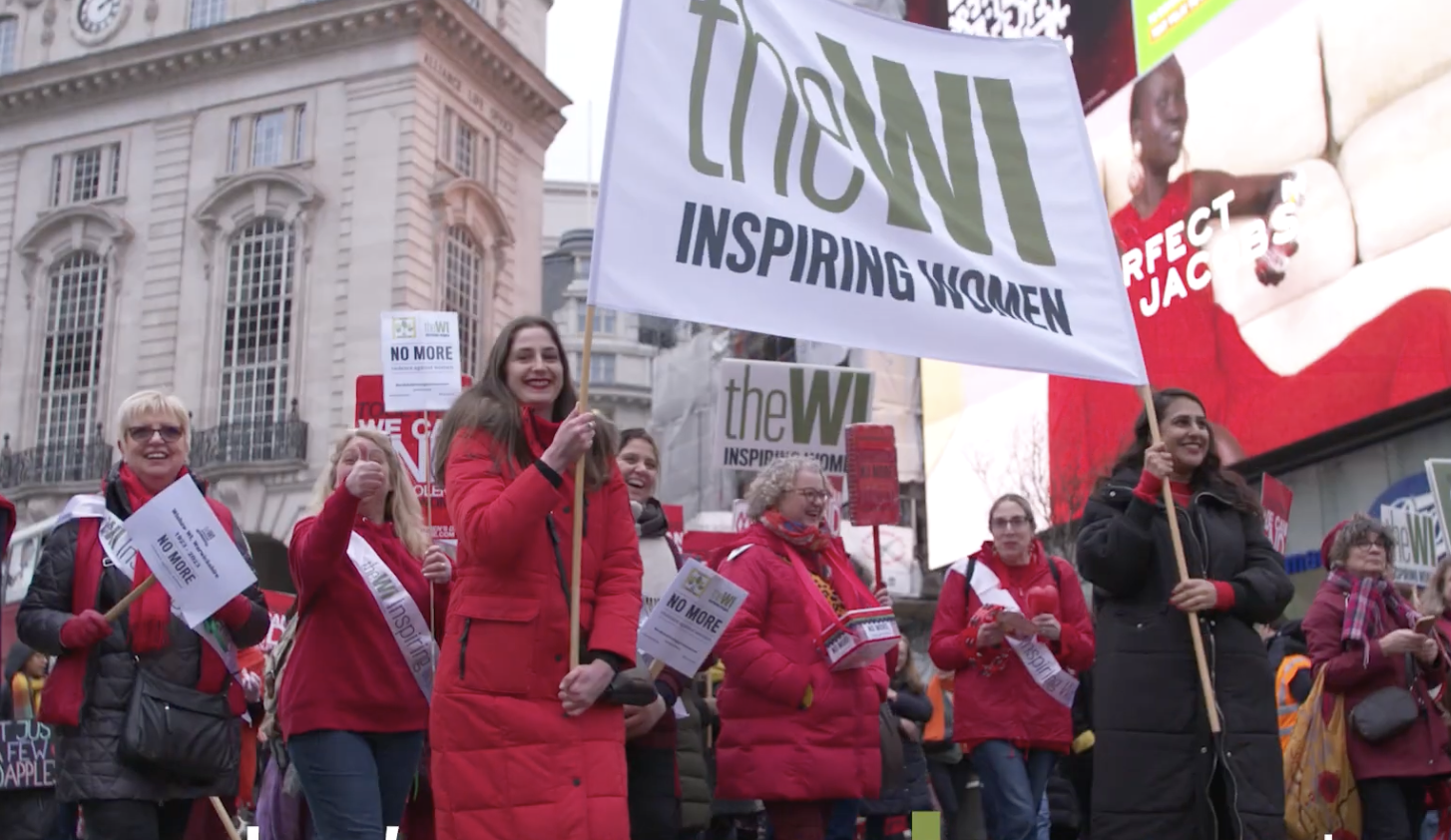
The Women’s Institute, one of the United Kingdom’s largest and most recognizable community organizations for women, announced it will end membership eligibility for transgender women beginning in April 2026. The decision, delivered “with sincere regret,” marks a major shift for the 109-year-old group, which has welcomed trans women for decades.
The National Federation of Women’s Institutes (NFWI), which oversees roughly 175,000 members across thousands of local branches, said the change is required to comply with a recent Supreme Court ruling that defines “woman” strictly by biological sex under the Equality Act. That ruling, issued earlier this year, limits single-sex organizations from admitting members of a different biological sex if they wish to maintain their legal status.
Melissa Green, the NFWI’s chief executive, acknowledged the emotional and social impact of the decision during an interview with BBC Radio 4’s Woman’s Hour. “Unfortunately the legal position as it stands means that we can no longer offer that,” Green said, referring to membership for transgender women. “Some of our transgender members have been with us for four decades. They’ve been part of our family.”
Decades of Inclusion Upended
For more than 40 years, trans women have participated in the Women’s Institute’s social programming, educational workshops and local activism. Many members and leaders have long viewed the WI as a space that fosters community and sisterhood among women of diverse backgrounds.
Green said that a majority of the organization’s elected council expressed a desire to remain trans-inclusive but concluded that the law offered “no option” to continue doing so while remaining a single-sex charity. “Ultimately, the WI is a women’s organization,” she said. “But it’s our firm organizational belief that transgender women are women.”
In an attempt to maintain support for trans women while complying with legal restrictions, the WI will create a new network of “sisterhood groups” operating alongside its formal branches. These groups would provide a trans-inclusive space for connection, community and programming, though they would not be official WI chapters.
A Broader Pattern of Exclusion
The Women’s Institute is not alone in changing course. Earlier this week, Girlguiding UK announced it would no longer accept transgender girls, also citing legal pressures following the Supreme Court ruling.
The Equality and Human Rights Commission (EHRC) has stated that it will soon update national guidance on how organizations should interpret the Equality Act following the court’s decision. Green said the WI did not want to wait. “Society needs organizations such as my own to lead,” she said.
LGBTQ+ Advocates Express Alarm
Trans rights groups criticized the decision, arguing that it reflects mounting political pressure rather than organizational values.
“This is the second national charity in as many days pushed to force out trans people, against the organization’s will and at great cost,” said Helen Belcher, chair of TransActual. She warned that the change could “out” trans members or leave them without vital social support networks. “Our thoughts are with the people who may be outed by their exclusion, or lose access to their vital social groups and support networks at a time when those are more important than ever,” she said, calling for urgent government action.
Women’s rights group Sex Matters welcomed the shift. “A group set up for women must be able to keep out all men, even the ones who are very insistent that they feel like women,” said the group’s director, Helen Joyce.
An Uncertain Future for Trans Members
The WI did not specify how it would enforce the new rules, saying it is awaiting EHRC guidance. The organization has also declined to confirm the number of trans women currently involved in its branches.
What is clear, however, is that an institution long known for community-building is now at the center of a national conversation about gender, inclusion and the law. As the UK’s largest women’s charity works to navigate those tensions, trans women who have called the WI a home for decades face an uncertain future — and a legal system that increasingly defines their place in public life.


