




The Long Island Roller Rebels have beaten Nassau County’s transgender athlete ban in court. On Wednesday, Nov. 4, the Appellate Division, Second Department, struck down the law that denied park permits to women’s teams with trans players. The league and Attorney General Letitia James won separate appeals, Gothamist reported.
“Wednesday the court made it abundantly clear that any attempt to ban transgender girls from public spaces is prohibited by the state’s anti-discrimination laws,” Gabriella Larios, a senior staff attorney with the New York Civil Liberties Union, said, ABC7 New York reported.
The county isn’t finished. “We are reviewing the decision with the intention to continue the appeals process,” County Attorney Thomas Adams said in a statement, ABC7 reported.
How the Ban Began
County Executive Bruce Blakeman, a Republican, started with an executive order on Feb. 22, 2024. Justice Francis Ricigliano of the state Supreme Court in Nassau tossed it on May 10, 2024, finding that “the County Executive acted beyond the scope of his authority,” according to his decision.
Blakeman didn’t take it well. “Lack of courage from a Judge who didn’t want to decide the case on its merits,” he said, according to CBS New York.
The Republican-controlled county legislature passed its own version 12-5 on June 24, 2024, along party lines, The Associated Press reported. The law denied county park permits to girls’ and women’s teams that included transgender girls or women.
Blakeman signed it on July 15, 2024, and the NYCLU and Attorney General Letitia James each sued that same day. “With this law, Nassau County is once again attempting to exclude transgender girls and women from participating in sporting events while claiming to support fairness,” James said in an announcement that put the law’s reach at more than 100 county sites, ice rinks and swimming pools among them.
What the Court Decided
The league lost a round on Oct. 6, 2025, when Justice R. Bruce Cozzens upheld the ban. Two days later, it got a reprieve: the appeals court blocked enforcement through an earlier appeal, the NYCLU announced. That temporary injunction held the ban off while the litigation continued. Wednesday brought decisions against the law itself.
“While the County suggests that the plaintiff can use its facilities by designating itself as a mixed-sex league, which is permitted under the local law, this would change the identity of the league and would force its players to identify themselves as playing in a mixed-sex league,” the justices wrote in that October 2025 order.
Blakeman kept his line. “Nassau County will continue to protect the integrity and safety of women’s sports,” he told the New York Post at the time.
In James’ case, the four judges agreed that Nassau cannot deny access to public facilities because someone is trans. The state’s Human Rights Law and Civil Rights Law “expressly prohibit the County from restricting access to places of public accommodation based on a person’s gender identity or expression, including whether the person identifies as transgender,” they wrote in their unanimous decision.
The judges sent James’ case back to Nassau for a judgment “declaring that the local law is invalid on the grounds that it violates the New York State Constitution and the Municipal Home Rule Law.” A county can pass laws to protect its residents, they explained, but it cannot contradict state law.
The panel also quoted a state human rights regulation: “Discrimination on the basis of gender identity or expression is also sex discrimination.”
Those New York protections are central to the Nassau case. The U.S. Supreme Court voted 6-3 on June 30 to uphold bans on transgender athletes in West Virginia and Idaho, as JURIST reported. Nassau’s law failed because it conflicts with its own state’s anti-discrimination laws.
The Roller Rebels Welcome Trans Teammates
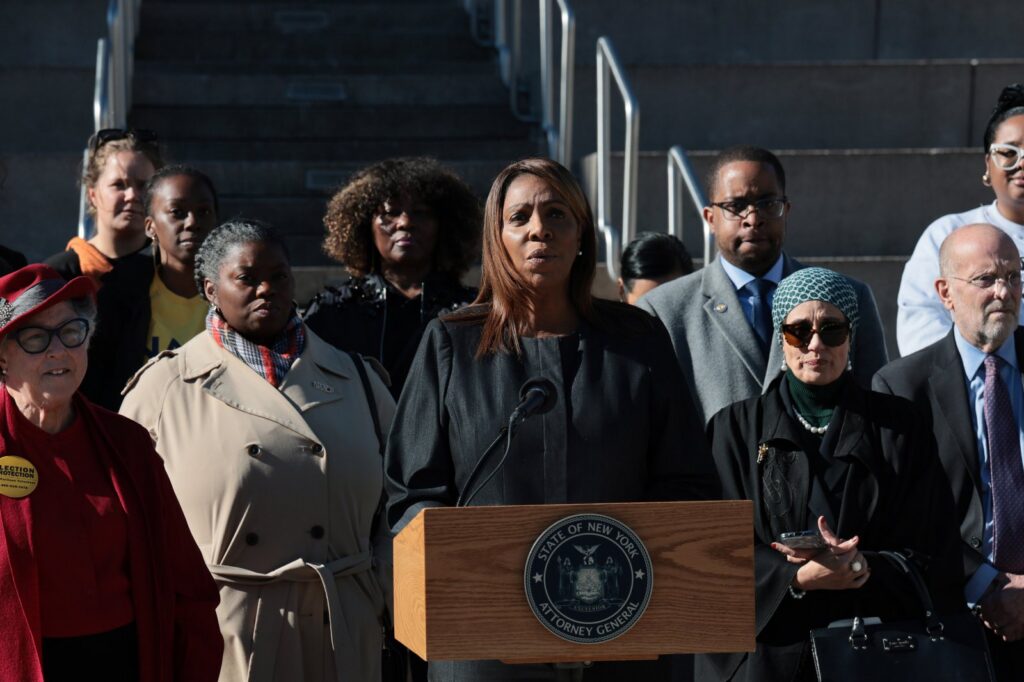
James’ office announced its win Wednesday. “Nobody should have to fight to play the game they love,” she said in a statement.
She took aim at the county executive by name. “Bruce Blakeman was just trying to stop athletes from playing with their teammates,” James said.
“The Roller Rebels want trans women to know that they are welcome to join our league, and trans people belong in Nassau County,” said Curly Fry, the league’s president, according to News 12 Long Island. (Roller derby skaters often play under derby names.)
The league, which calls itself Long Island’s first flat-track roller derby league and says it marked 20 years in 2025, has been fighting the county in court since 2024. “Trans athletes aren’t going anywhere,” Fry said.
Fights over trans athletes are still playing out elsewhere, from a Maine petition aimed at the 2027 ballot to the death threats Gabby Williams says she got for backing trans players.
“They have been steadfast in their solidarity with all kinds of teammates, but especially their trans teammates,” Larios said of the Roller Rebels, according to ABC7.
What Happens Next
Larios told Gothamist the county could still try New York’s highest court, the Court of Appeals in Albany, though the judges there may decline to take the case. “It is an uphill battle for them, and they would be flying in the face of very clear state law in pursuing that appeal,” she said.
“I want people to understand that this ban is unjust, and it is aimed at excluding trans people from places they have grown up, from communities that they feel safe in,” Larios said, according to ABC7.
“As long as I am attorney general, no New Yorker will be shut out of public life because of who they are,” James said in her statement.


