
A federal appeals panel in Denver heard arguments Nov. 16 in the lawsuit against Colorado’s Kelly Loving Act, the 2025 law that expanded the state’s civil rights protections for transgender people. The judges “did not rule from the bench,” the Rocky Mountain Voice reported.
The challengers are Jennifer Sey’s apparel brand, XX-XY Athletics, and Born Again Used Books, run by Eric and Sara Smith in Colorado Springs. “Colorado continues to place itself on the wrong side of the law,” said Hal Frampton, senior counsel at Alliance Defending Freedom, which represents them. ADF wants the appeals court to reverse U.S. District Judge Regina Rodriguez, who refused on March 31 to block the law while the case goes on.
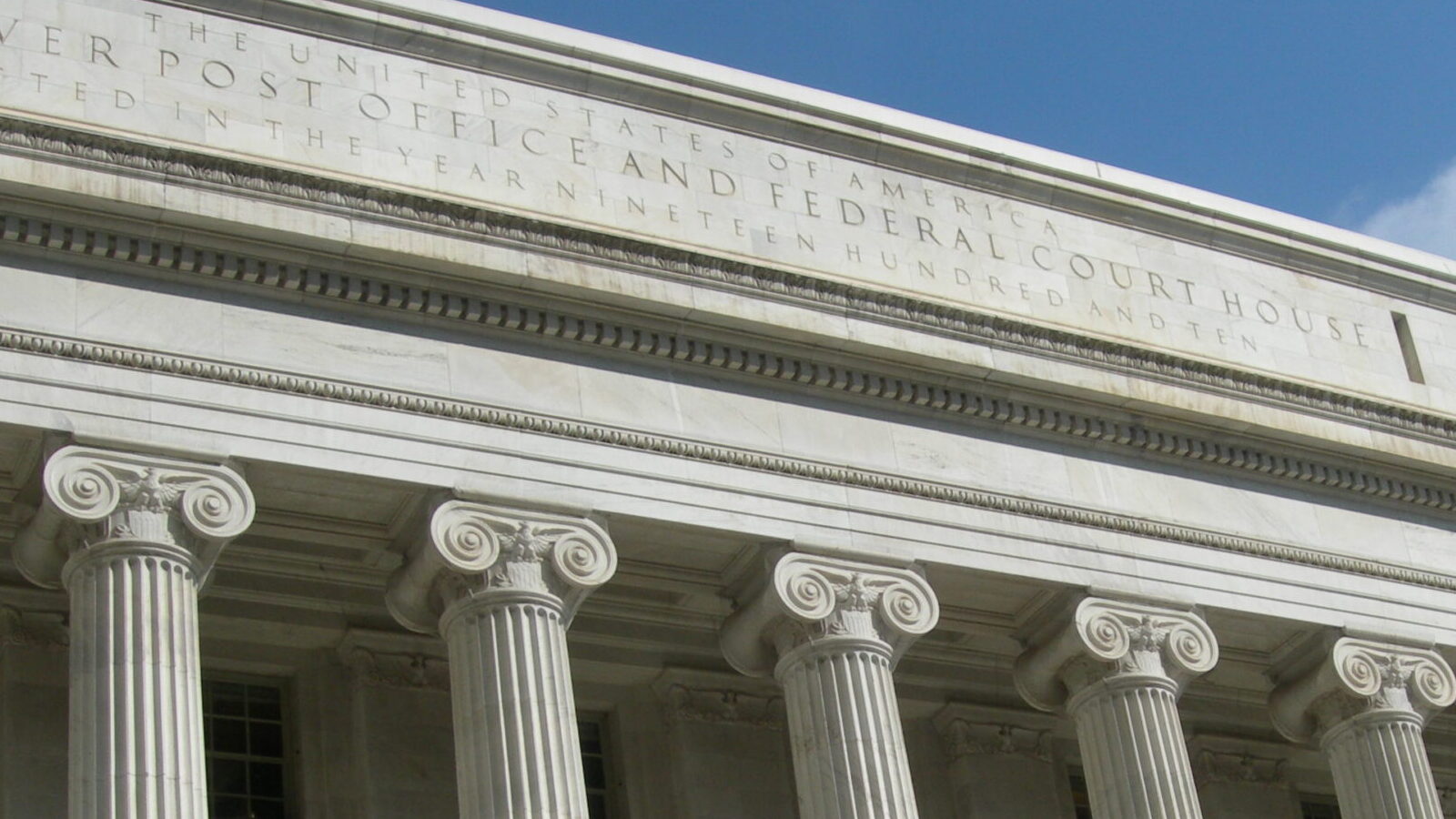
That appeal, No. 26-1103 in XX-XY Athletics’ case, was argued at the U.S. Court of Appeals for the 10th Circuit, inside the Byron White U.S. Courthouse, according to an ADF media advisory. The businesses’ appeals were heard alongside a third challenge led by Defending Education. The hearing concerned a request to pause enforcement while the legal challenges proceed. It was not a final ruling on the law.
Kelly Loving Act Lawsuit Centers on HB25-1312’s ‘Chosen Name’ Language
Gov. Jared Polis signed House Bill 25-1312 on May 16, 2025. “The short title of this act is the ‘Kelly Loving Act’,” its first section reads. The law took effect the day Polis signed it.
The disputed provision adds two things to the Colorado Anti-Discrimination Act’s definition of “gender expression”: a person’s “chosen name, and how the individual chooses to be addressed,” the signed version says.
A chosen name means one “that an individual requests to be known as,” as long as it “does not contain offensive language and the individual is not requesting the name for frivolous purposes.”
The introduced version expressly described deadnaming and misgendering as discriminatory acts. Lawmakers changed that language before passage.
Neither word made it into the enrolled text.
Jennifer Sey and the Smiths Say Colorado Could Fine Them
The businesses say they want to keep speaking about sex in ways the law could punish. “We won’t roll over to a law that demands we lie about basic biology,” Sey said, Colorado Politics reported.
“We’re not asking everyone to agree with us,” the Smiths said, according to the same report.
A court that finds a public accommodation broke the law “may fine the party $5,000 for each violation,” according to ADF’s opening brief for XX-XY Athletics. A footnote says the figure “was $3,500 when this case began.” At Monday’s press conference, the Smiths cited the $3,500 figure, Rocky Mountain Voice reported.
Rodriguez wasn’t convinced the businesses were in danger. “Collective Plaintiffs have not alleged such denial of goods or services,” she wrote in the March order. The order also says, “The Court notes that, at this stage, it has not reached the merits of these cases.”
A separate standing decision allowed the businesses to continue their claims in September. In a Sept. 25 order, she adopted a magistrate judge’s finding that the businesses had shown their conduct was “arguably proscribed by CADA,” and she kept their claims alive. She dismissed three parent advocacy groups, Defending Education, Colorado Parent Advocacy Network and Protect Kids Colorado.
Colorado Says Misgendering Alone Has Never Led to Probable Cause
Janna Fischer argued for the state’s civil rights officials and Attorney General Phil Weiser. “Plaintiffs here seek the extraordinary relief of a broad preliminary injunction allowing them to misgender and deadname anyone with impunity,” she told the panel, the Rocky Mountain Voice reported.
According to the Voice, Fischer said the Civil Rights Division looks for denial of service or treatment that amounts to harassment. The division has “never found probable cause based on misgendering and deadnaming alone,” the outlet wrote, summarizing her argument.
From the bench, one judge “asked what would stop Colorado from reading the law differently” down the road, according to the Voice.
The panel included U.S. District Judge Kelly Rankin of Wyoming, sitting by designation, the outlet reported. Colorado has also filed a motion asking that “a question about the law’s scope be sent to the Colorado Supreme Court,” according to the Voice. Weiser’s office “has no comment beyond our court filings and what was said during oral argument,” spokesman Lawrence Pacheco told the outlet.
Who Kelly Loving Was
The law carries the name of Kelly Loving, one of five people killed in the Nov. 19, 2022, shooting at Club Q in Colorado Springs. She was 40.
“As a transgender woman, she was excited to get involved with the LGBTQ community in the Springs, according to her friend Natalee Skye Bingham,” ABC News reported on the first anniversary.
Her sister, Tiffany Loving, told NBC News that Kelly was “loving, always trying to help the next person out, instead of thinking of herself,” KOAA reported. The fourth anniversary of the shooting falls on Thursday, Nov. 19, the day before Transgender Day of Remembrance.
Supreme Court Won’t Hear Colorado Legislature Decorum Rules Case
In a separate case on Nov. 16, the Supreme Court’s order list placed Gays Against Groomers v. Garcia, No. 26-120, under “CERTIORARI DENIED,” with no noted dissent.
The group’s name uses “groomer,” a smear that falsely ties LGBTQ+ people to child sexual abuse. It sued Democratic lawmakers who cut off testimony in 2024 hearings on HB24-1071, a bill making it easier for people with felony convictions to change their names to match their gender identity, when witnesses used names and pronouns that broke committee decorum rules. One plaintiff was Rich Guggenheim, an original proponent of the initiative that became Prop 134.
The 10th Circuit ruled 3-0 on March 10 that legislative immunity protects those lawmakers. “The legislative process is inherently political, and therefore not easily amenable to federal judicial inquiry,” Judge Richard Federico wrote in the opinion.
Judge Joel Carson agreed, reluctantly. “Although it troubles me that a legislative body can effectively silence speech and leave the party whose speech is compelled or prohibited without a judicial remedy, the relevant authorities allow it,” he wrote.
The justices took up the petition at their Nov. 13 conference, the docket shows, and left the March ruling in place without saying why. The Kelly Loving Act case is still waiting on the 10th Circuit.