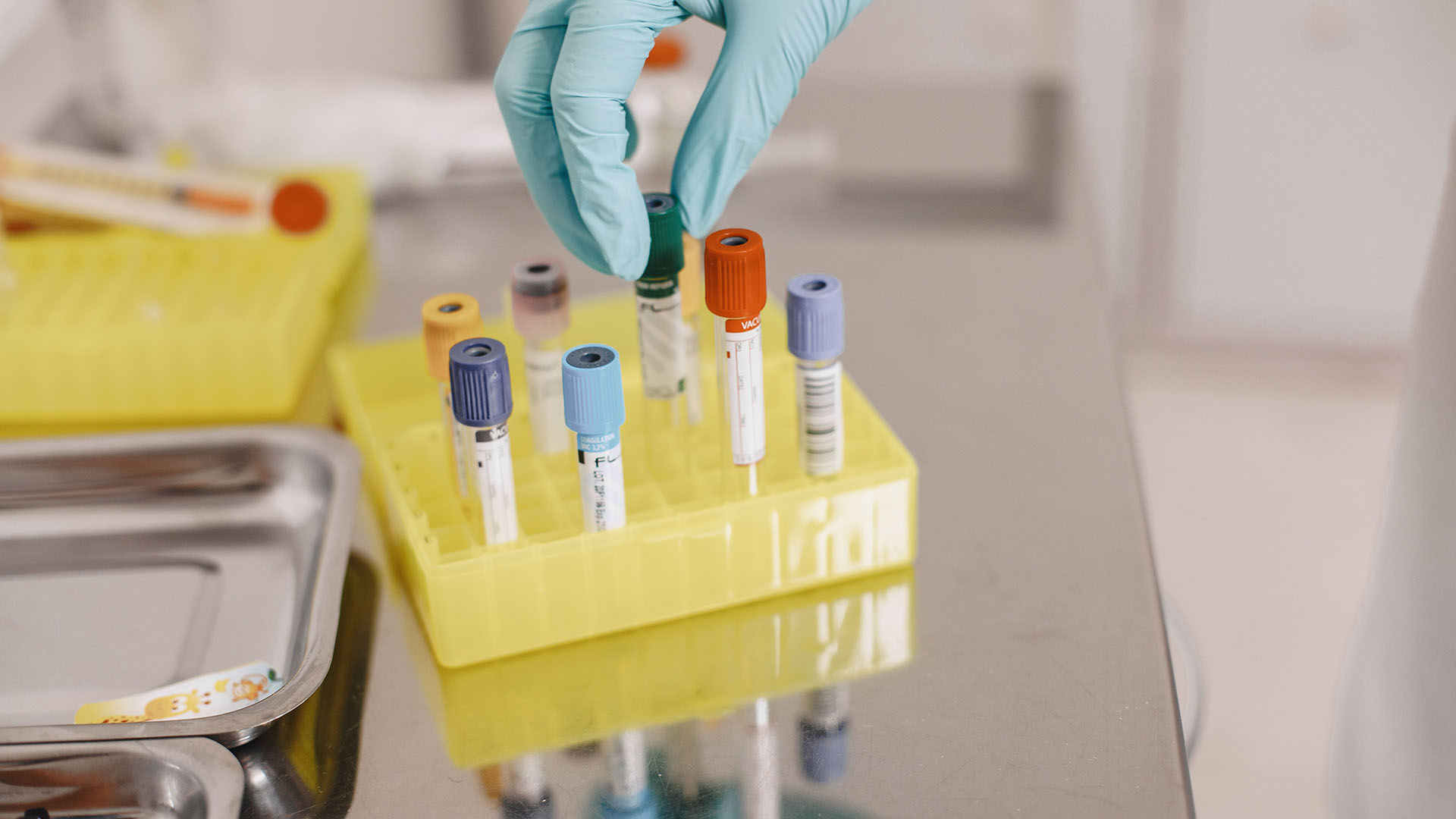

The short answer: Sexually active men who have sex with men generally need at least annual syphilis, gonorrhea and chlamydia screening at appropriate sites, plus HIV screening if they do not already have HIV. Screening every three to six months may be appropriate with ongoing risk or multiple partners. PrEP has its own HIV-testing schedule, which differs between pills and injections.
A urine test cannot tell you whether you have a throat or rectal STI. That is one of the most useful things to know before a screening visit, along with when you last tested and whether anything has changed. The right schedule follows the sex you have, the sites exposed and any prevention medicine you take.
You can ask for screening while you feel completely well. Many STIs have no symptoms, and testing is routine care rather than a judgment about your sex life.
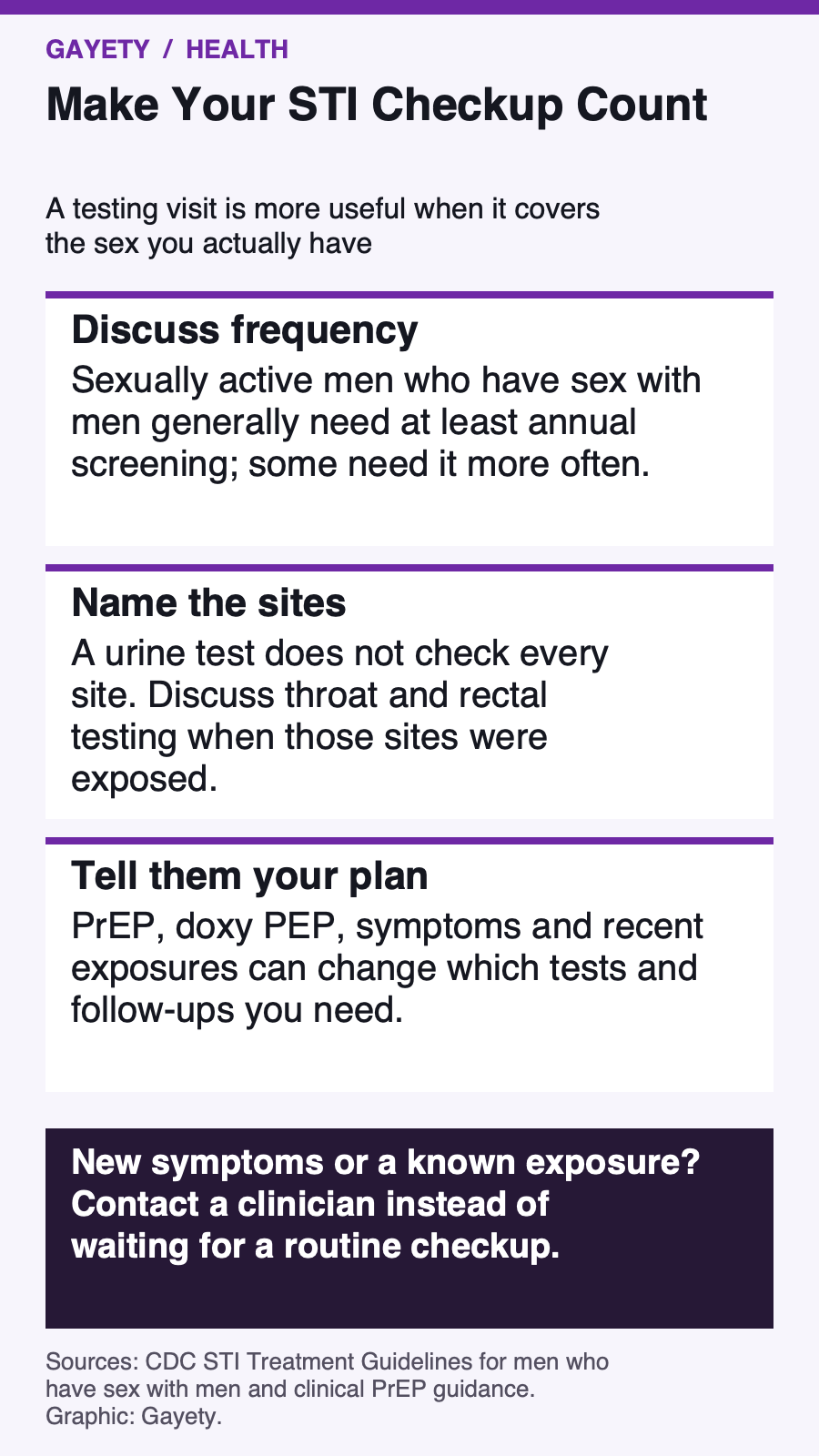
Possible HIV exposure within 72 hours? Seek urgent PEP assessment now. Do not wait for symptoms or your next screening appointment.
How Often Should You Get Tested for STDs? CDC’s Schedule
CDC’s STI screening recommendations set “at least annually” as the baseline for sexually active men who have sex with men, moving to every 3 to 6 months for people at increased risk. That group includes people on PrEP, people living with HIV and people who have multiple partners or whose partners do. CDC’s consumer testing page also names anyone with multiple or anonymous partners.
| Test | How often (CDC baseline) | How it’s done |
|---|---|---|
| HIV screening for people without diagnosed HIV | At least yearly; every 3 to 6 months with higher risk; every 3 months on oral PrEP | Blood draw or finger prick |
| Syphilis | At least yearly; every 3 to 6 months with higher risk | Blood draw |
| Gonorrhea | At least yearly at each exposed site; every 3 to 6 months with higher risk | Urine, throat swab, rectal swab |
| Chlamydia | At least yearly at each exposed site; every 3 to 6 months with higher risk | Urine, rectal swab |
| Hepatitis B | At least once as an adult; repeat testing may be needed with ongoing risk | Blood draw |
| Hepatitis C | At least once as an adult; at least yearly for MSM living with HIV, with other repeat testing based on risk | Blood draw |
Routine throat screening is recommended for gonorrhea, not chlamydia, although a combined laboratory test may report both. These schedules are for screening when you feel well. Symptoms, a partner’s diagnosis or a recent exposure may call for assessment sooner.
Throat, Rectal and Urine Tests for Every Kind of Sex
A urine test checks the urethra. That’s it. Chlamydia and gonorrhea can live in the throat and rectum without causing any symptoms, so a cup alone can miss them.
The CDC’s guidance for men who have sex with men links sampling to the site exposed: urine for the urethra after insertive sex, a rectal swab after receptive anal sex, and a throat swab for gonorrhea after giving oral sex. Tell the clinician which body parts were involved. Screening recommendations apply regardless of condom use.
Whether you top, bottom or go vers, your test should follow the map. CDC’s guidelines note that self-collected throat and rectal swabs have been found acceptable, and many clinics will hand you a swab and a private bathroom.
Who Should Get STI Testing Every 3 to 6 Months
For daily oral PrEP, HIV testing is required at least every three months. Cabotegravir injections require testing before each injection, usually every two months after initiation. Lenacapavir requires testing before each six-month injection, with additional testing when indicated. Bacterial STI screening may need to happen between injection appointments. Our PrEP guide explains the options.
For sexually active people living with HIV, STI screening is recommended at entry to care and at least annually, with three- to six-month screening when exposure risk continues. Men who have sex with men and live with HIV also need at least annual hepatitis C screening. People prescribed doxy-PEP should have follow-up STI testing every three to six months.
HIV Window Periods and When to Retest
Every test has a window period, the time between exposure and when it can usually detect an infection. HIV.gov lists these windows for HIV:
| HIV test type | Window period after exposure |
|---|---|
| Nucleic acid test (NAT) | 10 to 33 days |
| Lab antigen/antibody test (blood from a vein) | 18 to 45 days |
| Antigen/antibody test (finger prick) | 18 to 90 days |
| Antibody test | 23 to 90 days |
A negative result during a window period may be too early to rule out infection. PrEP and PEP can also affect HIV detection, so tell the clinic about either medicine and follow its testing plan. Blood-based HIV tests are used for PrEP care; an oral-fluid home test is not a substitute for the required monitoring.
For a potentially substantial HIV exposure within the past 72 hours, seek PEP assessment immediately. Baseline testing is part of care, but waiting for laboratory results should not delay a needed first dose. For other STIs, ask when testing and any repeat sample will be informative after the particular exposure.
Hepatitis, HPV and Mpox Vaccines Worth Asking About
Your testing visit is a great time to get protected, too. CDC’s STI guidelines recommend hepatitis A and hepatitis B vaccines for all men who have sex with men who haven’t had the infection or the shots, and HPV vaccination for men through age 26. A hepatitis B blood test can also show whether you’re already immune.
The CDC recommends JYNNEOS vaccination for people with specified mpox exposure risks, including some gay and bisexual men and transgender or nonbinary people with recent or anticipated sexual exposures. The usual series is two doses four weeks apart. A clinician can check whether you are eligible and whether you have completed it.
Bring any vaccine records you have. Testing and vaccination answer different questions: a screening result does not replace a vaccine, and a vaccine does not rule out an infection when symptoms appear.
At-Home STI Tests the FDA Has Authorized
There are two kinds of home testing: tests you perform and read yourself, and samples you collect and mail to a laboratory. The CDC explains the distinction. In 2023, the FDA authorized Simple 2 home sample collection for chlamydia and gonorrhea. In 2024, it authorized the First To Know Syphilis Test, which checks a finger-prick blood sample for antibodies.
Check which infections and body sites a kit covers. A urine-only kit does not sample the throat or rectum. A syphilis self-test cannot establish an active infection by itself and may remain positive after successful treatment. A positive result needs clinical follow-up; recent exposure or symptoms need assessment even after a negative home result.
Where to Get STI Testing Free or Cheap
CDC’s Get Tested locator lists HIV, STD and hepatitis testing sites across the U.S., many of them free, low-cost or confidential. Local health departments, LGBTQ+ health centers, Planned Parenthood and community health centers are all worth a call. Some health departments also mail free test kits, the American Sexual Health Association notes, depending on where you live.
Coverage depends on the test, reason for testing, plan and network. Before the visit, ask whether the clinician, laboratory and each sample are covered and whether you may receive separate bills. Explain the visit accurately rather than asking for a particular billing code. If you take PrEP, ask the clinic to check coverage for the required monitoring and related services.
What to Say to Your Provider (Copy These Scripts)
You don’t owe anyone a play-by-play, just enough detail to get the right tests. Try these:
- “Can we review which HIV and STI tests I need based on the sex I have and when I last tested?”
- “I have oral and anal sex, so I need throat and rectal swabs, not just urine.”
- “I take [PrEP medicine]. What HIV and STI testing schedule should I follow?”
- “Can you check my hepatitis A and B immunity, and am I due for HPV or mpox vaccines?”
- “I had a possible exposure on [date]. Is it too early for any of these tests?”
If the suggested testing does not match your exposures, ask why. A sexual-health clinic can help clarify which samples are appropriate. You can also ask whether self-collected swabs are available.
STI Testing for Trans and Nonbinary People
Testing should follow your body and the sex you have, not the gender marker on your chart. CDC’s screening recommendations say that for transgender and gender-diverse people, chlamydia and gonorrhea screening “should be adapted based on anatomy,” with throat and rectal testing considered based on reported sexual behavior. CDC also says to offer HIV screening to all transgender people and to consider yearly syphilis screening based on sexual behavior.
The scripts above work for you too, adjusted for your anatomy. You shouldn’t have to teach a seminar to get a swab.
STI vs STD: Same Tests, Different Label
STD means sexually transmitted disease; STI means sexually transmitted infection. An infection may be present without symptoms, which is why clinicians often use STI. Neither term describes one universal panel: ask which specific tests have been ordered and what they cover.
Before leaving, make sure you know how results will arrive, whom to contact with symptoms and when to test again. A “negative panel” is useful only when you know what was included and whether the timing was appropriate.
STD Testing FAQ for Gay and Bi Men
How often should gay men get tested for STDs?
At least annual screening is the usual baseline for sexually active men who have sex with men. Three- to six-month screening may be appropriate with ongoing risk or multiple partners. PrEP requires a separate HIV-testing schedule based on the regimen.
Do I need throat and rectal swabs without symptoms?
Often, yes. Ask about rectal gonorrhea and chlamydia testing after receptive anal sex and throat gonorrhea testing after giving oral sex. A urine sample does not test those sites.
How soon after sex can I get tested for HIV?
The useful timing depends on the test and whether you use PrEP or PEP. An early negative result may need follow-up. Seek immediate PEP assessment for a substantial possible exposure within 72 hours.
Do at-home STD tests check the throat and rectum?
Only if those sample types are included and appropriate for the test. Read the kit details and ask a clinic about samples it does not cover.
Is STI testing free with insurance?
It depends on the service, plan, network and reason for testing. Confirm the visit and laboratory costs separately. Health departments and community clinics may offer free or reduced-cost testing.