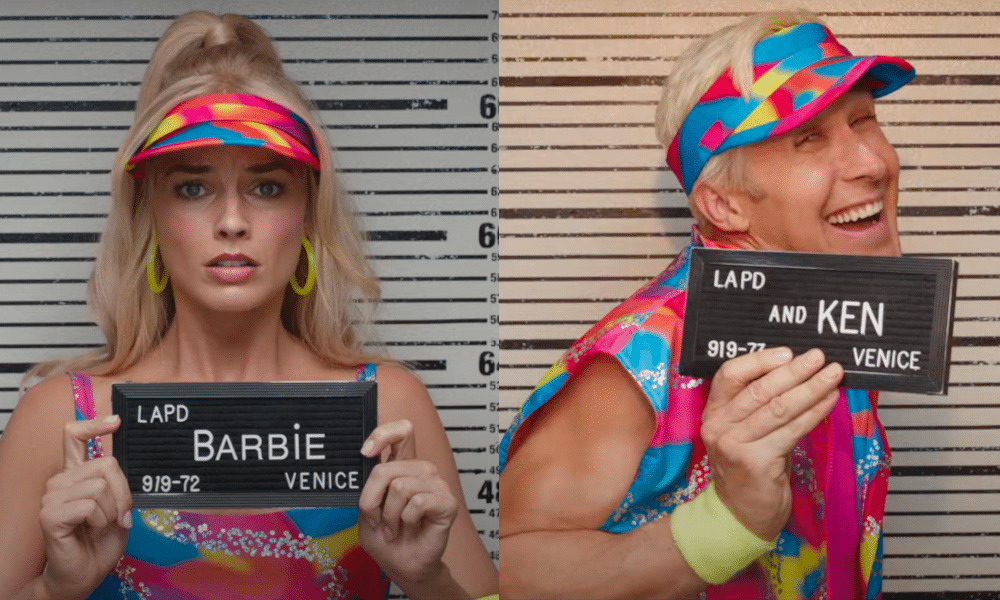

A himbo is a hot man who isn’t very bright, and these days he’s usually sweet, too. Merriam-Webster defines himbo as “an attractive but vacuous man” and dates its first known use to 1988. Washington Post film critic Rita Kempley used the blend of “him” and “bimbo” that year.
The sweetness matters. The dictionary definition makes him sound like someone to dismiss, while fans use the word for characters they adore. When a writer calls Kronk or Ken a himbo, there is often affection in the insult. The good-looking guy does not have to be cruel, and the joke does not have to end with how little he knows.
The Cannes Dispatch From 1988
The accessory was a 16-foot python, worn like a stole. In a Washington Post report from the Cannes Film Festival, Kempley called its wearer a macho himbo, MEL Magazine reports. Linguist Arnold Zwicky dates that Post piece to May 29, 1988. A couple of weeks later, MEL reports, she wrote a longer essay on the type. In her 1988 Post writing, InsideHook reports, she called himbos “bombshells with a Y chromosome.”
Bimbo described men first. The Oxford English Dictionary traces bimbo to a 1919 use meaning “a fellow, chap,” Zwicky explains. The insulting meaning aimed at women came afterward. Bimbo comes from the Italian bambino, meaning baby, per the OED.
Himbo vs. Mimbo: How the Word Spread in the 1990s
In “The Stall,” a 1994 episode of Seinfeld, Jerry calls Elaine’s rock-climbing boyfriend Tony a male bimbo and coins “mimbo,” MEL reports. MEL’s account asks why that version failed to catch on. Etymologist Mark Peters, author of Bullshit: A Lexicon, told MEL that himbo is simply “a better-built word,” because the full pronoun makes it easier to understand.
MEL dates the word’s addition to Merriam-Webster to 2006. By the following decade, online fans were giving it a warmer reception.
The Himbo Gets a Fan Club
An account devoted to pop-culture himbos was posting on Twitter by January 2019, according to Know Your Meme. An Urban Dictionary entry dated Feb. 23, 2020, made the kindness explicit, adding it and respect to the handsome-but-dim description. It named Kronk from The Emperor’s New Groove.
The dispute that followed is part of the word’s history, too. On June 21, 2020, a tweet called himbo ableist, Know Your Meme records. InsideHook recounts a response that separated a himbo trying to do the right thing from an attractive idiot who is also a jerk. For that defender, a man could have the looks and the lack of brains and still fail to qualify.
Gita Jackson wrote in Vice: “I would prefer if my fictional boyfriends were, well, nice.” Jezebel’s Ashley Reese described a himbo as “a golden retriever of a man” in The Guardian.
Himbo Meaning on Screen: Characters Critics Have Named
The examples vary by writer. These seven are fictional characters, with the publications that called them himbos or offered them as examples. The label belongs to the role, not to the actor playing it:
| Himbo | Where he’s from | Who named him |
|---|---|---|
| Kronk | The Emperor’s New Groove | Urban Dictionary’s 2020 entry, via Know Your Meme; InsideHook |
| Fred Jones | Scooby-Doo | InsideHook |
| Hercules | Disney’s Hercules | InsideHook |
| Thor | The Avengers | Vice |
| Andy Dwyer | Parks and Recreation | GQ (2012), via InsideHook |
| Joey | Friends | The Caftan Chronicles |
| Ken | Greta Gerwig’s Barbie, played by Ryan Gosling | The Caftan Chronicles |
The Gay Himbo: Big, Dumb and Kind
In a February 2026 conversation about the gay himbo on Tim Murphy’s Substack, The Caftan Chronicles, producer Greg Scarnici summed up the type in three beats: “Big. Dumb. And kind.” He then described a gentleness that could coexist with intelligence. It is a useful complication: even someone happy to begin with dumb did not leave the definition there. Scarnici was talking about a man’s manner and emotional engagement as well as his appearance.
The word is doing different work in those settings. Describing Ken as a himbo is a reading of a fictional character. Describing a friend that way is something he gets to have an opinion about. Some people enjoy the label; an affectionate intention does not guarantee that someone else will enjoy being called unintelligent. Let him tell you whether the joke works for him.


