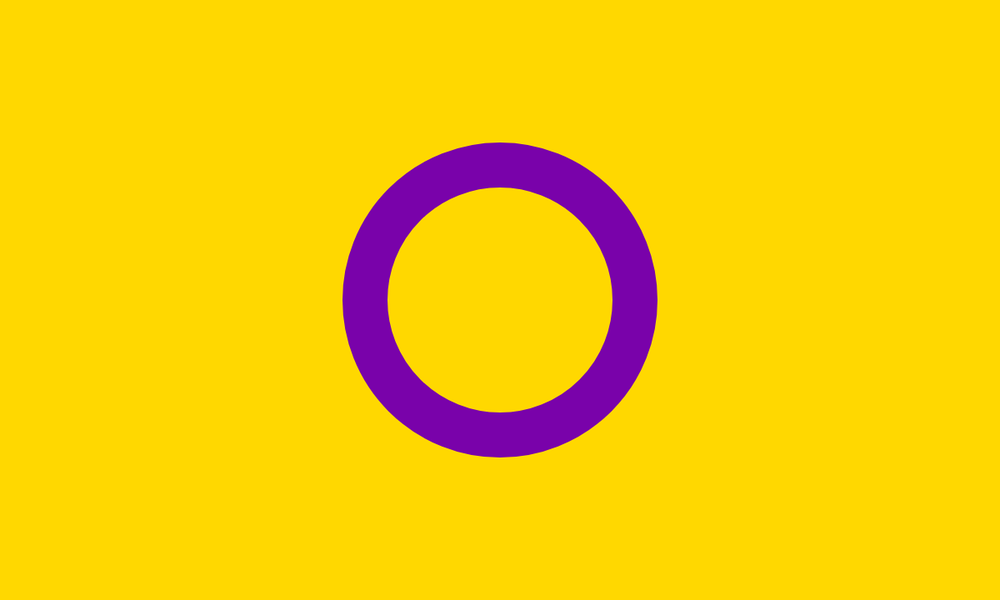

Intersex describes natural variations in sex characteristics. These can involve chromosomes, hormones, reproductive organs or genitals that differ from typical expectations for female and male bodies. Traits may be apparent at birth or discovered later. Being intersex does not tell you someone’s gender or whom they love.
I’d start with that distinction before getting into terminology or statistics. Intersex people have different bodies, identities and healthcare needs. A useful explanation leaves room for all of them.
Jump to: How common is intersex? · Intersex vs. transgender · Common misconceptions · Medical consent · Flag and awareness dates · Support · FAQ
What Intersex Means
There is no single intersex anatomy. The NHS describes a range of variations involving genes, hormones and reproductive organs. Some affect how the body responds to hormones; others involve chromosomes or anatomy. Medical records may use a specific diagnosis rather than the word intersex.
The Council of Europe’s guidance also makes room for personal language: not everyone with these variations identifies as intersex. Some prefer a diagnosis or another term. Ask which words a person uses, and follow their lead.
You may encounter the word “endosex” for someone who is not intersex. interACT’s definitions use it in place of describing one group of bodies as normal and another as abnormal.
How Common Is Intersex? Why the Numbers Differ
The often-cited 1.7% figure and the much smaller 0.018% estimate count different things. Presenting them as the upper and lower ends of one agreed measurement hides the disagreement over the definition itself.
The Broad Estimate: About 1.7%
interACT uses an estimate of about 1.7%, drawing on Anne Fausto-Sterling’s review of medical literature. That broad definition includes variations that may not be visible at birth.
Visible Genital Differences: About 1 in 1,500 to 2,000 Births
The archived Intersex Society of North America estimate concerns genital differences noticeable enough that a specialist might be consulted. It does not count every kind of intersex variation.
The Narrower Estimate: 0.018%
Leonard Sax’s 2002 paper used a narrower definition. It excluded variations such as Klinefelter syndrome, Turner syndrome and late-onset congenital adrenal hyperplasia. That choice explains much of the difference between the estimates.
The broader research came from a 2000 review by Melanie Blackless, Anne Fausto-Sterling and colleagues of medical literature dating back to 1955. These are estimates assembled from research, not a current worldwide census. A useful prevalence claim needs its definition attached. It also cannot tell you whether a particular person uses the intersex label.
Intersex vs. Transgender
Intersex concerns sex traits. Transgender concerns a person’s gender in relation to the sex they were assigned at birth. An intersex person can be cisgender, transgender or nonbinary. Those descriptions answer different questions, so someone can be both intersex and trans.
As intersex advocate Morgan Carpenter explains, intersex people can have any gender identity or sexual orientation. The I in LGBTQIA+ stands for intersex, but inclusion in that acronym does not require every intersex person to identify as queer.
Three Common Misconceptions
You Can Always Tell at Birth
Some variations become apparent during puberty or an investigation into fertility. Others may never be diagnosed. That is one reason a definition based only on a newborn’s external genitals leaves people out. If someone tells you they are intersex, they do not owe you a description of their anatomy or a medical history.
‘Hermaphrodite’ Is the Right Word
interACT advises against using this word for a person unless they use it for themselves; it is commonly regarded as a slur. You may also see “disorders of sex development” or “differences of sex development,” both abbreviated DSD. Some people use that terminology, while others object to being described as having a disorder. A term printed in a medical file is not necessarily the person’s preferred language.
Every Intersex Baby Needs Surgery
Care depends on the particular variation. Some people need no medical treatment; others need monitoring, medication or treatment for a specific health problem. An urgent health need and an operation intended to make genitals look more conventionally male or female are different decisions.
For example, salt-wasting congenital adrenal hyperplasia can cause a life-threatening hormone and salt imbalance. Treatment can involve replacing missing hormones and salt. Genital surgery does not correct that hormone deficiency. Families need a specialist team to explain the diagnosis, any immediate risks and which decisions can safely wait.
Why Consent Is Central to Intersex Medical Care
The UN human rights office’s 2025 report calls for prohibiting medically unnecessary interventions without the person’s informed consent. It also calls for access to appropriate healthcare, medical records and remedies for past violations. Cosmetic expectations alone should not determine what happens to a child’s body.
In a 2020 statement, Lurie Children’s Hospital apologized for harm caused by earlier approaches to intersex care. A January 2021 update said its pause on nonessential irreversible genital procedures included patients with congenital adrenal hyperplasia. These were institutional policies, not a nationwide ban.
The Council of Europe’s 2025 recommendation urges governments to prohibit interventions on sex characteristics without free and informed consent. It calls for postponing interventions on children unable to consent, with limited exceptions involving imminent danger to life, serious physical harm or a sufficiently mature minor’s explicit request under safeguards. It also calls for access to appropriate healthcare throughout life.
Intersex Rights: Milestones and Their Limits
In 2015, Malta adopted a law protecting intersex children’s bodily integrity. OHCHR describes it as the first law to prohibit treatment that children cannot consent to, particularly interventions driven by social factors. The scope and enforcement of protections differ between countries.
On April 4, 2024, the UN Human Rights Council adopted a resolution on discrimination, violence and harmful practices against intersex people. The official vote record shows 24 in favor, none against and 23 abstentions. The resulting human rights report was issued in August 2025. The Council of Europe adopted its separate equal-rights recommendation on Oct. 7, 2025. These international actions guide governments; they do not create an identical law in every country.
Intersex Awareness Day and the Yellow-and-Purple Flag
Intersex Awareness Day falls on Oct. 26. It commemorates the 1996 protest outside a pediatrics conference in Boston, where intersex people and allies challenged nonconsensual childhood surgeries. Nov. 8 is Intersex Day of Solidarity, also called Intersex Day of Remembrance. It falls on the birthday of Herculine Barbin, a French intersex person whose memoirs became an important historical record.

Finding Support and Asking Better Questions
An intersex-led organization can offer something a diagnosis sheet cannot: connection with people who have lived through similar experiences. interACT’s organization directory is one place to look. Ask a healthcare team what requires treatment now, what can wait and how each option affects future choices.
If someone shares that they are intersex, follow their language and protect their privacy. I’d ask what support they want, rather than asking about their anatomy.
Intersex Meaning FAQ
What does intersex mean?
Intersex describes innate variations in sex characteristics that fall outside typical expectations for female and male bodies. Those traits can involve chromosomes, hormones, reproductive organs or genitals.
How common is being intersex?
Estimates depend on which variations are included. The widely cited 1.7% estimate uses a broad definition; the 0.018% estimate comes from a much narrower 2002 definition. They should not be treated as interchangeable measurements.
Is intersex the same as transgender?
No. Intersex describes sex characteristics; transgender describes gender in relation to sex assigned at birth. A person can be both.
Is it OK to say hermaphrodite?
Avoid applying the word to another person. Many intersex people consider it a slur, although some reclaim it for themselves.
When is Intersex Awareness Day?
Oct. 26. It commemorates the 1996 demonstration by intersex people and allies outside a pediatrics conference in Boston.