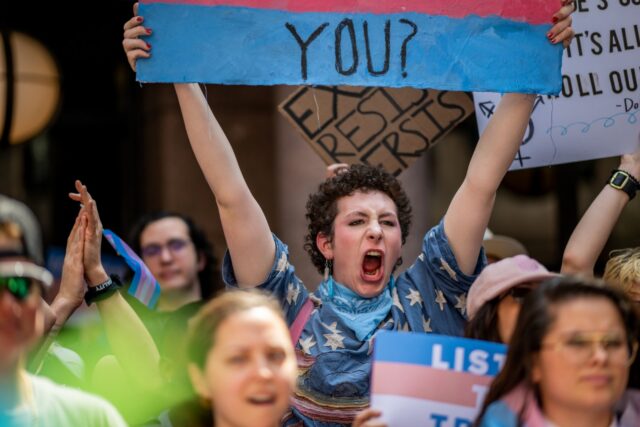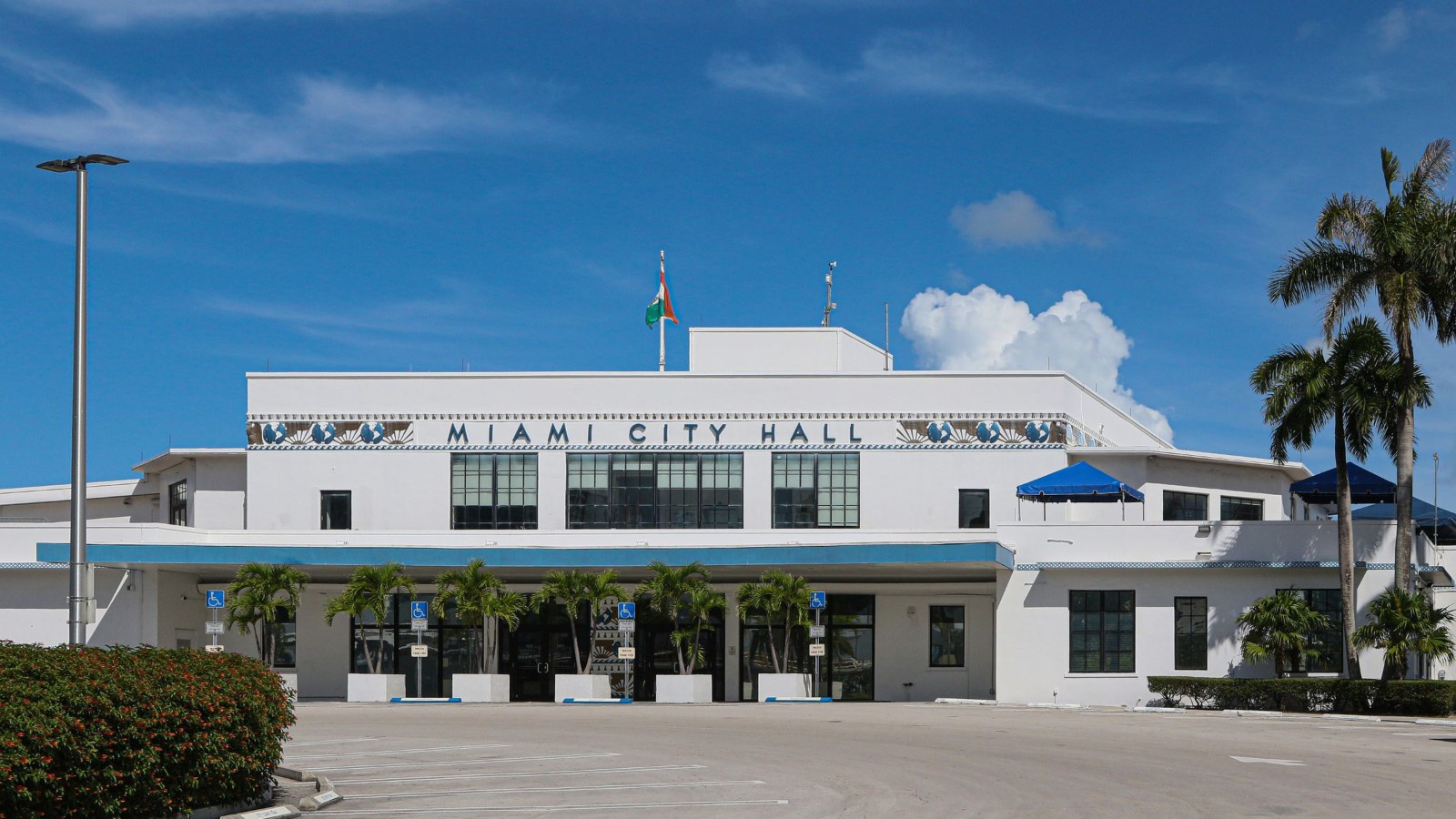

Miami commissioners take a first vote Thursday, Nov. 19, on an ordinance that would strip the city’s LGBTQ Advisory Board of 12 of its 13 listed duties, citing Florida’s new local anti-DEI law, SB 1134. The measure is the first item under first reading ordinances on the City Commission’s Nov. 19 agenda. The meeting starts at 9 a.m. at City Hall, 3500 Pan American Drive.
The board wouldn’t be abolished. The ordinance itself says the LGBTQ Board “will continue to be a Board of nonelected volunteers with basic administrative support.”
What survives is thin. In the city’s marked-up code, every listed duty is struck through except one: to perform “duties as may from time to time be assigned to it by the city commission by resolution.” The line naming the city attorney as “legal counsel to the board” is replaced with one word: “Reserved.”
The same ordinance repeals the city’s Equal Opportunity and Diversity Programs office, its affirmative action policy and its 14-member Equal Opportunity Advisory Board. No sponsor is listed on the file. It’s still a proposal. If it clears Thursday, it needs a second and final vote, The Florida Trib reported.
What the Miami LGBTQ Advisory Board Would Lose
Among the struck lines is the board’s duty “to foster mutual understanding, tolerance, and respect for the LGBTQ community in the city.”
Another crossed-out power lets it “make recommendations to the city commission with respect to all issues affecting or relating to the LGBTQ community.” Gone too is its job attracting LGBTQ businesses to Miami.
The board would also stop serving “as a forum to which individuals and groups can express concerns related to issues of homophobia and transphobia,” under the markup.
Commissioners created the board by ordinance on Feb. 13, 2020, according to the city’s board page, which lists five members in six seats and a city attorney assigned to it.
The ordinance includes a way back. “Should SB 1134 (2026) and/or Section 116.04971, Florida Statutes, be repealed and/or deemed unconstitutional,” the board’s code sections “shall automatically revert” to their old text, it says. (The state statute is numbered 166.04971. The city’s draft clause reads 116.)
What Florida’s SB 1134 Requires of Cities
Gov. Ron DeSantis signed SB 1134 on April 22, and it takes effect Jan. 1, 2027, according to the Florida Senate’s bill page. It passed the Senate 25 to 11 and the House 77 to 37.
The law, now Section 166.04971 of the Florida Statutes, says a city “may not fund or promote, directly or indirectly, or take any official action” tied to diversity, equity and inclusion. Existing ordinances and policies of that kind “are void,” it says.
A city’s own residents can sue it over a violation. An official who breaks the law “commits misfeasance or malfeasance in office,” the statute says.
It also carves out volunteer panels. The section “does not apply to” the “actions of a body composed of nonelected volunteers,” or to basic administrative support for one, unless a city employee’s “sole function” is providing it.
Miami’s draft reads that limit narrowly. One of its “whereas” clauses says the statute “prohibits anything more than basic administrative support to a body of nonelected volunteers.”
Florida League of Cities and Equality Florida on Volunteer Boards
Attorney Michael Spellman read the exemption in a May 8 legal memo to the Florida League of Cities’ general counsel. “Actions of boards or commissions composed entirely of nonelected volunteers are exempt, as is basic administrative support to such bodies,” he wrote.
He flagged one catch: “having a local official sit ex officio probably defeats the exemption.”
An August open letter to cities and counties, signed by Equality Florida public policy director Jon Harris Maurer and Community Justice Project attorneys and posted by the ACLU of Florida, went further.
“Given such explicit textual protections in the law, there can be no basis to eliminate these boards,” the letter said.
“Overzealous compliance and fear-based capitulation with the authoritarian spirit of this state law can expose local governments to significant legal challenges,” it added.
Commissioner Damian Pardo Plans to Vote No
Commissioner Damian Pardo told the Trib he’ll vote against the ordinance. “All of this hurts us,” he said. “It hurts our economy. It hurts our brand throughout the world.”
In a statement quoted by the Trib, Pardo called SB 1134 “a travesty when it passed” and said the law was “clearly targeting LGBTQ residents and other groups.” He said it “should be repealed immediately.”
Pardo founded the advocacy group SAVE in 1993, his city biography says, and he previously sat on the LGBTQ Advisory Board, the Trib reported.
Mayor Eileen Higgins can’t vote on the commission, but she can veto. She hadn’t answered the Trib’s question about a veto when it published. Under a footnote in the ordinance, the mayor gets 10 days after passage to veto.
“If the Mayor vetoes this Ordinance, it shall become effective immediately upon override of the veto by the City Commission or upon the effective date stated herein, whichever is later,” the footnote says.
Other Florida cities are moving ahead of the same deadline. Delray Beach said Nov. 10 it won’t host Pride or its St. Patrick’s Day Parade in 2027. Lake Worth Beach locked in a 20-year lease for the Compass LGBTQ+ center before the law starts.
For workplace bias complaints, Miami says it “will establish a reporting and investigatory protocol and procedure for any claims of discrimination or retaliation within the Department of Human Resources.” The state law takes effect Jan. 1.